Negative Number: 0
Latitude:
Longitude:
Geographical Classification:
North America: United States and Possessions (Except Asiatic Possessions): South Atlantic States: Maryland
Card Front:
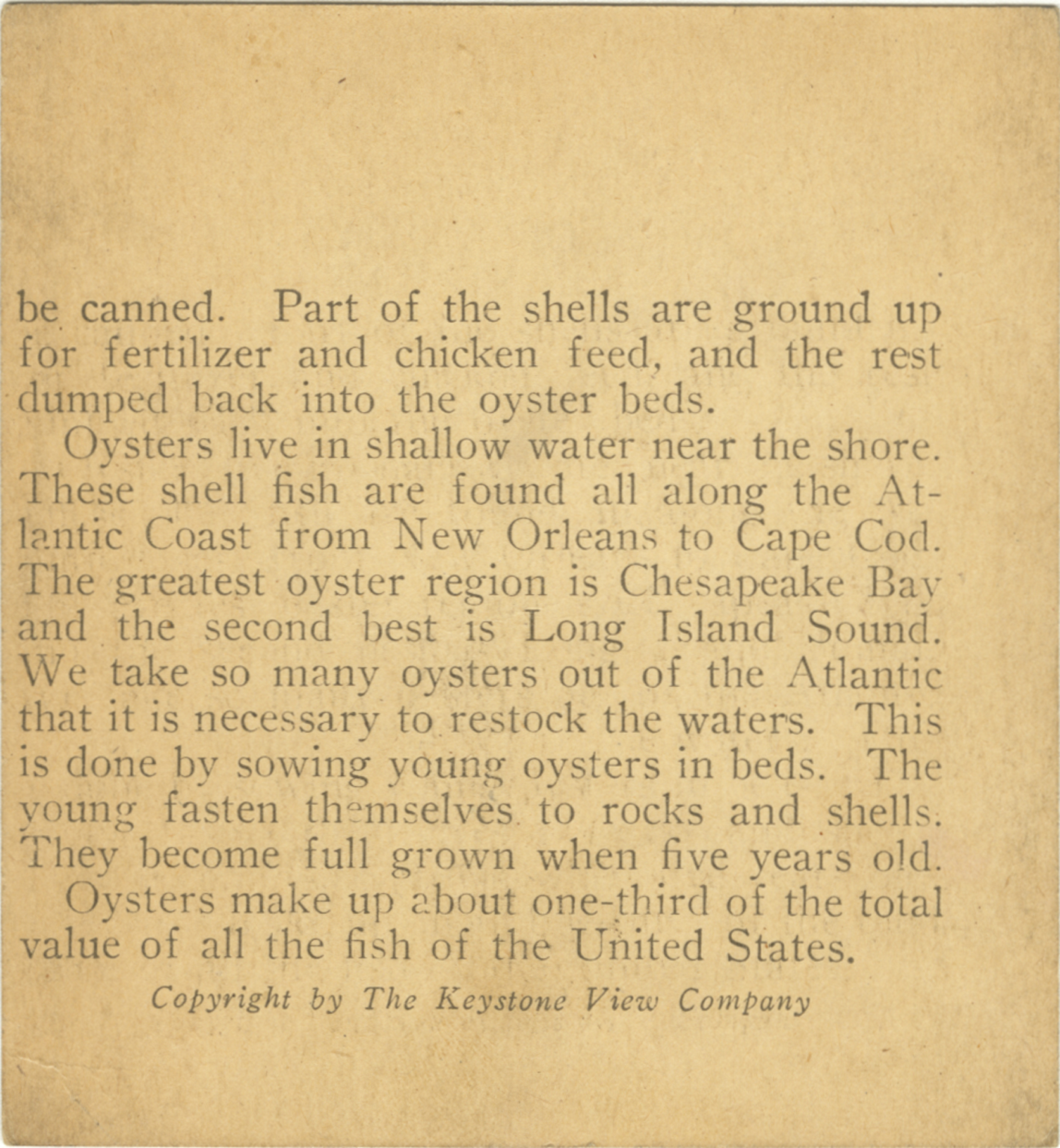
This view shows thousands of oysters which have been pulled in by means of dredges which scrape the oysters from the ocean bottom into nets. Then the dredges with nets full of oysters are pulled aboard the boat. There the oysters are emptied out and shoveled into piles on the deck. You can see one of the dredges with the net attached to it in the foreground, and another one is being emptied by the two men on the left. When a cargo has been hauled in, the boat steams back to the wharf. There the oysters are taken to a "shucking" room where they are opened. Some of the oysters are shipped in ice containers to fish markets all over the United States. Some are sent to factories to
Card Back:
be canned. Part of the shells are grouped up for fertilizer and chicken feed, and the rest dumped back into the oyster beds. Oysters live in shallow water near the shore. These shell fish are found all along the Atlantic Coast from New Orleans to Cape Cod. The greatest oyster region is Chesapeake Bay and the second best is Long Island Sound. We take so many oysters out of the Atlantic that it is necessary to restock the waters. This is done by sowing young oysters in beds. The young fasten themselves to rocks and shells. They become full grown when five years old. Oysters make up about one-third of the total value of all fish in the United States.