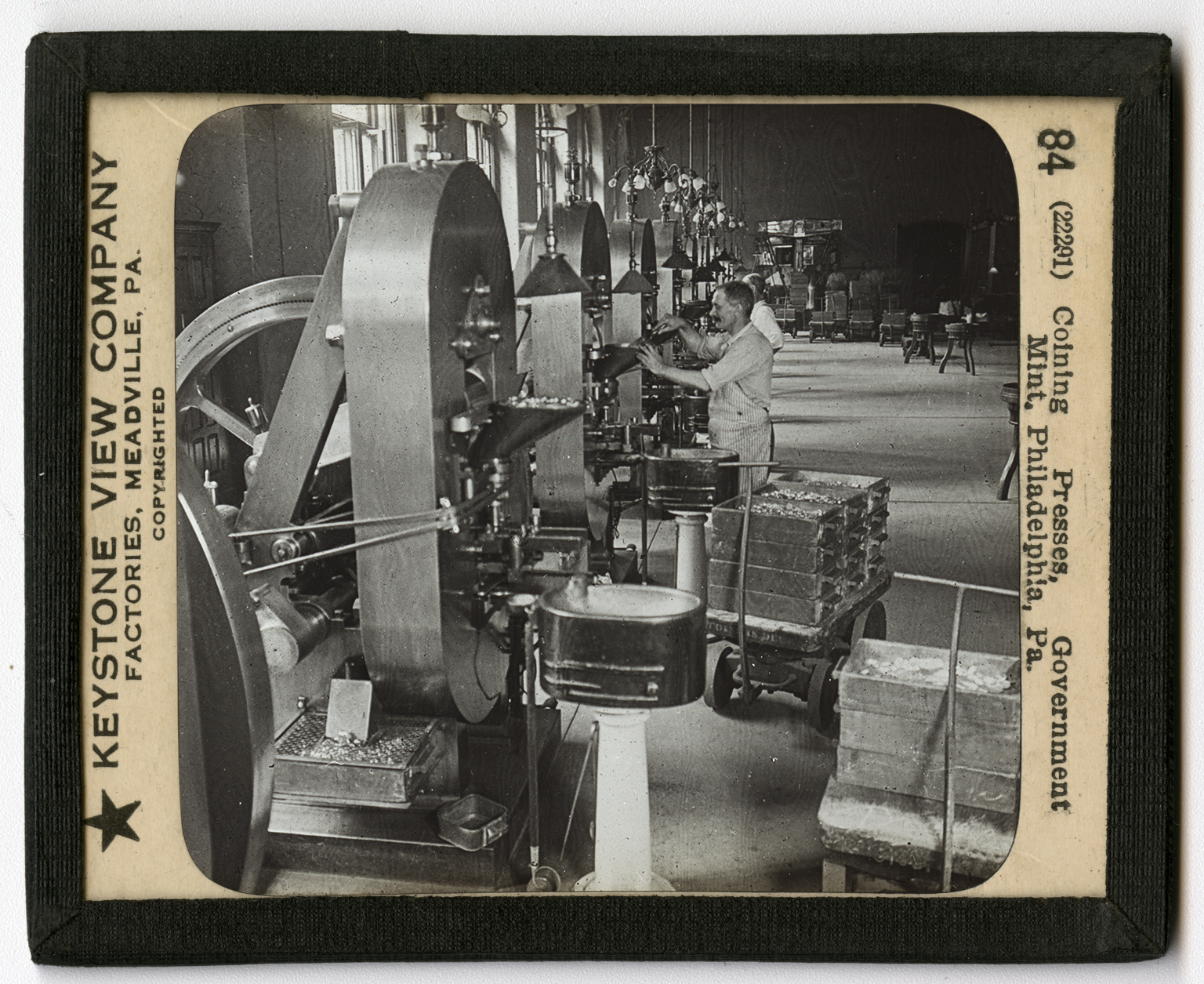
Negative Number: 22291
Latitude: 40.0
Longitude: 75.0
Geographical Classification:
North America: United States and Possessions (Except Asiatic Possessions): Middle Atlantic States: Pennsylvania
Card Front:
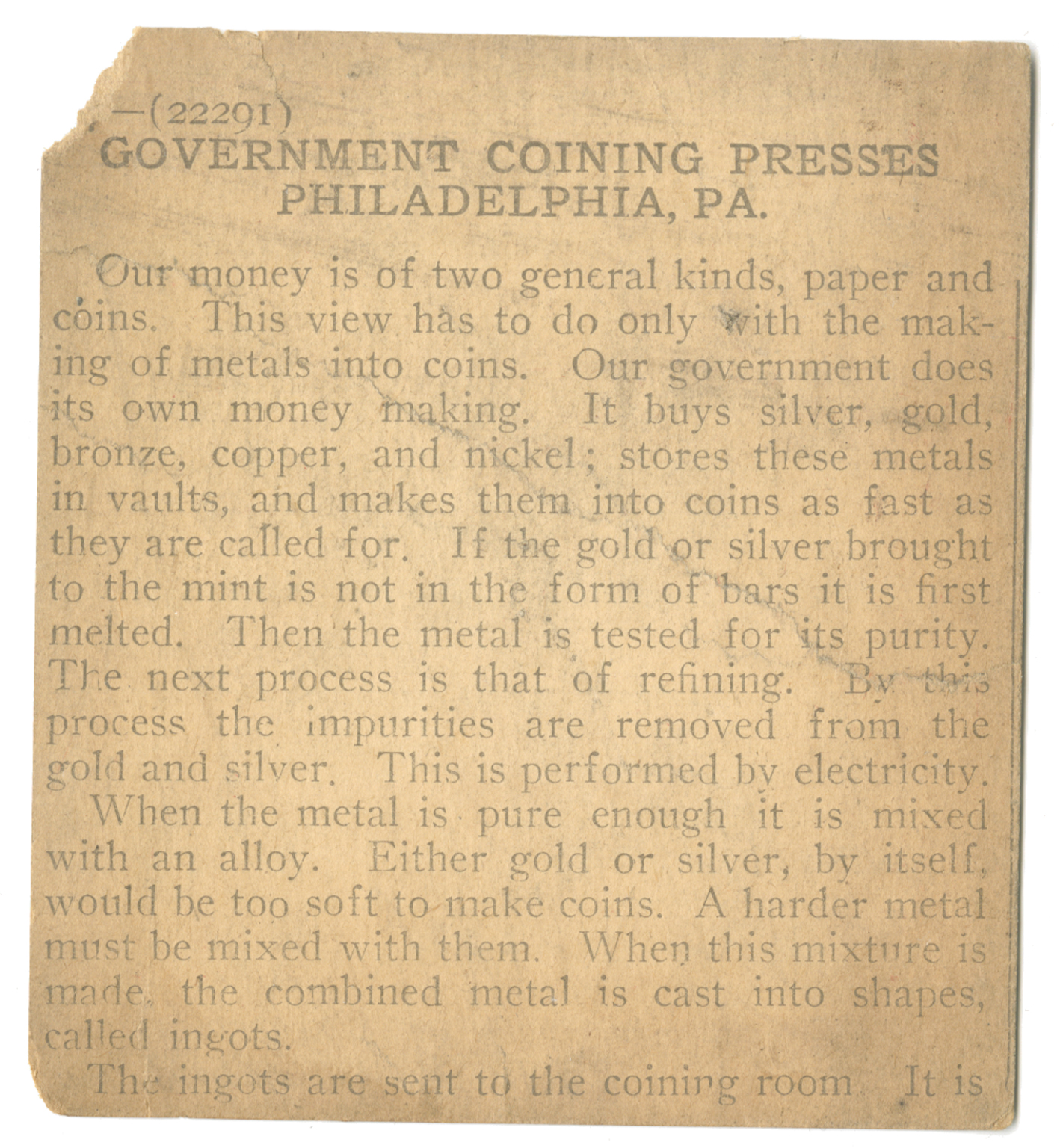
Our money is of two general kinds, paper and coins. This view has to do only with the making of metals into coins. Our government does its own money making. It buys silver, gold, bronze, copper, and nickel; stores these metals in vaults, and makes them into coins as fast as they are called for. If the gold and silver brought to the mint is not in the form of bars it is first melted. Then the metal is tested for its purity. The next process is that of refining. BY this process to impurities are removed from the gold and silver. This performed by electricity. When the metal is pure enough it is mixed with an alloy. Either gold or silver, by itself, would be too soft to make coins. A harder metal must be mixed with them. When this mixture is made the combined metal is cast into shapes, called ingots. The ingots are sent to the coining room. It is
Card Back:
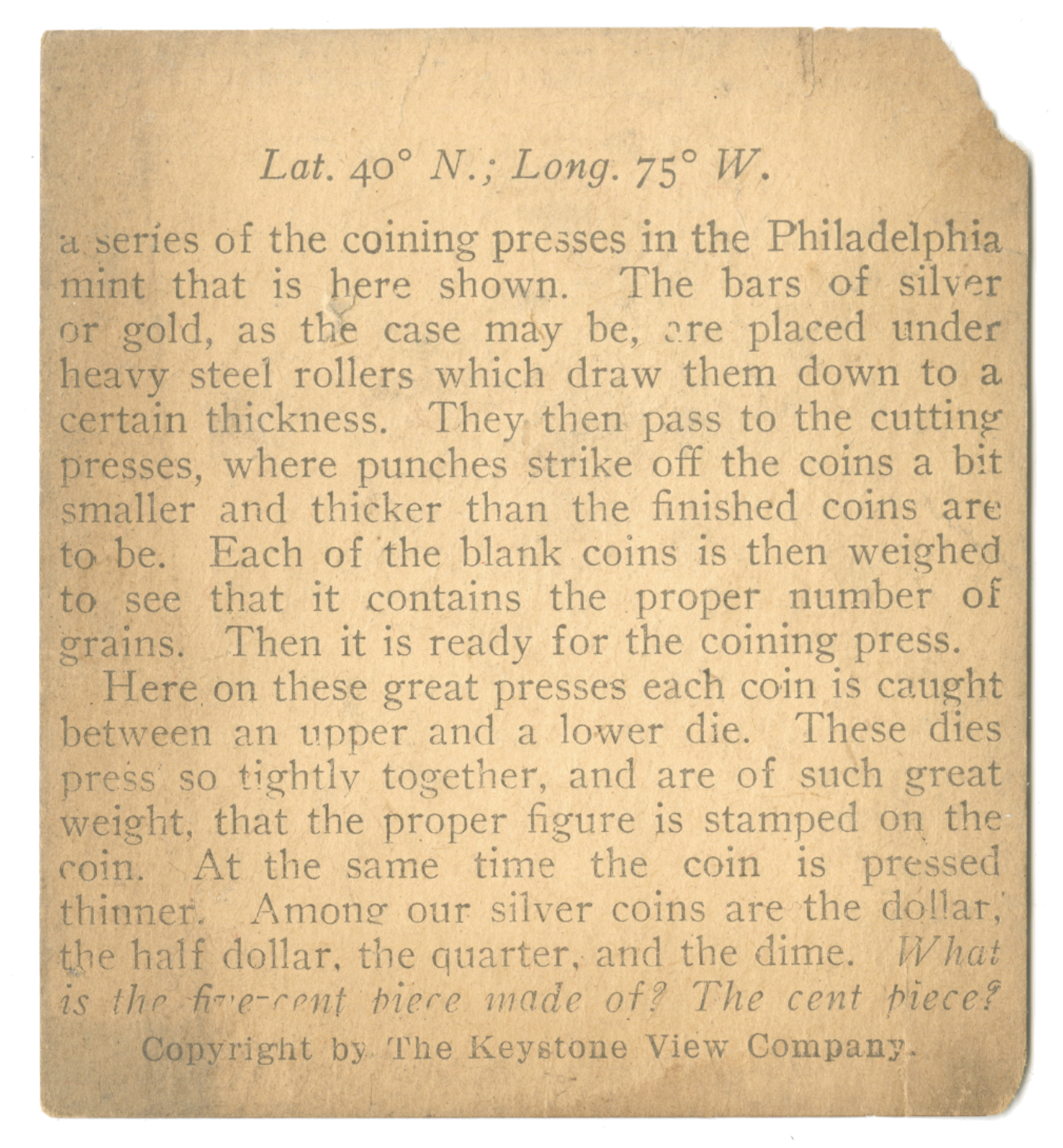
a series of the coining pressed in the Philadelphia mint that is here shown. The bars of silver or gold, as the case may be, are placed under heavy steel rollers which draw them down to a certain thickness. They then pass to the cutting presses, where punches strike off the coins a bit smaller and thicker than the finished coins are to be. Each of the blank coins is then weighed to see that it contains the proper number of grains. Then it is ready for the coining process. Here on these great presses each coin is caught between an upper and a lower die. These dies press so tightly together, and are of such great weight, that the proper figure is stamped on the coin. At the same time the coin is pressed thinner. Among our silver coins are the dollar, the half dollar, the quarter, and the dime. What is the five-cent piece made of? The cent piece?