Negative Number: 7057
Latitude: 41.0
Longitude: 76.0
Geographical Classification:
North America: United States and Possessions (Except Asiatic Possessions): Middle Atlantic States: Pennsylvania
Card Front:
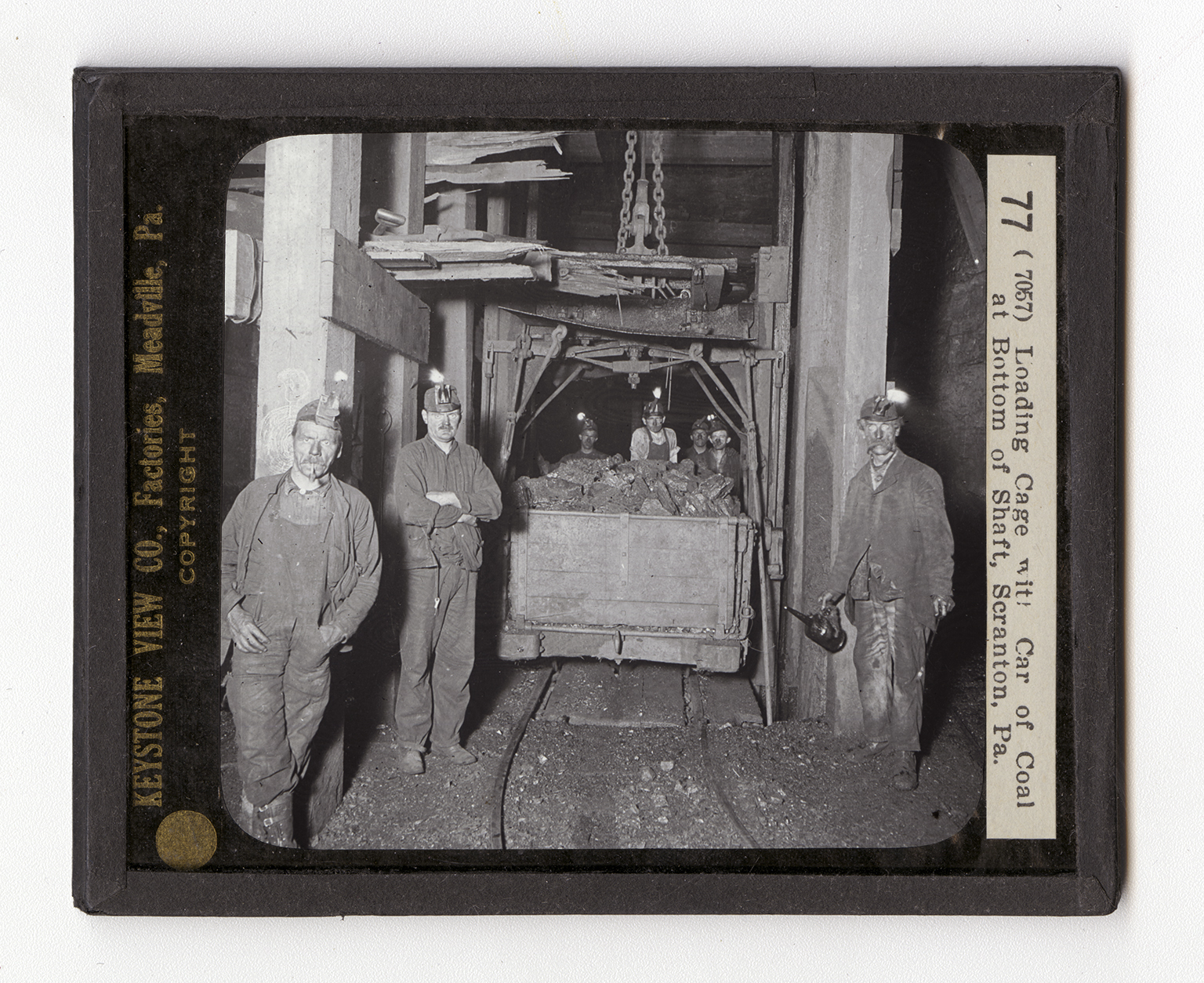
Here you are at the bottom of an anthracite, or hard coal mine. This is the lower end of the large shaft which leads to the surface of the earth perhaps 1,500 feet above. A carload of coal is on the elevator or cage ready to be lifted to the top of the dump into the breaker. The cage and the shaft are the center of a mine of this kind. To it lead the many switches from acres of underground rooms. It is necessary that this shaft be constructed of strong materials. For not only must all the coal be brought to the surface through it but it is the only exit of the hundreds of miners. You can see for yourself that the shaft and cage here shown are strongly made. You will observe the larger timbers, the heavy framework of the cage, and the big safety chain above. The weight on the cage you can figure for yourself. The car weighs one ton and the coal two tons.
Card Back:
The cage weighs 1 1/2 tons and the 1500 feet of wire rope which lifts it, another 1 1/2 tons. How much is this in all? You will be interested to know that the rope is made of strands of woven steel wire, 19 wires to the strand. It is 1 1/8 inches in diameter and can lift weight of 60 tons. Some of the cages used in these mines have two decks, one above the other. By this means, two cars of coal can be lifted at a time. Some of the Pennsylvania shafts are sunk 3,000 feet beneath the surface of the earth. This means that some of the coal is actually mined below sea level. In many of these deep mines it is necessary to have extensive pumping equipment to remove the inflow of water. Pennsylvania mines, however, are shallow as compared with most of those in Europe. Some of the European mines are over a mile in depth.