Negative Number: 6531
Latitude: 40.0
Longitude: 80.0
Geographical Classification:
North America: United States and Possessions (Except Asiatic Possessions): Middle Atlantic States: Pennsylvania
Card Front:
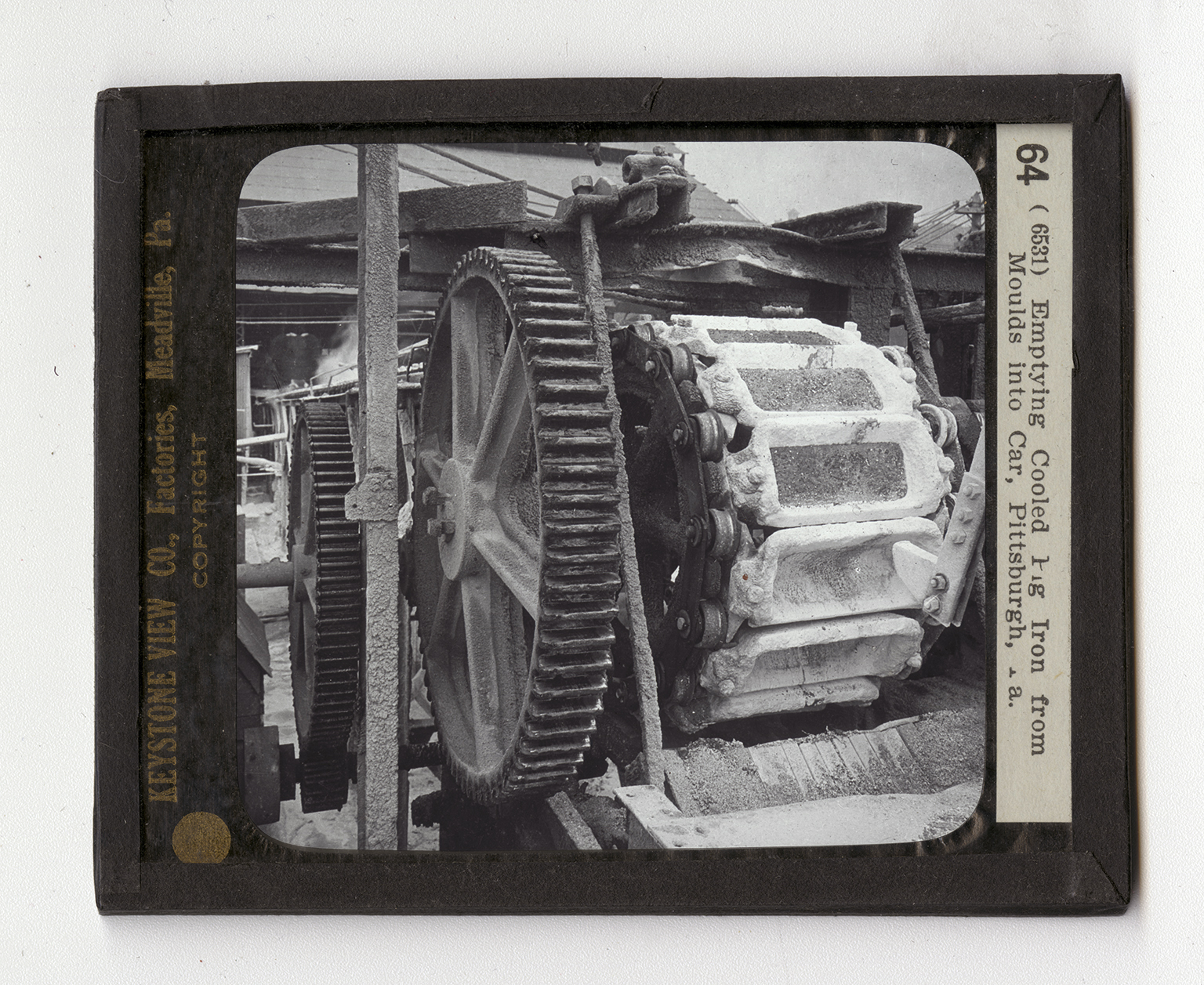
In view No. 63 you saw the pig iron machine at rest. You viewed it from the end at which the blast furnace stands. You were looking toward the freight cars on the switches in the distance. In these cars, you will recall, the pigs are dropped. This view shows you the opposite end of the pig iron machine. Directly in the foreground and below the machine is the fright car. The first thing you will observe are the great cog gears that turn the spindles about which the pig iron belt revolves. You will observe the heavy steel chain that holds the cast iron boxes in place and yet allows them to revolve about the wheel. This chain is made of links composed of two strips of steel, one on either side of an iron spool. These little spools fit into the cogs on the spindle, and the two steel bars connecting them fit nicely over each cog.
Card Back:
You also have here a very distinct view of the cast iron pigs. The three molds at the top of the spindle contain pig iron. Those below have dropped their bars into the car. Most of the pigs fall out of the troughs of their own weight. Occasionally one sticks fast so that it must be tapped to release it. The big hammer, the end of which you see, is to loosen these occasional pigs. The entire pig iron belt is about 200 feet long. That is, the car is about 100 feet from the blast furnace. The belt moves very slowly, but not slowly enough to allow the pigs to cool thoroughly by the time they reach the car. Hence water is sprinkled over them by automatic sprinklers as they pass along. Imagine yourself the man standing in this car. Give a brief talk explaining your duties.