Negative Number: 11994
Latitude: 34.0
Longitude: 18.0
Geographical Classification:
Africa: Union of South Africa
Card Front:
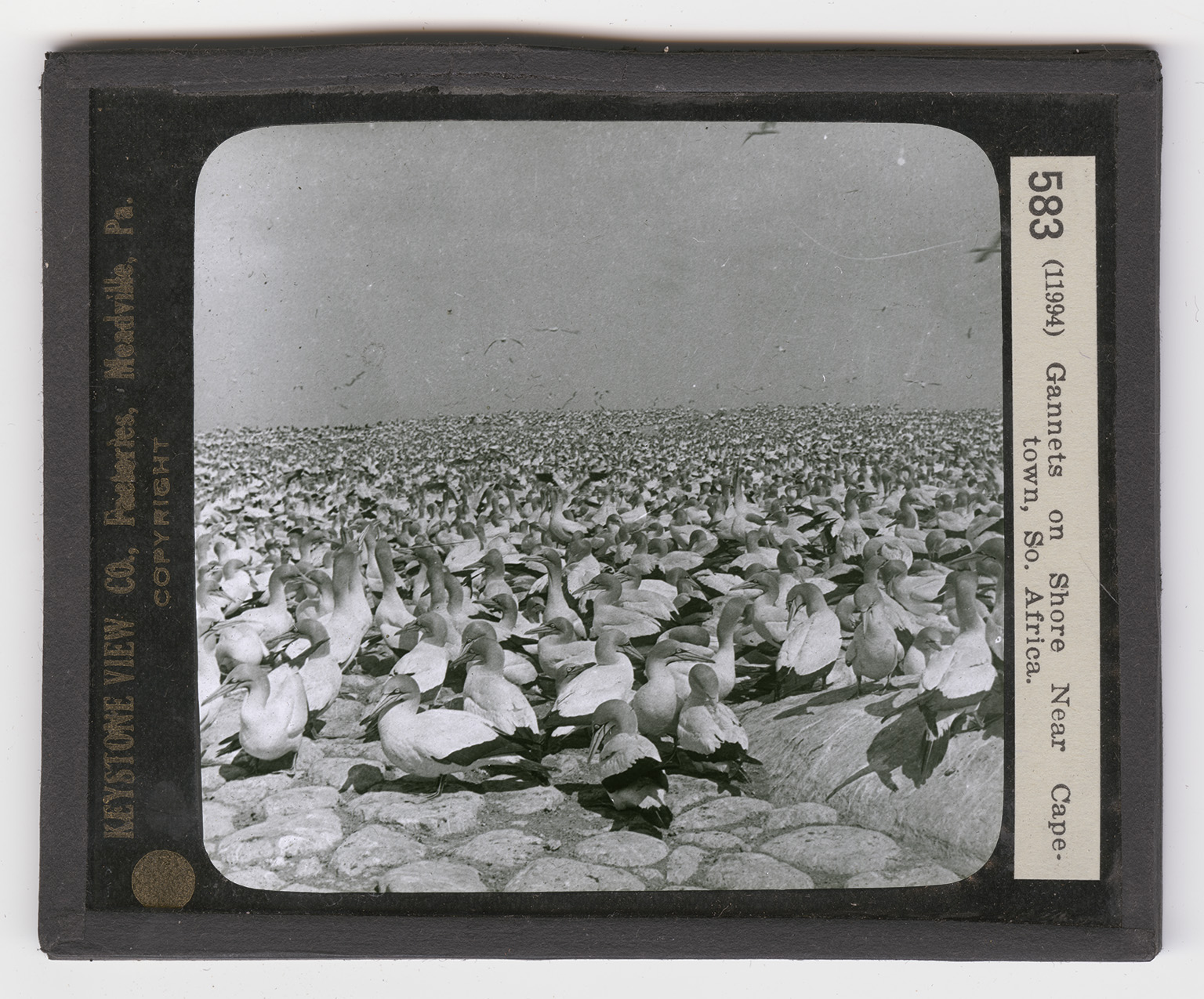
A glance at this scene might lead one to believe that he was looking over a lake with short waves chopping each other into whitecaps. This is only a small section of a great breeding ground of sea birds called gannets, on the south shores of Africa. Gannets are a king of wild geese. They live in colder waters also, in both northern and southern latitudes. Off the British Isles they have 4 or 5 stations which they visit regularly. In the northern latitudes, these birds come about the first of April and leave in the fall when the young birds are ready to fly. On such ground as you see here they lay their eggs and hatch them. The mother birds lay one egg apiece, in a hollow place in the sand or among the rocks. Or they may bring sea weed from a long distance and builf up a kind of nest. You will notice that the gannets appear to be big-
Card Back:
ger than geese. They are; but they are not so heavy. They are built for flying and for diving. The plumage of the South African gannets is white, excepting the wings and tail, which are black. The white is mixed with a tawny color. The little birds, when hatched, have no feathers. A bit later they are covered with a milk-white down. Their first feathers are of a deep olive-brown. In the fall the birds start out on fishing trips. They fish in squadrons, one following directly behind the other in their flight. When they see a school of herring, the front bird closes his wings and falls directly down into the water. He seizes his fish, and rises from the water and drops in at the rear end of the flying line. Then the second bird drops likewise, and so on. Order is the first law in a fishing party of gannets.