Negative Number: 9812
Latitude: 30.0
Longitude: 31.0
Geographical Classification:
Africa: Egypt
Card Front:
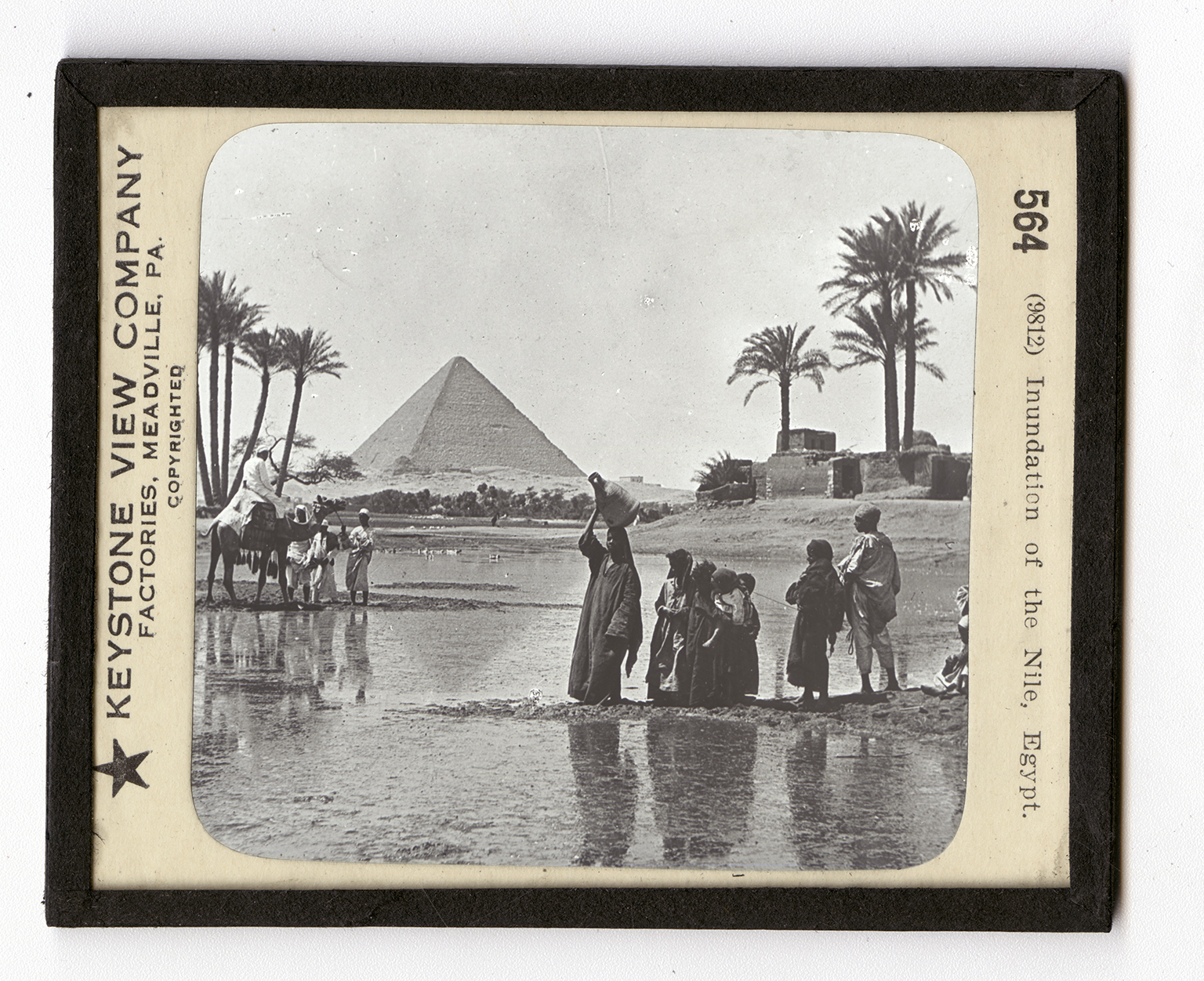
The wonders of ancient Egypt are in the scene before you. In the distance is a pyramid, the finest work of Egyptian builders, and the tomb of their mightiest kings. It represents the labors of thousands of men for many years. The Egyptians looked upon the overflow of their river rises because of the heavy spring rains along the upper Nile. In July the water begins to spread over the lower Nile valley. For several months the valley is inundated. When the water recedes, it leaves behind a rich earth, throughly soaked. In this soil is raised fine cotton and the crops that fill the granaries of the country. You recall that the brethren of Joseph came over from Asia to buy grain in Egypt when there was a famine among the Israelites. The grain they bought was grown in the rich soil of the Nile.
Card Back:
On the left is another gift of desert people - the camel. He can travel for days without food and water. Why? He carries heavy loads patiently. And he can usually survive the worst sand storms the Sahara can produce. The degree of civilization of any country or people may be measured by their advance in transportation methods. What people on the American continent carry burdens on their head? On the right are palm trees. They grow near the Nile and about the oases that are scattered over the Sahara. The adobe homes are built without window and have thick walls to keep out the heat and sand. The style of dress is that of a people living in a hot country and not far advanced. What American city has about the same latitude? What important crop is raised in both Texas and Egypt?