Negative Number: 6233
Latitude: 24.0
Longitude: 33.0
Geographical Classification:
Africa: Egypt
Card Front:
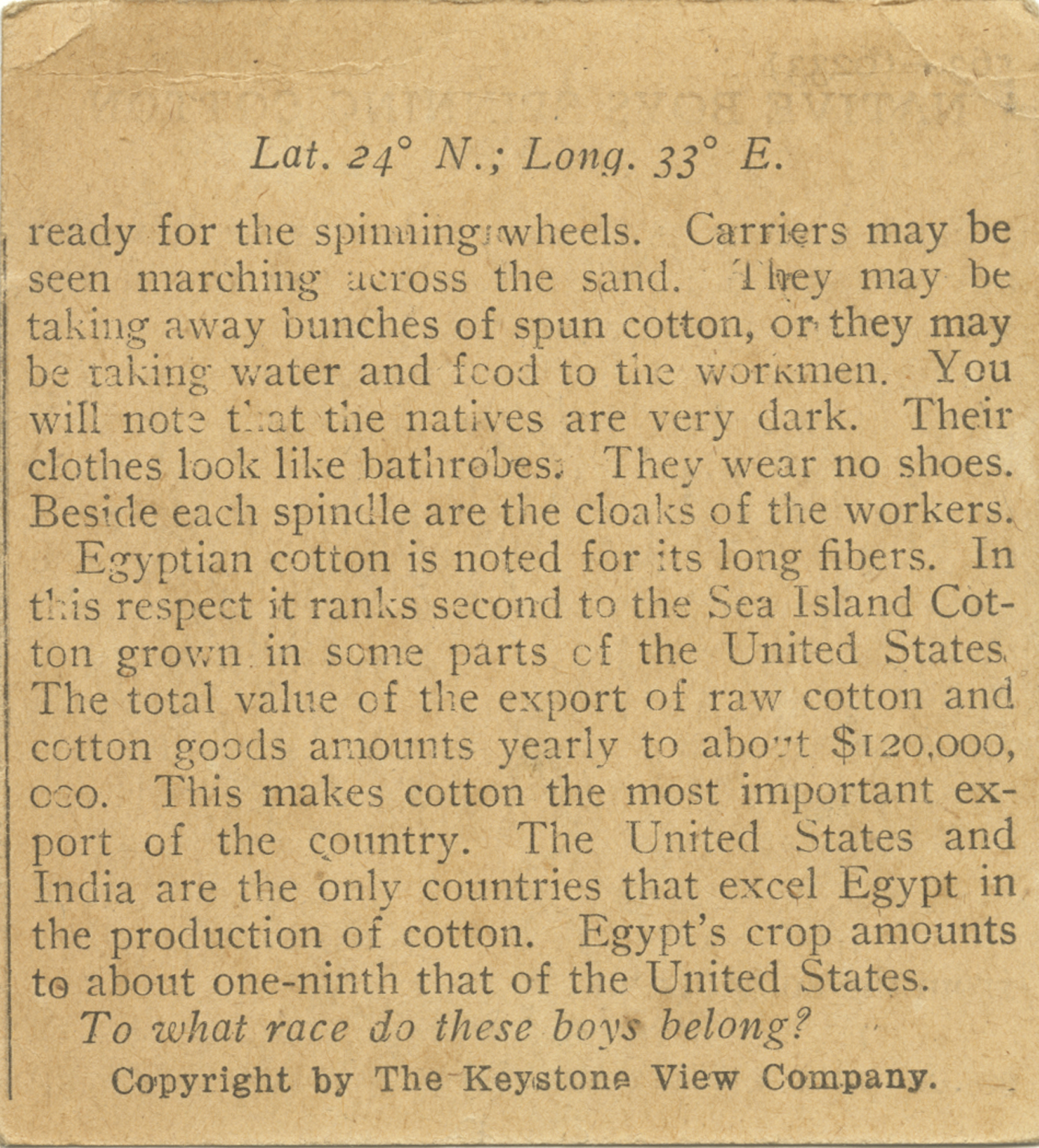
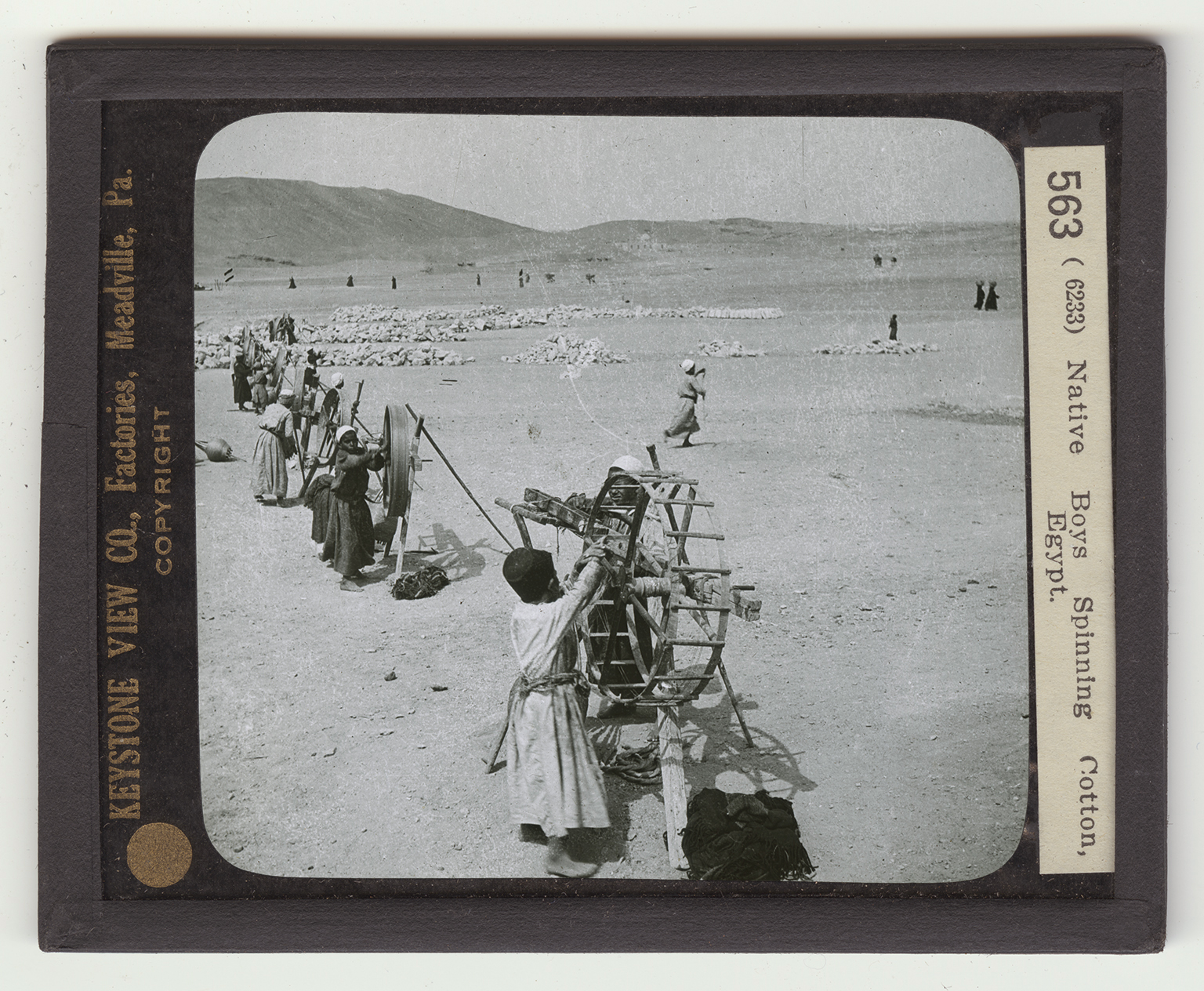
Such a scene as this could hardly be found in any country other than Egypt. But this is the way cotton is spun along the Nile. Here is a row of old-fashioned spinning wheels, much cruder than those our great-grandmothers used. They work in the same way but it takes two persons to use one of these machines. One turns the wheel while the other draws out the thread. The object of spinning is to wind several fibers into a thread that can afterwards be spun or knit. The large wheel is belted to a small spindle, which turns rapidly. As the thread is twisted, one of the two workers walks away from the machine with it. Then he turns away from the machine with it. Then he turns and walks back as the thread is wound up. At the third spindle you can see a thread carrier walking away from the spinning wheel. Beyong the spindles you observe what appears to be piles of stones. This is cotton piled up
Card Back:
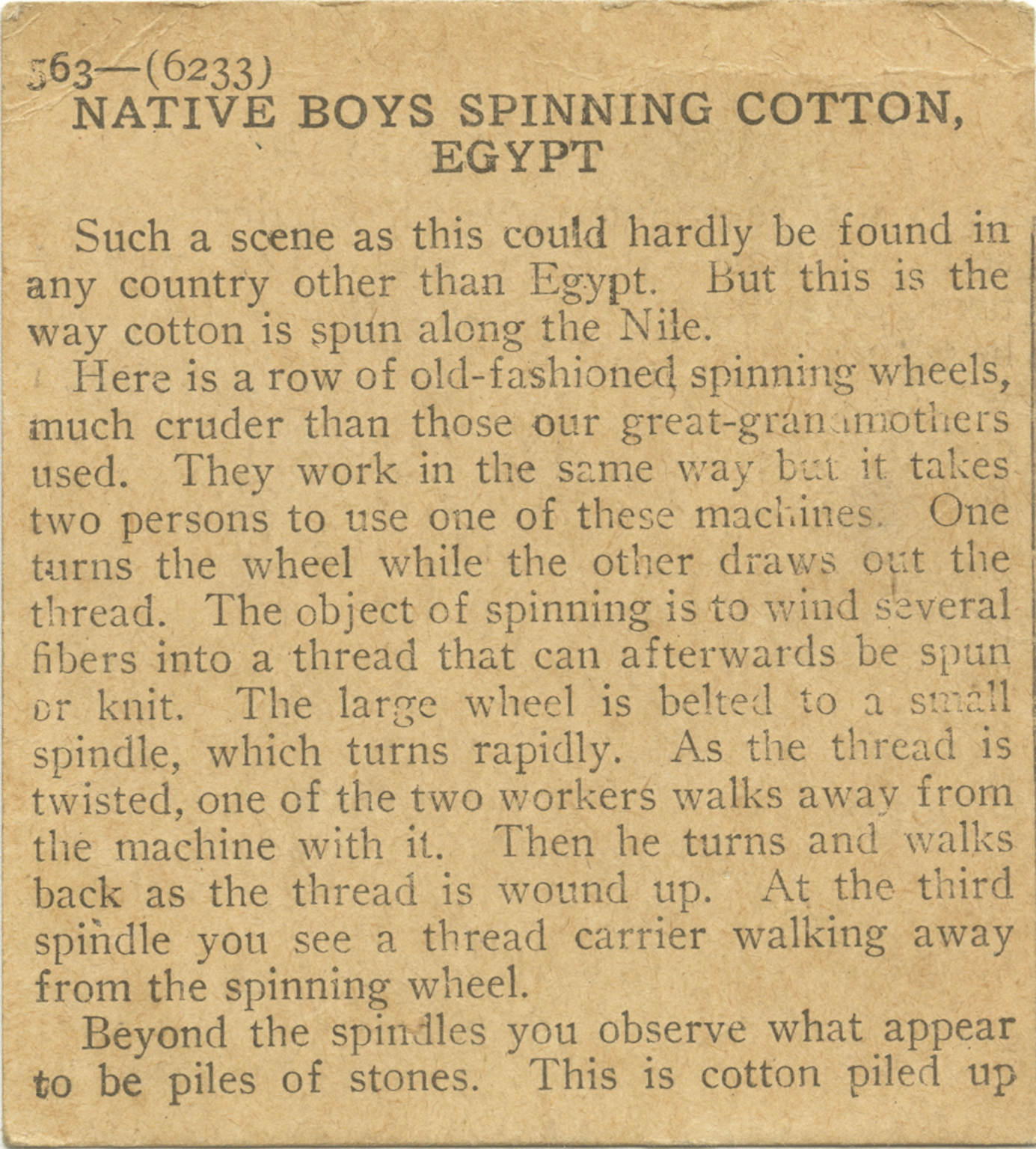
ready for the spinning wheels. Carriers may be seen marching across the sand. They may be taking away bunches of spun cotton, or they may be taking water and food to the workmen. You wil note that the natives are very dark. Their clothes look like bathrobes. They wear no shoes. Beside each spindle are the cloaks of the workers. Egyptian cotton is noted for its long fibers. In this respect it ranks second to the Sea Island Cotton grown in some parts of the United States. The total value of the export of raw cotton and cotton goods amounts yearly to about $120,000,000. This makes cotton the most important export of the country. The United States and India are the only countries that excel Egypt in the production of cotton. Egypt's crop amounts to about one-ninth that of the United States. To what race do these boys belong?