Negative Number: 9774
Latitude: 30.0
Longitude: 31.0
Geographical Classification:
Africa: Egypt
Card Front:
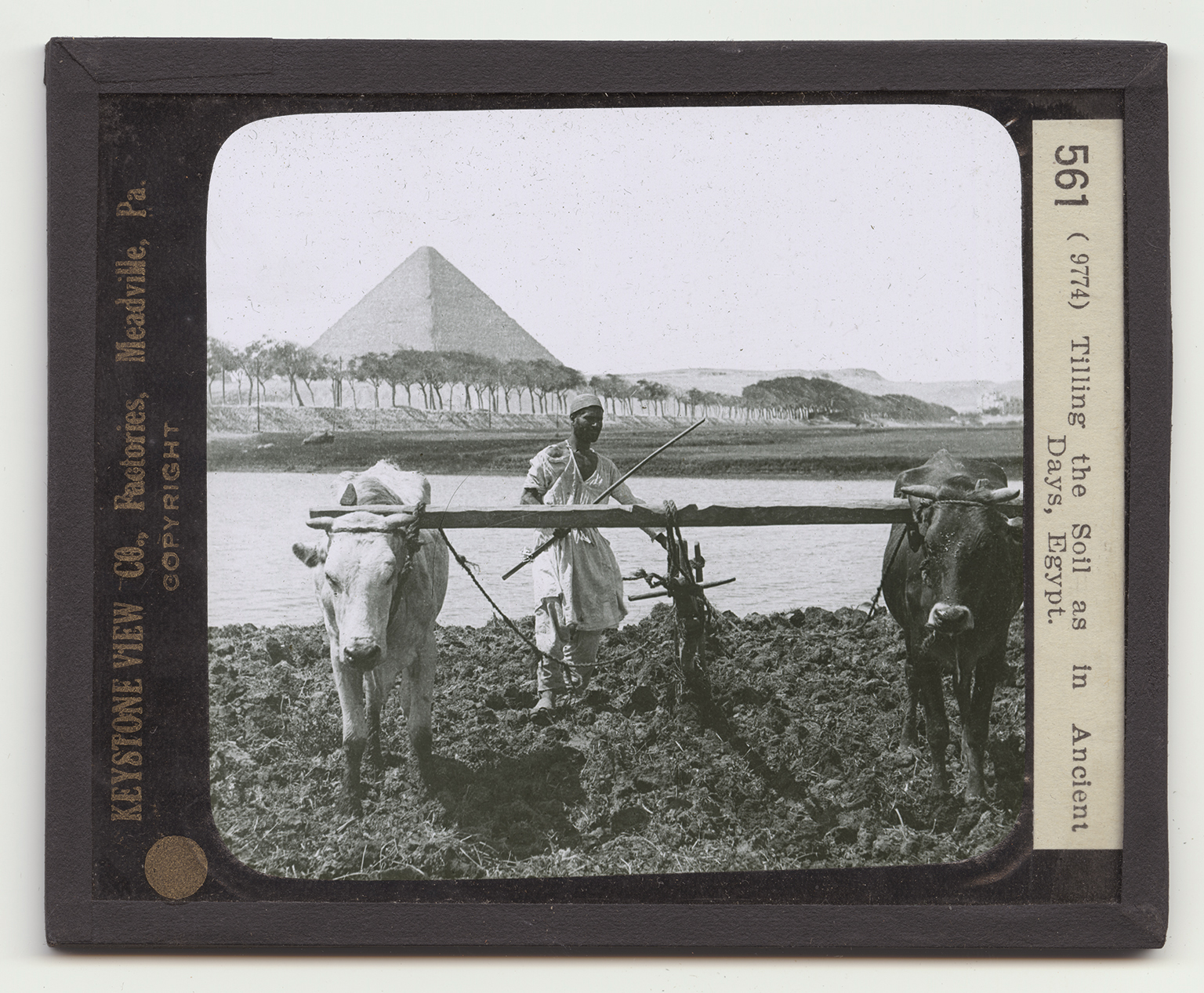
Here is an Egyptian on the banks of the Nile plowing up the soil. If a farmer in our country "broke up" his ground in this way he count not make a living. Contrast this implement of agriculture with one of our modern gang plows. This will tell you the story of improvements in farming in a very clear way. The Egyptian plow consists of a pole about 6 feet long. The lower end of this shaft is bent downward. To the bent portion a piece of iron is fastened. That is all there is to plow. It is the direct ancestor of the "single shovel" with which your great grandfather used to plow his "newground." One ox here walks on the plowed ground. His fellow is yoked several feet away. There is no reason for yoking them so far apart except that it has always been done so in Egypt. In many places along the Nile the ground is not even plowed before sowing seed. The overflow of the river leaves a rich mud behind. The na-
Card Back:
tives often plant the seed in this mud jsut a the river has left it. The pyramid in the background is several thousand years old. On or about it are crude carvings of the doings of the people at the time it was built. There you would find a picture of a plow like the one this peasant is using. Some imporvement in Egypt is being made under English rule. One of the greatest is the building of a dam at Assuan to store the flood warer of the Nile. This damn holds enough water to cover 6,400,000 acres a foot in depth. With such a beginning a great system of irrigation will be built up. Then modern farming machinery will come, and better methods of tilling the soil. But it cannot come till the natives are better educated than they now are. Find out where the Assuan dam is. What other countries are backward in farming?