Negative Number: 14753
Latitude: 38.0
Longitude: 140.0
Geographical Classification:
Asia: Japanese Empire: Japan Proper
Card Front:
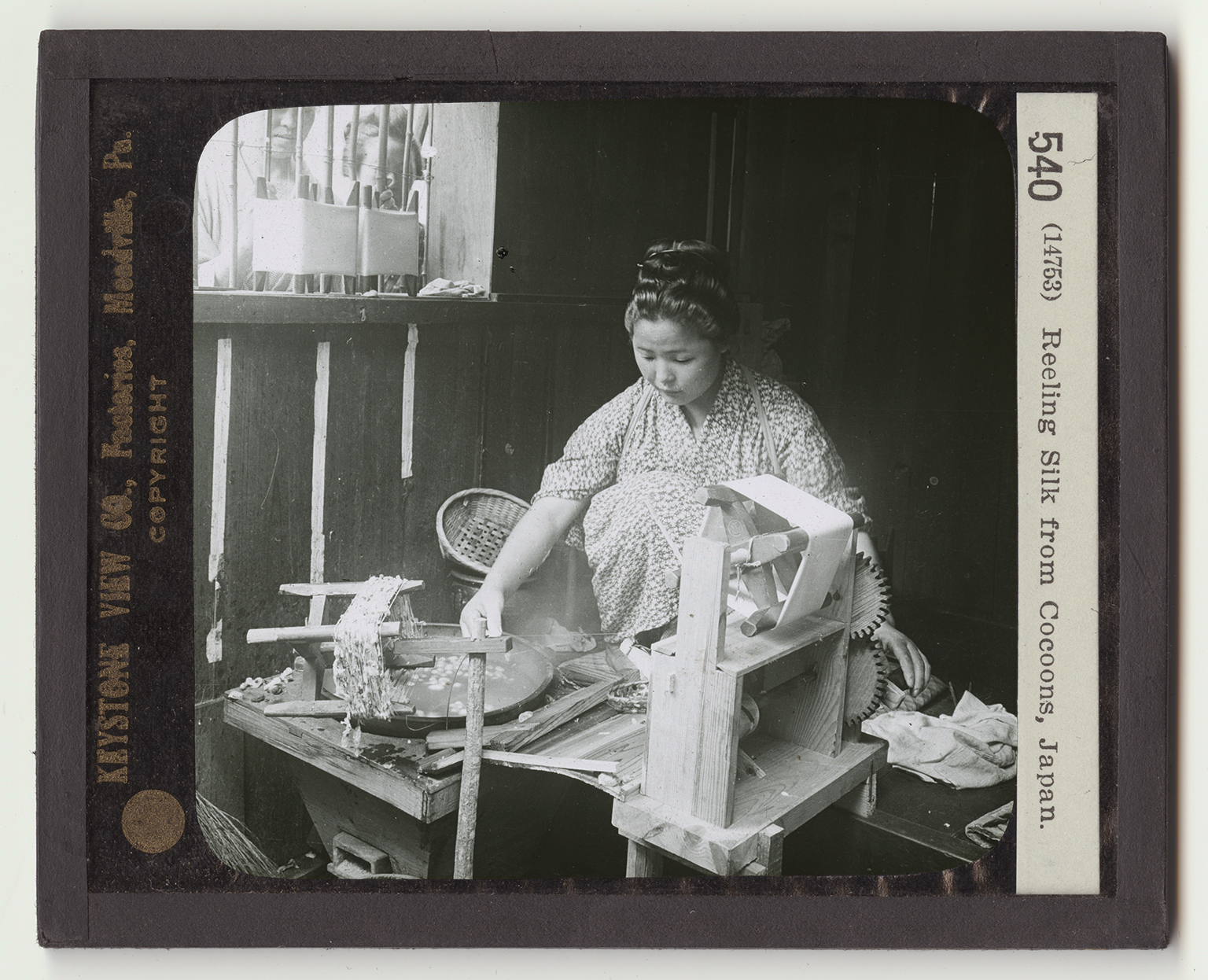
When the silkworms have finished their spinning, the cacoons are gathered up. They are taken to a room where they are heated til the worms are dead. Otherwise the worms would gnaw the threads. The cacoons are sorted and graded. Then come the spinning. The Japanese still do silk spinning in their homes. To be sure much of the silk is spun in large factories, but, as you know, hand labor is cheap in Japan. Wherever this is true you will find many of the arts carried on in homes. In this view you see a Japanese woman reeling silk from cocoons. The rough outer coverings of the cocoons are first removed. Then the proper number is dropped into a shallow pan of water. The water dissolves the sticky substance that holds the threads together. The woman starts the threads of a number of cocoons on the spindle. The number
Card Back:
she chooses depends on the size of the thread she wants. She may make a fine thread with only 5 or 6 strands; or she may make a coarse thread with 15 or 20 strands, all the same size. As soon as the tiny strands from the different cocoons are brought together they stick and form a thread. To bring them together firmly, they pass through a tiny hole in an agate. Observe the thread the woman is guiding with her right hand. With the left hand she slowly winds the thread on the spindle. When the strand of a cocoon is reeled, another is fastened to its end. Study the machine. Note the looms in the window, drying. The Japanese on the outside are watching the woman have her picture taken. Observe the long, shapely fingers of the woman. The Japanese have nimble fingeers. This accounts in part for their skill in the hand crafts.