Negative Number: 14791
Latitude: 35.0
Longitude: 136.0
Geographical Classification:
Asia: Japanese Empire: Japan Proper
Card Front:
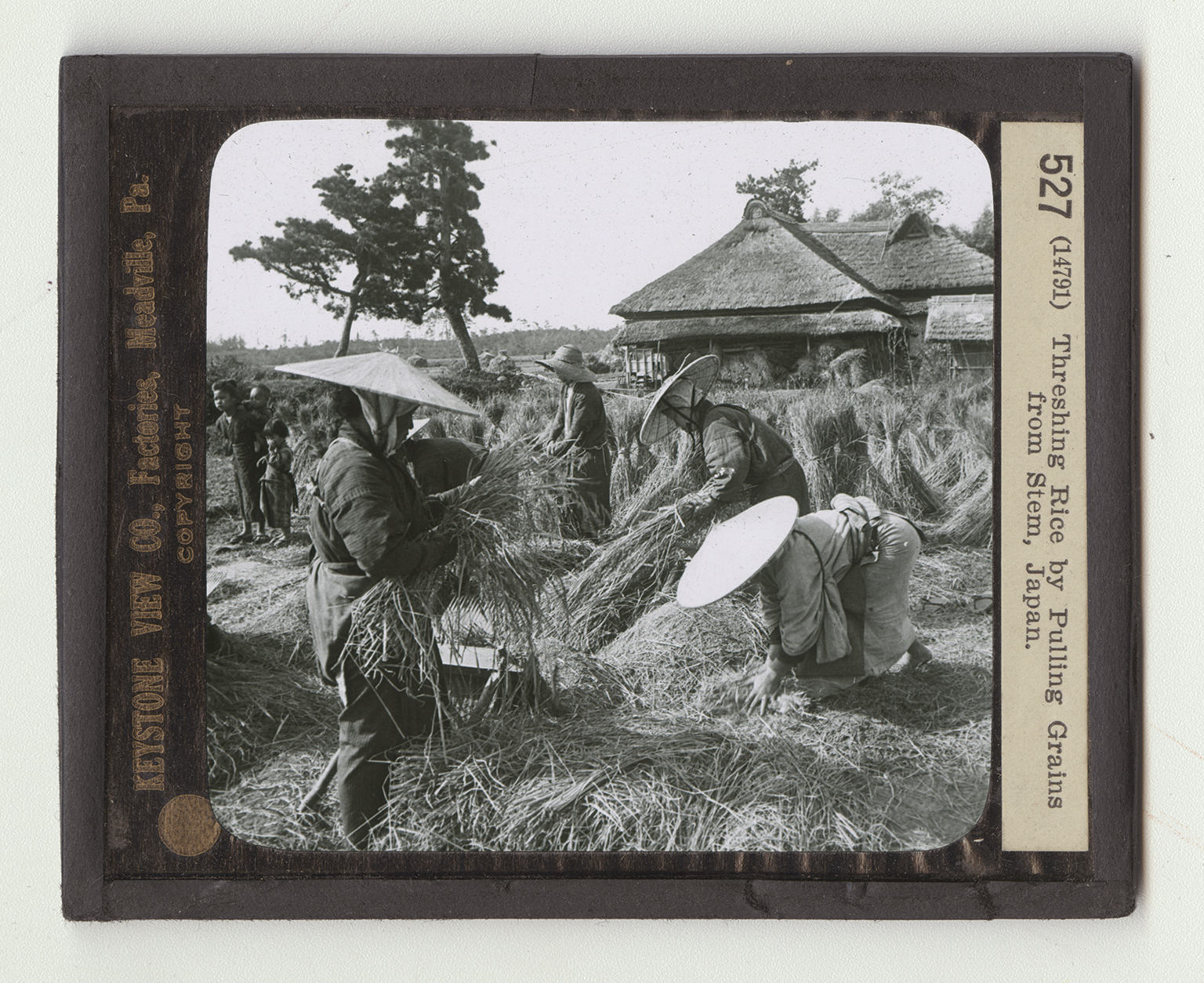
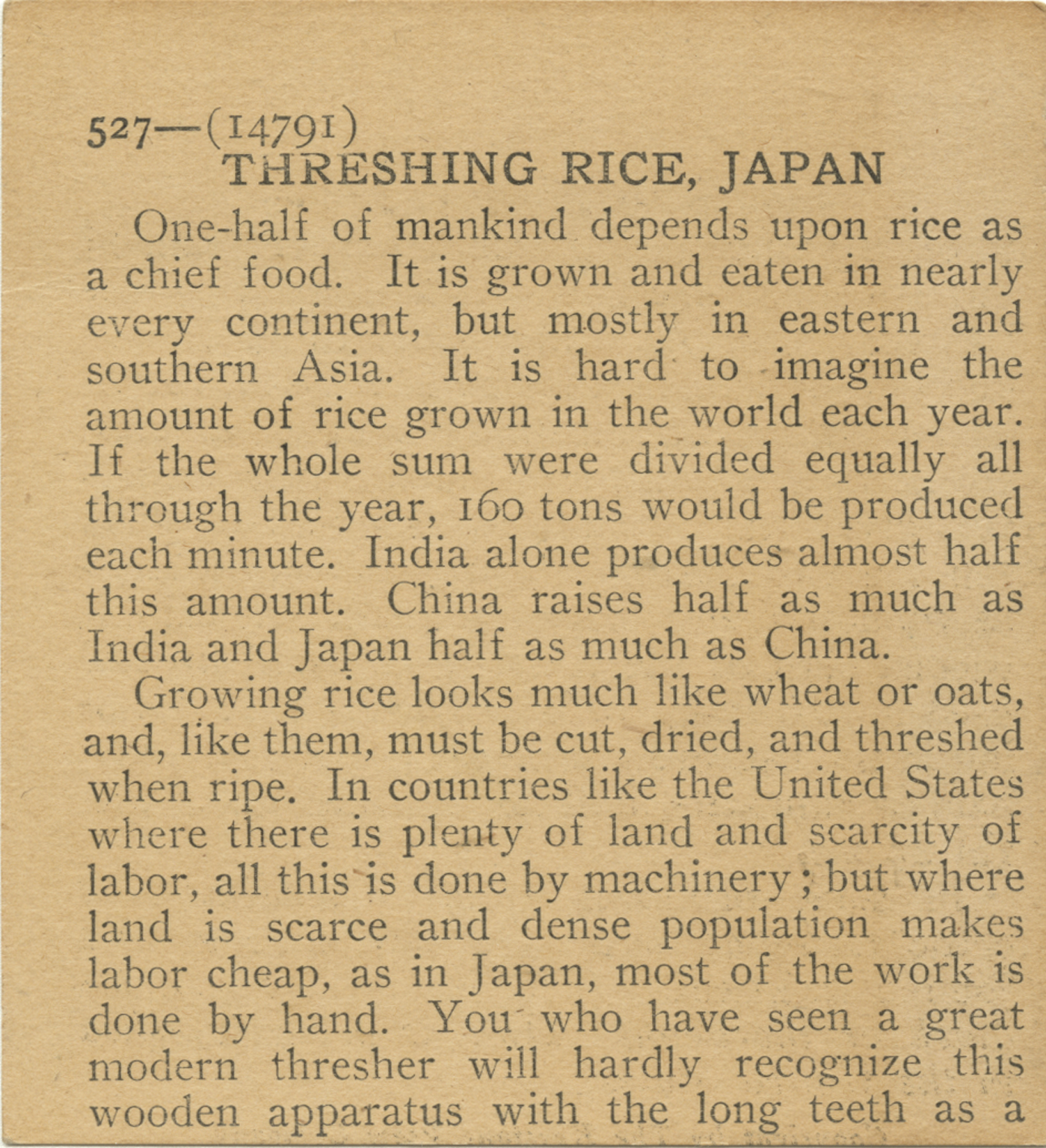
One-half of mankind depends upon rice as a chief good. It is grown and eaten in nearly every continent, but mostly in eastern and southern Asia. It is hard to imagine the amount of rice grown in the world each year. If the whole sum were divided equally all through the year, 160 tons would be produced each minute. India alone produces almost half this amount. China raises half as much as India and Japan half as much as China. Growing rice looks much like wheat or oats, and, like them, must be cut, dried, and threshed when ripe. In countries like the United States where there is plenty of land and scarcity of labor, all this is done by machinery; but where land is scarce and dense population makes labor cheap, as in Japan, most of the work is done by hand. You will have seen a great modern thresher will hardly recognize this wooden apparatus with the long teeth as a
Card Back:
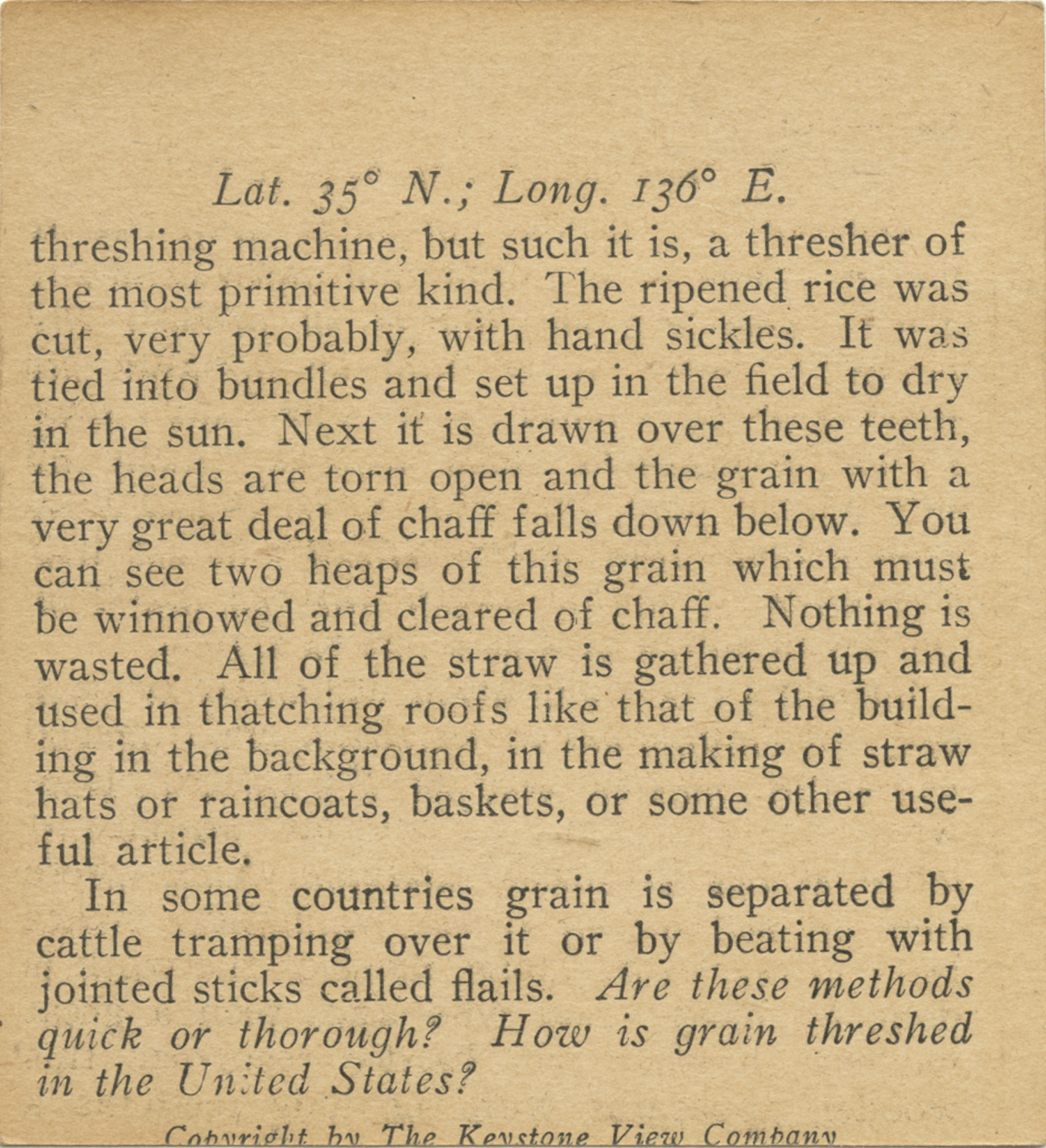
threshing machine, but such it is, a thresher of the most primitive kind. The ripened rice was cut, very probably, with hand sickles. It was tied into bundles and set up in the field to dry in the sun. Next it is drawn over these teeth, the heads are torn open and the grain with a very great deal of chaff falls down below. You can see two heaps of this grain which must be winnowed and cleared of chaff. Nothing is wasted. All of the straw is gathered up and used in thatching roofs like that of the building in the background, in the making of straw hats or raincoats, baskets, or some other useful article. In some countries grain is separated by cattle tramping over it or by beating with jointed sticks called flails. Are these methods quick or thorough? How is grain threshed in the United States?