Negative Number: 0
Latitude:
Longitude:
Geographical Classification:
Europe: Russia in Europe
Card Front:
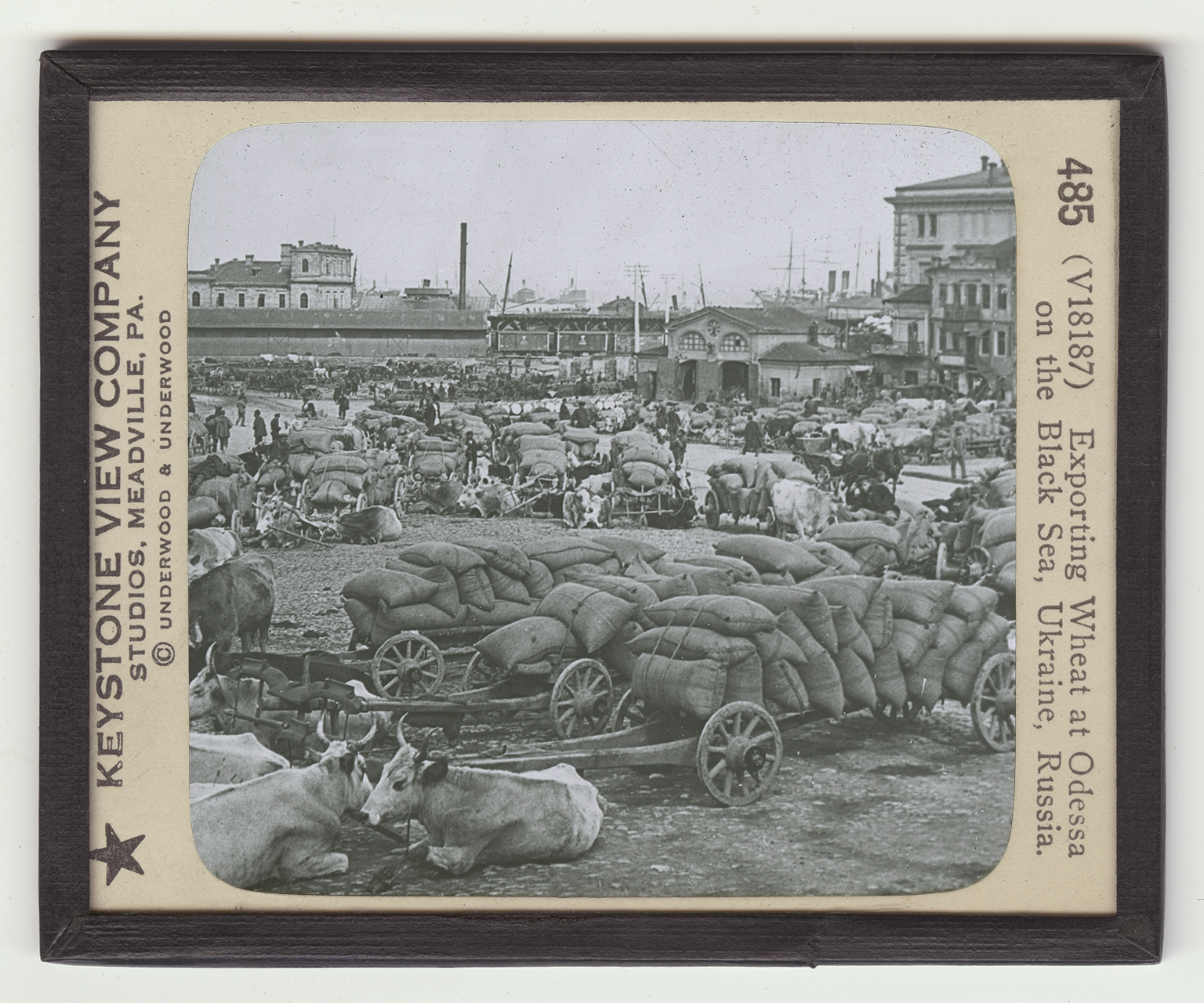
Odessa was for a long time the most important port of all Russia, because its southern location made it always free from ice, a handicap that always hampered trade of the Baltic seaports. From this city sailed the passanger and freight liners by which Russia maintained communication by way of the Suez Canal with her Pacific Ocean ports of Vladivostok and Port Arthur, as well as commerce out through the Mediterranean to the rest of the world. Her trade from Central Asia and the Caucasus and the Caspian Sea came by way of the Black Sea, with Odessa as the chief port. Round about Odessa is a highly fertile and prosperous agricultural region. Odessa is near the mouths of the rivers Dniester, Dnieper, and Bug, which flows through the most fertile land in all Russia. In their valleys is the famous black earth where most of the wheat, and much
Card Back:
of the corn, sugar beets, and barley are grown. These rivers are navigable, but as there are bars at their mouths that prevent boats passing out into the Black Sea, all the goods have to be unloaded and shipped to Odessa where there is a harbor which will take the largest ships. In normal times Russia had vast quantities of wheat for shipment and Odessa before the war was one of the greatest cities for the export of wheat in the world. The whole harbor is bordered with great elevators. While commerce is the chief industry, manufacturing has slowly developed and sugar refining, tea packing, canning, and flour milling are all important. The breaking up of Russia into various Soviet republics makes Kharkof the capital of Ukraine, though Odessa is its chief port and most important city.