Negative Number: 0
Latitude:
Longitude:
Geographical Classification:
Europe: Greece
Card Front:
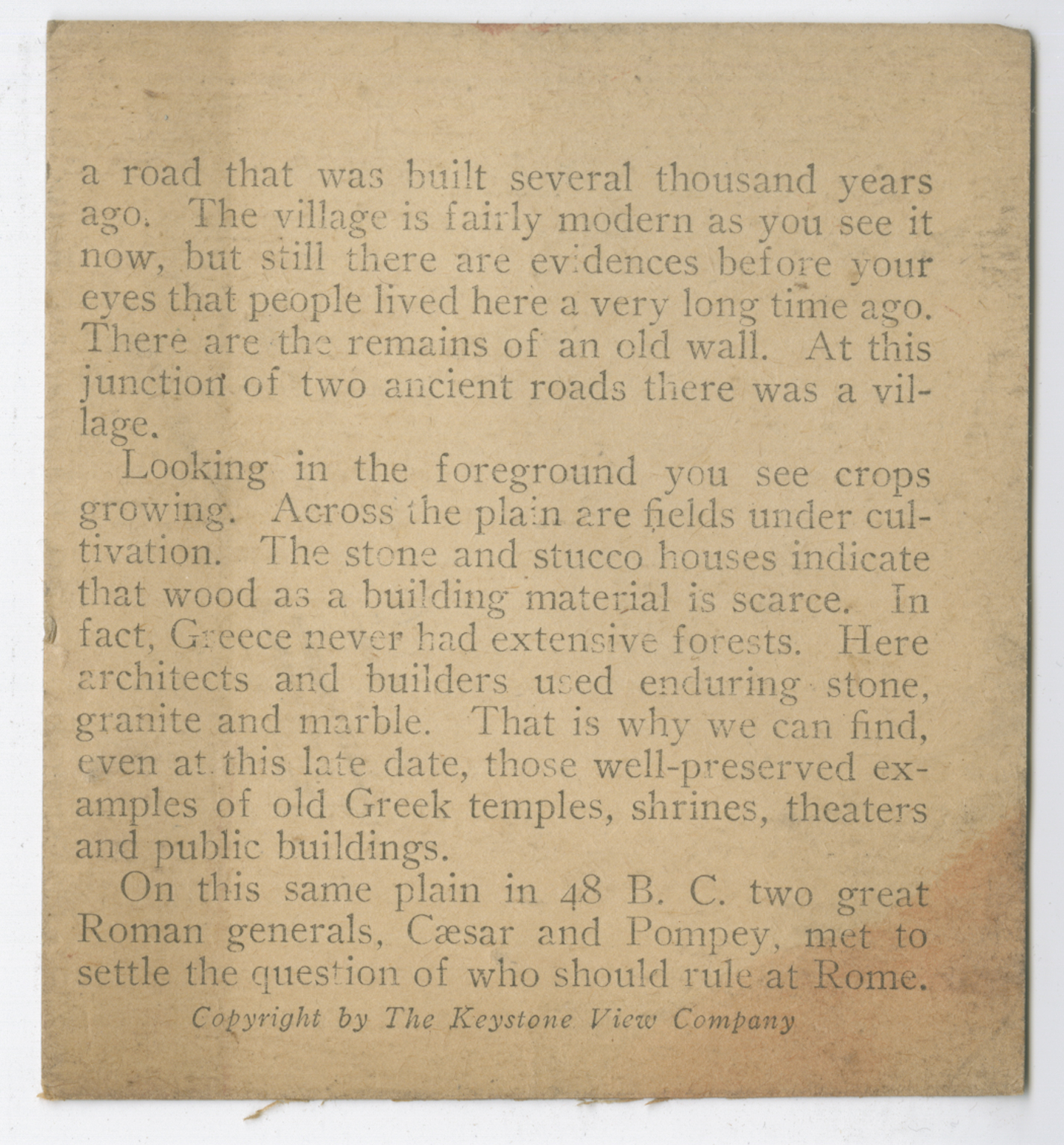
Greece is a farming country. About one-fifth of the land is cultivated, one-third is in pasture and meadow, and one-eight in forest. The rest is waste. The country is mountainous, but also has many low hills, slopes, valleys, and broad level plains. The valleys and plains are devoted to agriculture for here is found the fertile soil that has been brought down from the mountains by the streams. The slopes and foothills are used for grazing grounds for the flocks of sheep and goats. The early civilization of Greece developed in the valleys and on the plains for it was here that their food was raised and their homes built. Here also was space for the growth of the towns and villages in the cities. Through the valleys and across the plains extended the great highways of travel. In this view you are looking across the plain of Pharsalia. That white streak at the right is
Card Back:
a road that was built several thousand years ago. The village is fairly modern as you see it now, but still there are evidences before your eyes that people lived here a very long time ago. There are the remains of an old wall. At this junction of two ancient roads there was a village. Looking in the foreground tou see crops growing. Across the plain are fields under cultivation. The stone and stucco houses indicate the wood as a building meterial is scarce. In fact, Greece never had extensive forests. Here architects and builders used enduring stone, granite and marble. That is why we can find even at this late date, those well-perserved examples of old Greek temples, shrines, theaters and public buildings. On this same plain in 48 B.C. two great Roman generals. Caesar and Pomey, met to settle the question of who should rule at Rome.