Negative Number: 7134
Latitude: 38.0
Longitude: 23.0
Geographical Classification:
Europe: Greece
Card Front:
Greece is chiefly a peninsula extending into the Mediterranean Sea. It is divided into two parts by the Gulf of Corinth, which reaches almost across it. On the south shore of this gulf is the city of Corinth with about 5,000 inhabitans. The city on this site dates from 1858. The ancient city of the same name was 3 1/2 miles southwest. The phoenicians, those famous sea traders, made up a goodly part of the early people. Because of them, and because of its location, the city was always strongly commercial. It was on the line of travel from Athens to Sparta, the two chief city-nations of Greece. It traded with both. And while Athens became noted for its art and its schools and Sparta for its warriors. Corinth was the exchange place for goods. When Athens became very powerful, Corinth joined Sparta in war against the north-
Card Back:
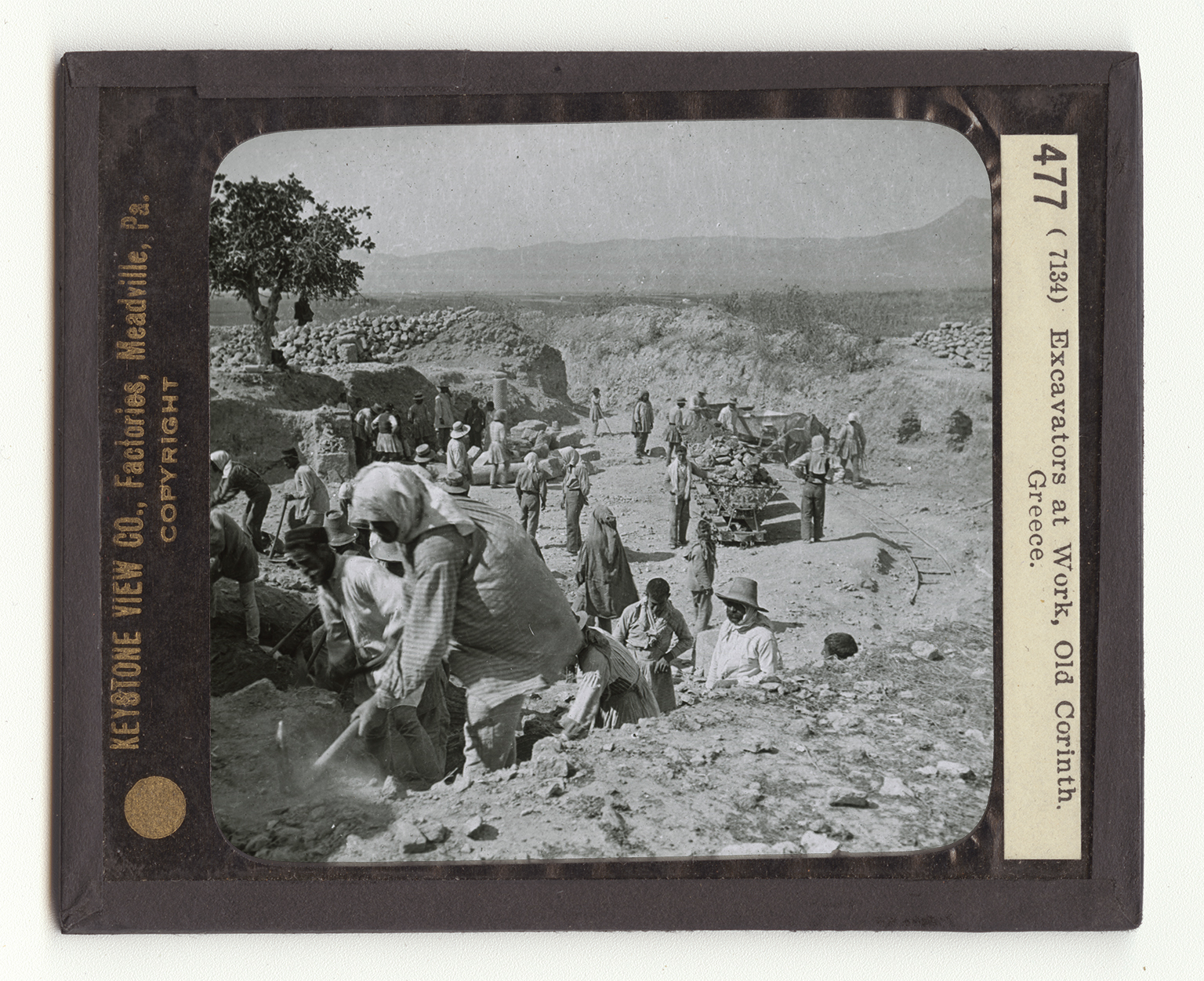
ern city. Later it warred against Sparta. But Corinth was never noted for its soldiers. After the fall of Greece, Corinth was under the rules of Macedonia. Then it passed into Roman hands. It rebelled against Rome, and the city was destroyed. It was rebuilt by Caeser, and became one of the great commercial cities of the East. During the period St. Paul wrote the letters to the Corinthians that you find in the New Testament. Later the Turks captured the city, and its glory departed. The old city is now a ruin. The workmen you see are busy digging in the ruins to discover the wonfers of the past ages. They are working under the direction of the American School of Classical Studies in Athens. The digging is done with great care, and all the dirt is sifted so that no piece of stone is thrown away.