Negative Number: 13701
Latitude: 44.0
Longitude: 73.0
Geographical Classification:
North America: United States and Possessions (Except Asiatic Possessions): New England States: Vermont
Card Front:
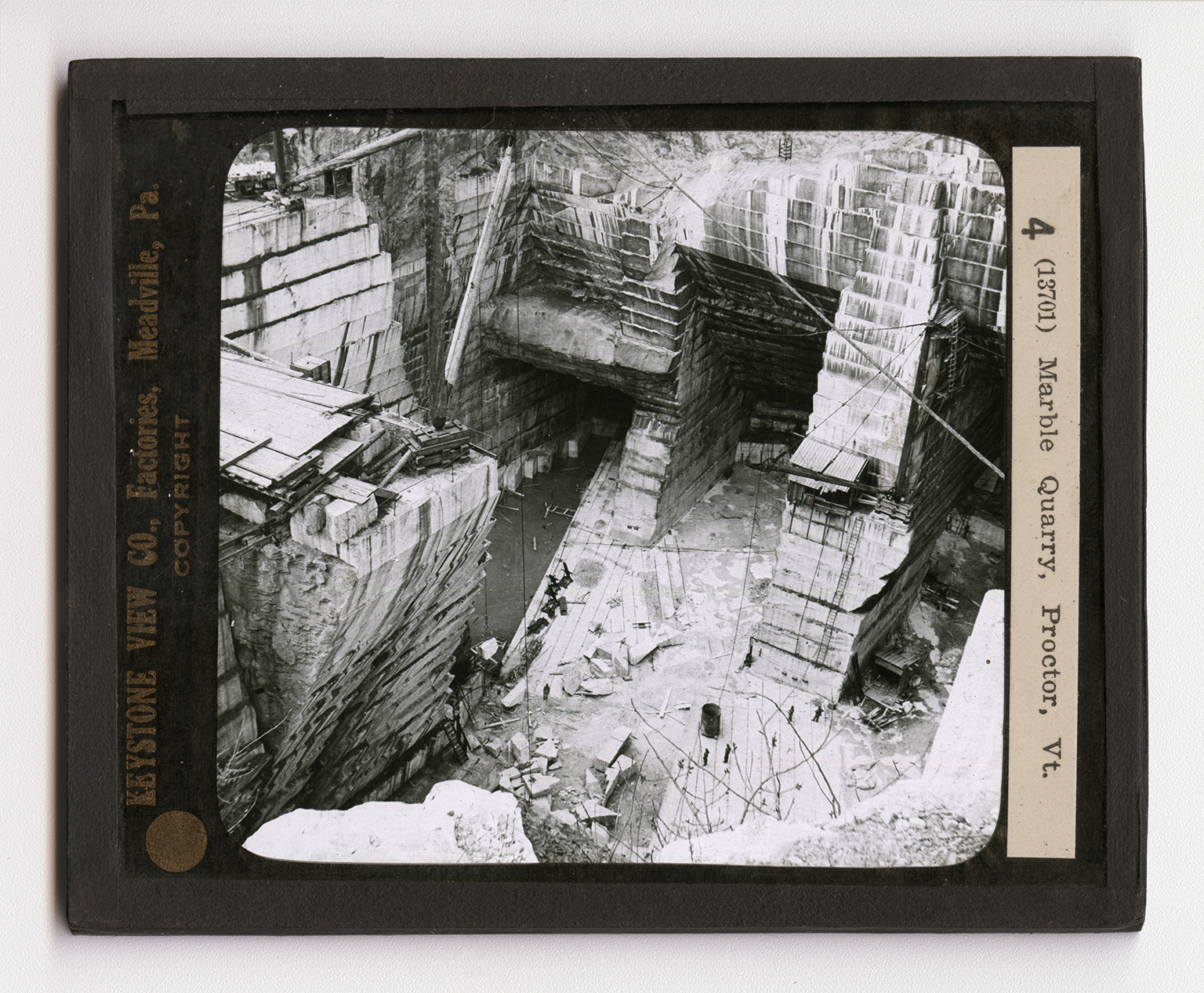
This is the largest marble quarry in the world. You can judge of the great depth of the opening by noticing the smallness of the man at the bottom of the pit. The shaft into which you are looking is only the entrance into the quarry. From it extend long tunnels which tap the marble vein in many directions. Marble is used more and more in the construction of buildings. You can hardly find a state capitol, federal post office, or large public building that is not finished in some part in marble. It is much used, too, in decorating the interior of costly dwellings, halls, etc. Mantelpieces, washstands, table tops, --these are often made of beautifully colored marble. Vermont produces over one-half of the marble of the United States. And the center of the industry is at Proctor. Tennessee and Georgia also produce a great deal. The annual value of
Card Back:
the output of the marble quarries in the United States is $7,000,000. In Vermont, the marble deposits run in a north and south direction from the northwest corner of the state to Manchester in the central southern part. The beds are from 1000 to 2000 feet in thickness. Only certain layers produce the kind of marble used in buildings or for statuary. Over 1,000,000 cubic feet of the stone are mined annually in this district. The large quarry here shown covers some 25 acres in its mills, and about 4000 men work for the Vermont Marble Company, which owns this quarry. You will observe the general manner in which the marble is quarried. Machines, called channelers, cut narrow strips into the soft stone, thereby giving the layer-like appearance to the sides of the quarry.