Negative Number: 6854
Latitude: 55.0
Longitude: 6.0
Geographical Classification:
Europe: Great Britain: Ireland
Card Front:
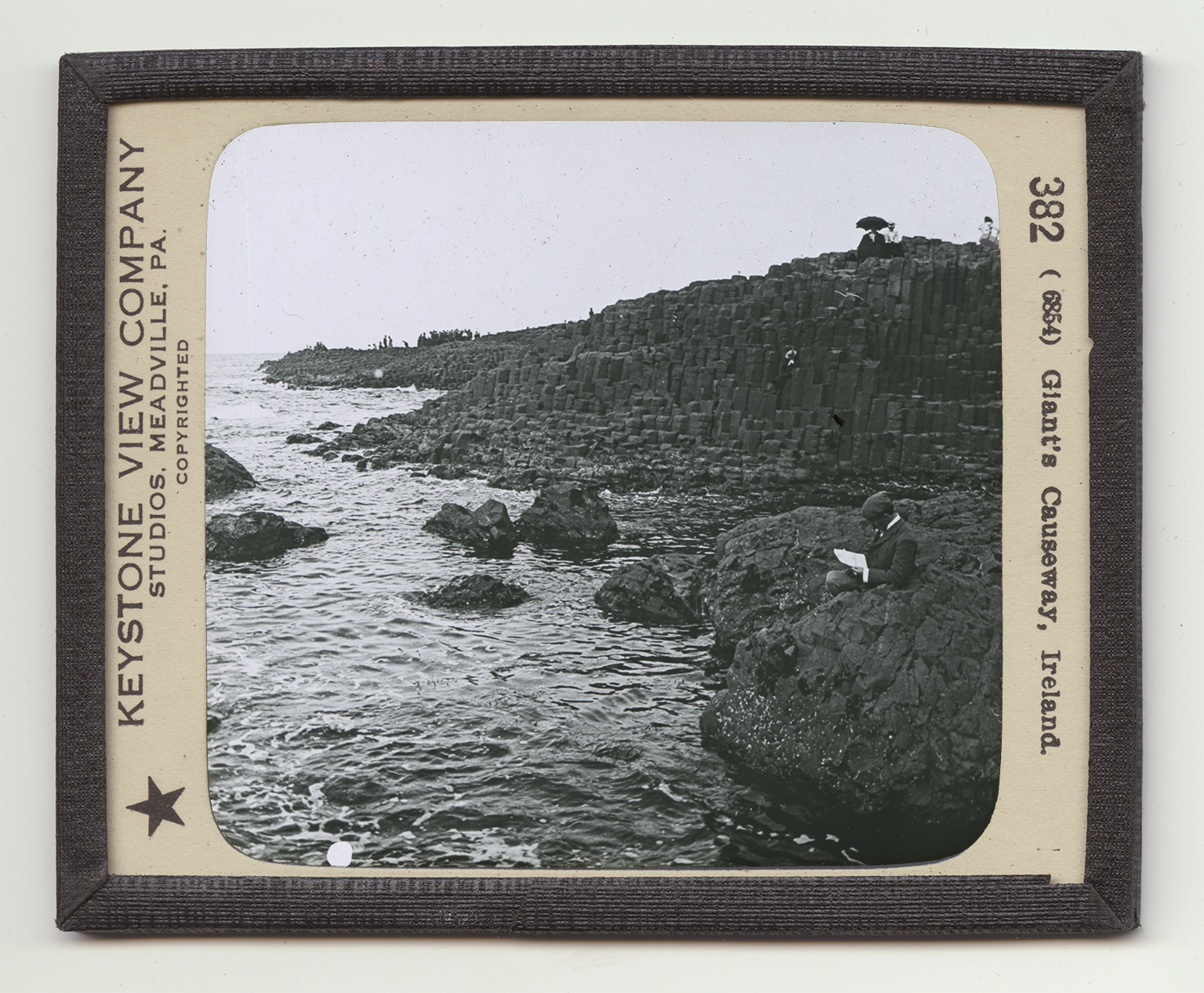
Between the northeastern coast of Ireland and the rough western shore of Scotland is North Channel. North Channel connects the Irish Sea and the Atlantic Ocean. On this Northern Channel about 40 miles northeast of Londonderry, is the Giant's Causeway. It is a remarkable group of rocks, as you see. They are really columns standing on end. They are regular, five- and six-sided stones that look as if they had been chiseled out and set down here for a road. There are about 40,000 of these columns fitted together nicely. The story goes that one Finn M'Coul or Fingal, a giant of Ireland, once bridged the North Channel to Scotland. A part of his highway still remains on the Irish coast. One tale goes that Finn built it so the giants of Scotland could come over to Ireland dry shod. Another story relates that Finn had quarreled with a Scotch giant, and built this road to go back to Scotland
Card Back:
to fight him. The story probably comes about because there is a cave with five columbs on Staffa Island, off Scotland. This cave is called Fingal's cave. The highway between the two would account for the likeness of the rocks and of the names. But the real reason is quite different. The stones are lava, called basalt. The Causeway was once a hot lava sheet. When the lava cooled it cracked in regular forms, as lava does when evenly spread. What is lava? What must have been here at one time? Groups of the stones have been named by the Irish. One bunch is called the Giant's Organ; another, Giant's Loom. What great Firth empties into the North Channel? What large Scotch city sends in ships through the North Channel not far from the Causeway?