Negative Number: 21200
Latitude: 52.0
Longitude: 1.0
Geographical Classification:
Europe: Great Britain: England
Card Front:
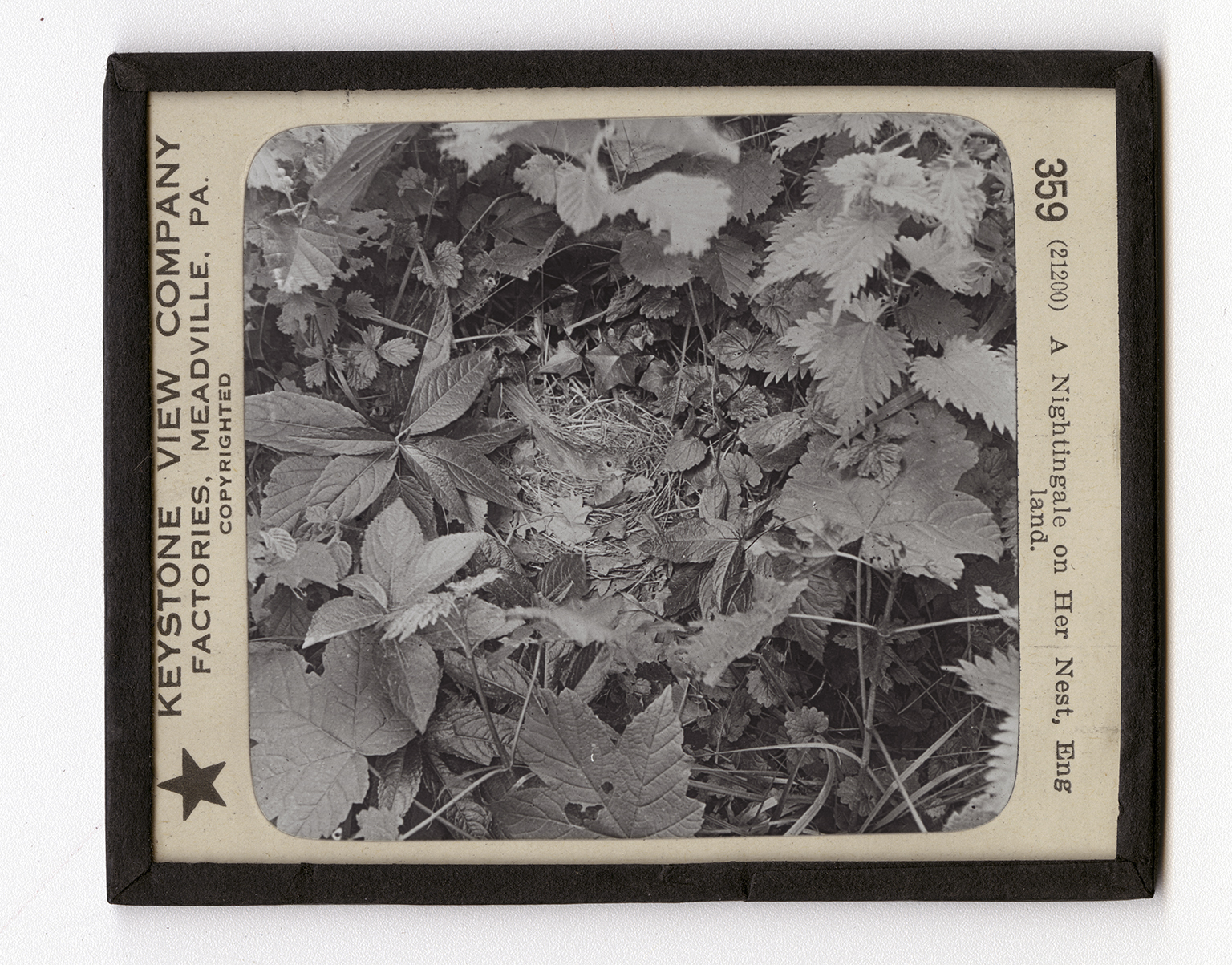
Perhaps no bird has figured in poetry so often as the nightingale. It is the bulbul of the Persian poets. It has been a favorite theme of English poets from Chaucer to Keats. Its song is sweet and full of melody, and carries a long distance. The fact that it sings after night, when all else is still, has made it popular. Here is a part of a poem that Keats wrote about it, as he listened to its night song through his open window. The bird is described as flying from one thicket to another farther away: "Adieu! adieu! thy plaintive anthem fades, Past the near meadows, over the still stream, Up the hillside, and now 'tis buried deep In the next valley-glades: Was it a vision, or a waking dream? Fled is that music:--Do I wake or sleep?" It is the male bird that sings. He sings in fine weather in the daytime as well as at night. He can be heared only from early May to the
Card Back:
middle of June, for he sings only till the young are hatched. The nest is begun in the early part of May. The birds of the species you see here are to be found only in central Europe and Africa. They go to Africa for the winter. In the spring they return to their summer haunts. They prefer thick woodsy spots in damp places. The nightingale is not a large bird. From the bill to the tip of the tail it measures only a half foot. What bird do you know of about the same size? It has a brownish back, and a buff-colored breast. Its eggs are generally brown. From 4 to 6 are laid in a nest. Of what is the nest built? Is it near the ground? Make a list of birds that nest on the ground; in bushes; in trees. How would you go about to take the picture you see here?