Negative Number: 21868
Latitude: 12.0
Longitude: 77.0
Geographical Classification:
South America: Peru
Card Front:
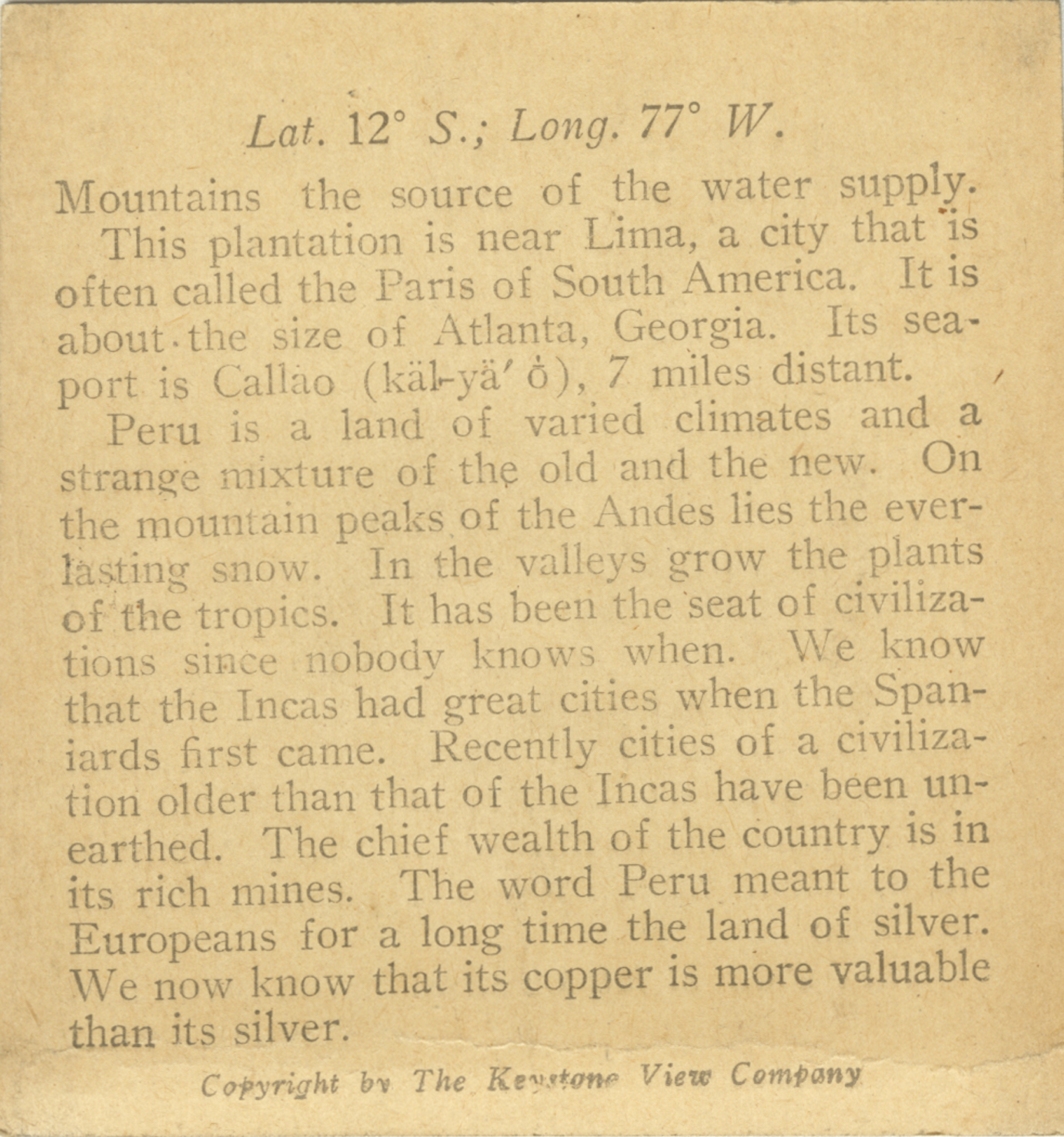
After the fields are plowed and harrowed, the next task on the sugar hacienda is to set out the cane. The ground is furrowed out in straight rows about four feet apart. The sprouts are placed along the ridges between the furros. Then the flood gates at the other end of the field are opened and the water comes rushing down. The sprouts are then planted in the thin mud. Of course these fields must be irrigated daily as it never rains and sugar cane requires plenty of water. From each joint new plants will soon spring up. It will not be necessary to replant this field for many years. Some fields have produced good cane without being replanted for as many as fifty years. Of course this is much longer than the old, plants are usually allowed to stand. This view shows beautifully the great level extent of farming land in the Peruvian Valley. In the background are ranges of the Andes
Card Back:
Mountains the source of the water supply. This plantation is near Lima, a city that is often called the Paris of South America. It is about the size of Atlanta, Georgia. Its seaport is Callao, 7 miles distant. Peru is a land of varied climates and a strange mixture of the old and the new. On the mountain peaks of the Andes lies the everlasting snow. In the valleys grow the plants of the tropics. It has been the seat of civilizations since nobody knows when. We know that the Incas had great cities when the Spaniards first came. Recently cities of a civilization older than that of the Incas have been unearthed. The chief wealth of the country is in its rich mines. The word Peru meant to the Europeans for a long time the land of silver. We now know that its copper is more valuable than its silver.