Negative Number: 21874
Latitude: 53.0
Longitude: 71.0
Geographical Classification:
South America: Chile
Card Front:
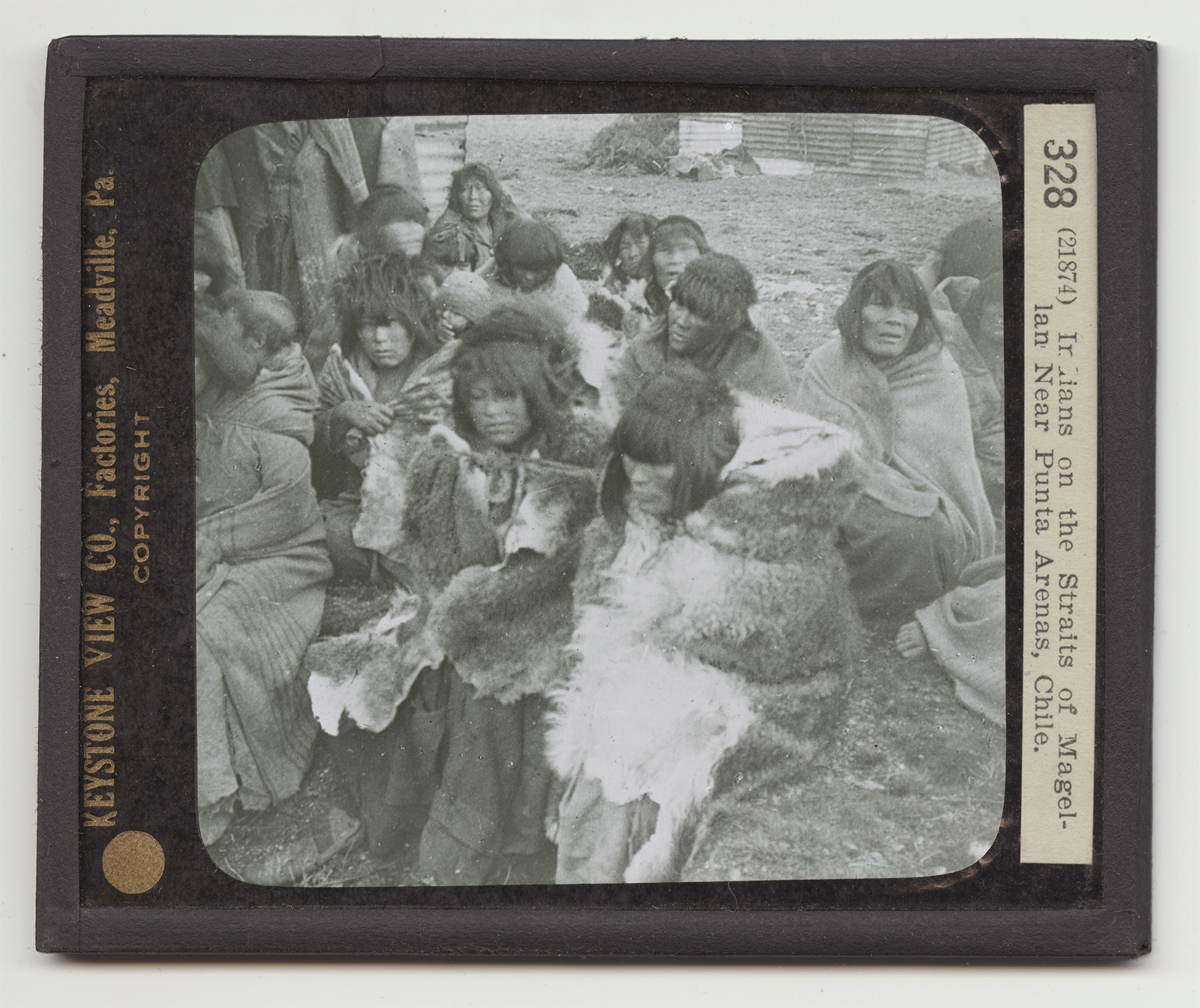
On the Straits of Magellan is located the city of Punta Arenas , the farthest southern city in the world. It has a population of about 13,000. From it are shipped wool, mutton, tallow, hides, coal, and some cereals. The sheep products are by far the most important, the wool alone being worth over $5,000,00 a year. On the island of Tierra del Fuego over a million sheep are pastured. The name of this island means "a land of fire." This name was given it because the native Indians always keep a fire going. The climate of the country is very severe. When the Indians go out in a boat, which is a hallowed-out log, they keep their fire burning in the canoe. These natives are a copper-colored people. There were Indians throughout South America when the first white men explored it, and there are still many in northern Argentina and middle
Card Back:
and central Brazil. Those in Peru, the Incas, were highly civilized. The Indians of Argentina and of southern Chile were far more warlike than their northern brethren, and probably belonged to an earlier race. The Spanish early built forts and made settlement on the Straits, but they could not conquer these people. Here you see a crowd of these Indians not far from Punto Arenas. They are an ungainly, ill-formed lot. This particular group is better dressed than many one may see in this section of the country. It is said that some of the tribes on the west side of the island go without any clothing whatever, even in the that cold climate. They are a shiftless, war like lot of savages. The Straits of Magellan were discovered in 1519 by the Portuguese sailor after woman they were named.