Negative Number: 10237
Latitude: 20.0
Longitude: 76.0
Geographical Classification:
North America: Southern Countries of North America: West Indies: Cuba
Card Front:
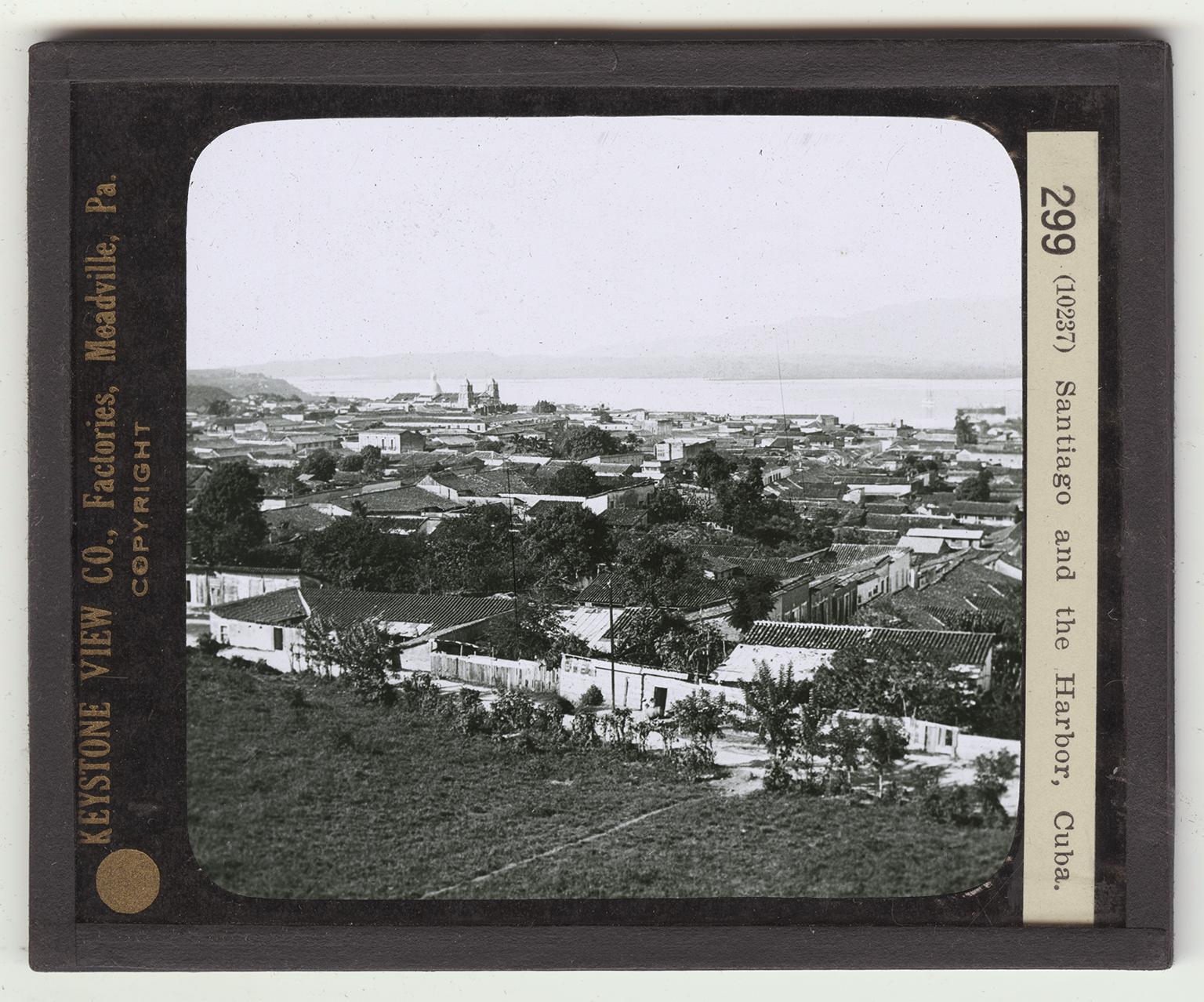
On the southeastern coast of Cuba, 470 miles from Havana, is Santiago, the second city in size and in importance on the island of Cuba. It has a population of over 60,000. It is a picturesque, old-fashioned place, with its square, red-roofed houses surrounded by wide verandes. There are flowers everywhere, bright flowers of the tropics. Its streets are narrow, but many of them are well-paved, and all are shops, and tobacco factories. In the background you have a view of its excellent harbor, one of the best in the West Indies. This harbor is almost landlocked. ALong the coast there is a range of mountains through which there breaks a narrow inlet. This inlet has a deep channel less than 200 feet wide, leading into a bay 6 miles long. The bay forms a harbor which is thoroughly protected from storms.
Card Back:
It was about Santiago that the chief interest of the Spanish American war was centered. In its harbor the Spanish squadron found refuge. About the city the Spanish troops were gathered in forts and behind barbed-wire fortifications. The American troops drove the Spanish backward towards the city in a series of battles in June, 1898. Outside the entrance of the harbor lay the American fleet, under the command of Admirals Schley and Sampson. To bottle up the fleet entirely in the harbor. Lieutentant Hobson attempted to sink the Merrimac directly in the narrow channel. The project was not successful. On July 3 the Spanish admiral, Cervera, made a dash for the open sea. In a running fight with the best vessels of the American navy, the Spanish fleet was destroyed.