Negative Number: 20518
Latitude: 23.0
Longitude: 82.0
Geographical Classification:
North America: Southern Countries of North America: West Indies: Cuba
Card Front:
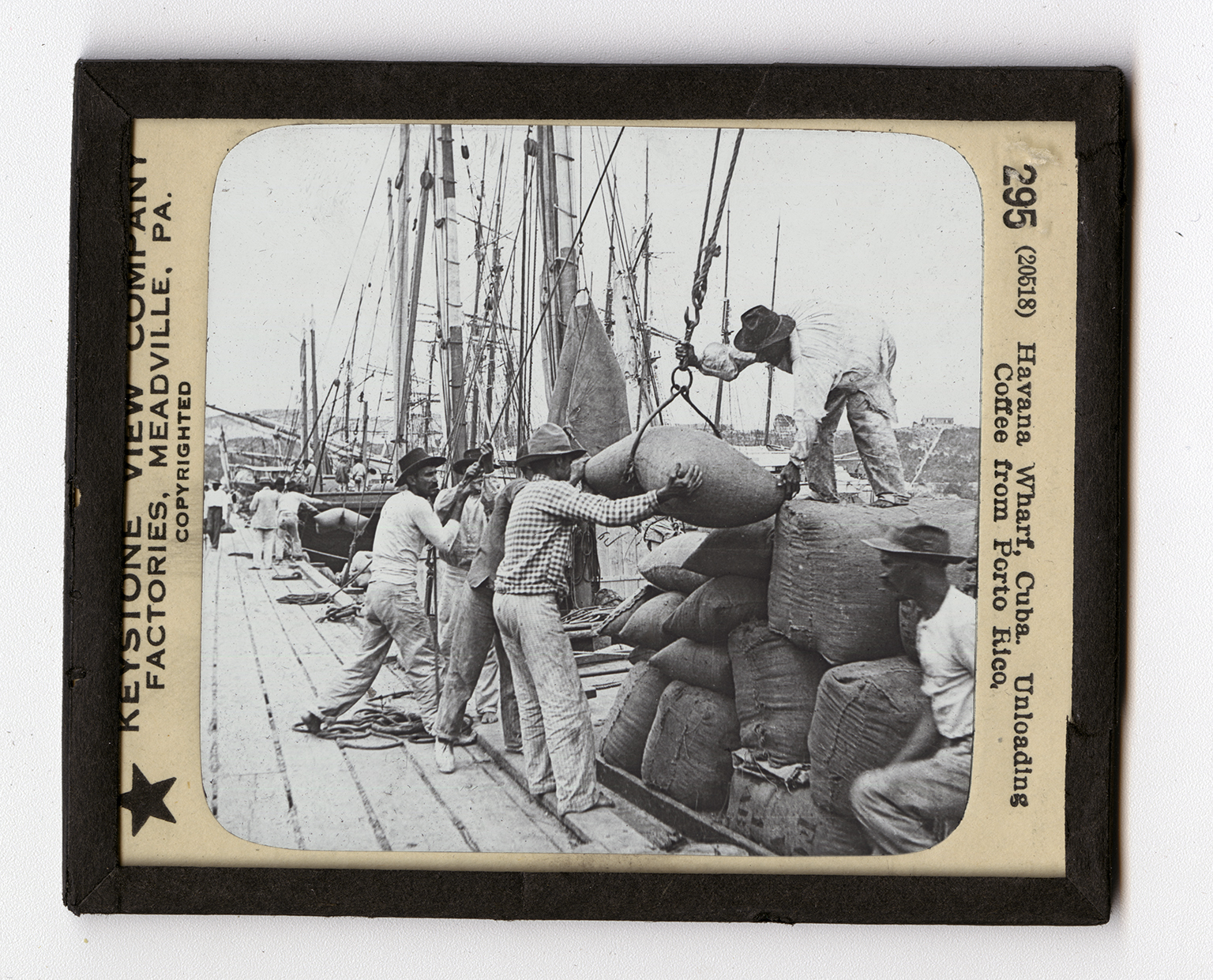
Havana is the capital of Cuba, its chief city, and the commercial center of the West Indies. Its steamship lines connect it with the ports of Mexico, Great Britain, France, Spain, Germany, and the United States. This makes the city a great exchange center for goods to be shipped from the West Indies. Sailing vessels and small steamers bring cargoes of coffee and sugar from Porto Rico to Havan. Here they are unloaded on the wharves and loaded on ocean liners bound for foreign ports. The United States received from Porto Rico over 500,000 pounds of coffee in 1916. The view shows the way in which sacks of coffee are unloaded from the small Porto Rican sailing vessels on the wharf. Each of these sacks contains 132 pounds of green coffee. Green or raw coffee is coffe that has been dried, but has not been roasted. The sacks are too heavy for
Card Back:
the men to lift easily, so they are handled by ropes running over pulleys. The wharves at Havana are usually piled high with sacks of coffee, raw sugar, and bales of tobacco. The combined exports and imports of Havana are annually valued at about $125,000,000. Havana was founded in 1519 by the Spanish. Until the Americans took possession of it in 1898, it had been a hotbed of yellow fever. During the 4 years that it was under direct American rule, the city was greatly improved. The streets were widened, sewers were laid, houses were overturned, and the city underwent a thorough cleaning. Even though its climate is hot and damp, the city is now healthful. Havana is modern in its business activities, although in appearance it is still Spanish. The city is most widely known for its tobacco industry.