Negative Number: 13882
Latitude: 46.0
Longitude: 63.0
Geographical Classification:
North America: Northern Countries of North America: Canada
Card Front:
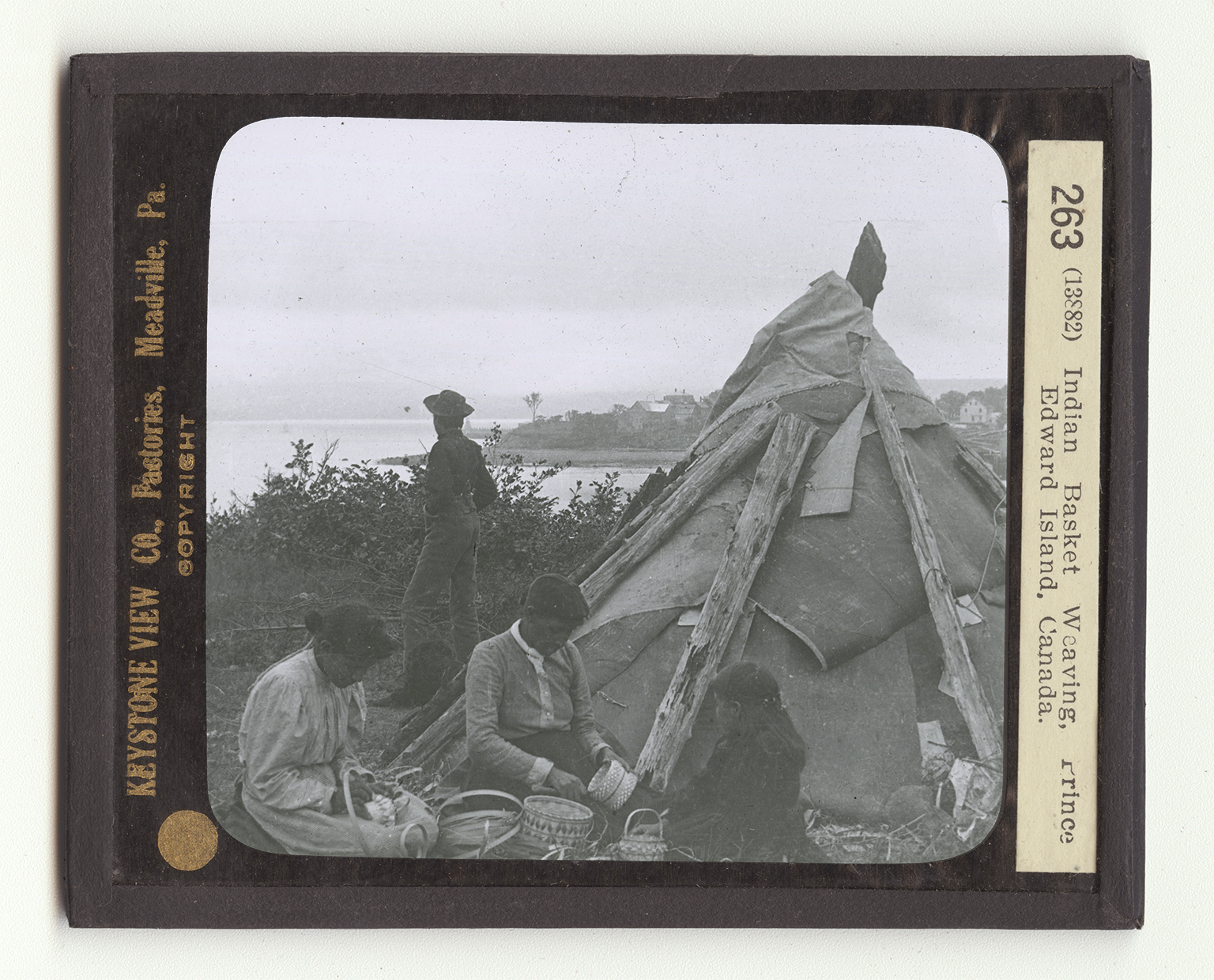
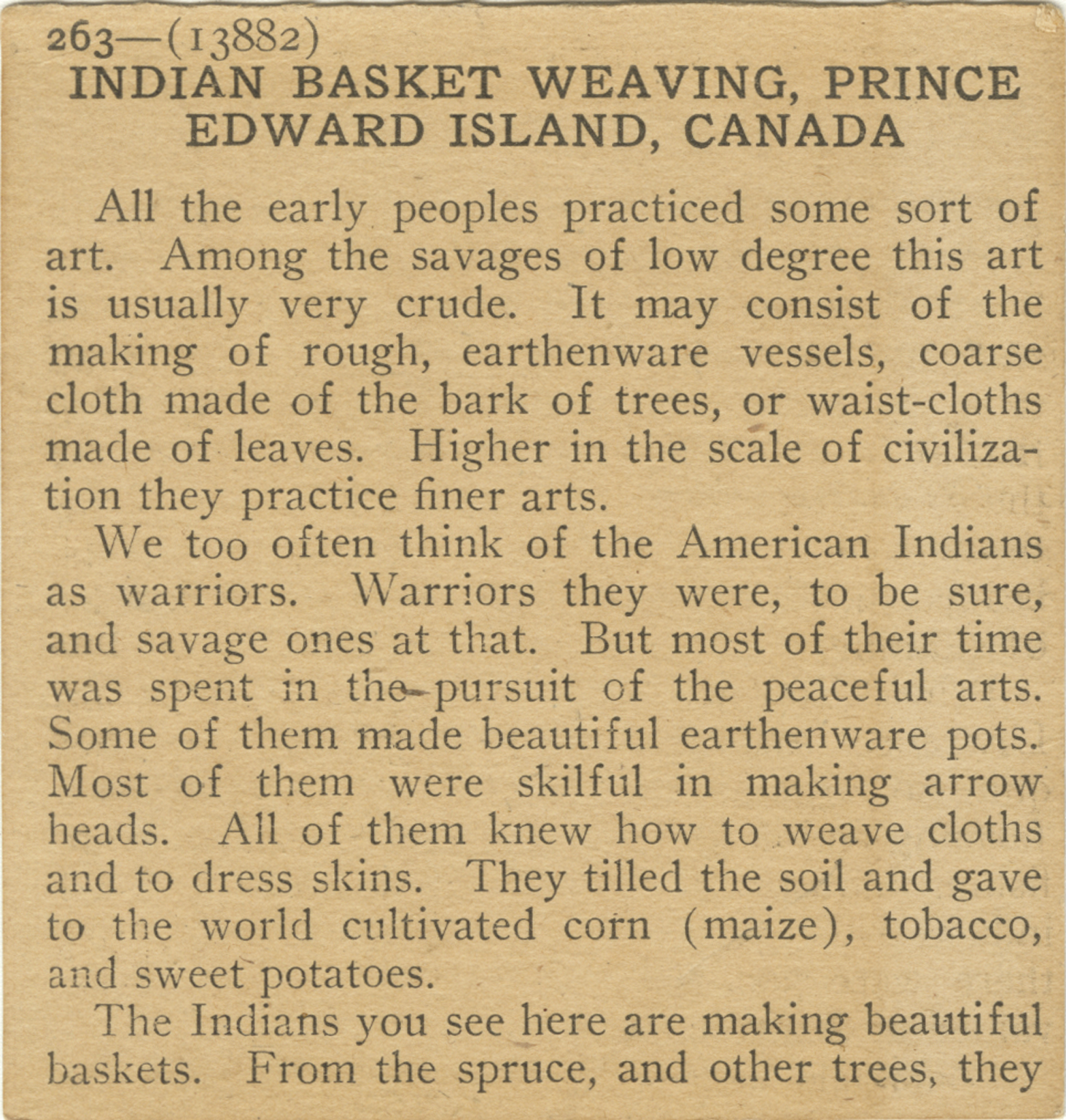
All the early peoples practiced some sort of art. Among the savages of low degree this art is usually very crude. It may consist of the making of rough, earthenware vessels, coarse cloth made of the bark of trees, or waist-cloths made of leaves. Higher in the scale of civilization they practice finer arts. We too often think of the American Indians as warriors. Warriors they were, to be sure, and savage ones at that. But most of their time was spent in the pursuit of the peaceful arts. Some of them made beautiful earthenware pots. Most of them were skillful in making arrow heads. All of them knew how to weave cloths and to dress skins. They tilled the soil and gave to the world cultivated corn (maize), tobacco, and sweet potatoes. The Indians you see here are making beautiful baskets. From the spruce, and other trees, they
Card Back:
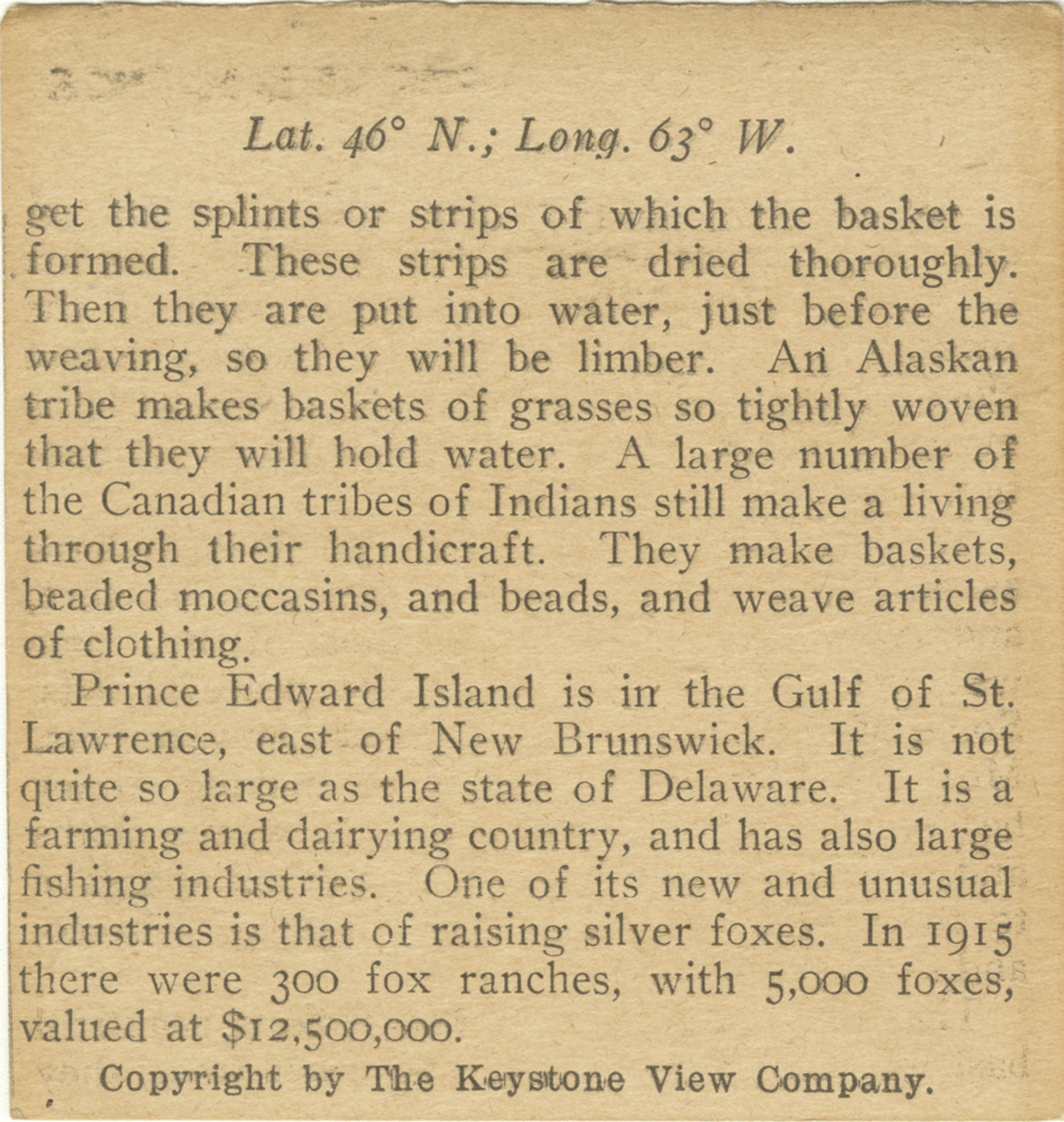
get the splints or strips of which the basket is formed. These strips are dried thoroughly. The they are put into water, just before the weaving, so they will be limber. An Alaskan tribe makes baskets of grasses so tightly woven that they will hold water. A large number of the Canadian tribes of Indians still make a living through their handicraft. They make baskets, beaded moccasins, and beads, and weave articles of clothing. Prince Edward Island is in the Gulf of St. Lawrence, east of New Brunswick. It is not quite so large as the state of Delaware. It is a farming and dairying country, and has also large fishing industries. One of its new and unusual industries is that of raising silver foxes. In 1915 there were 300 fox ranches, with 5,000 foxes, valued at $12,500,000.