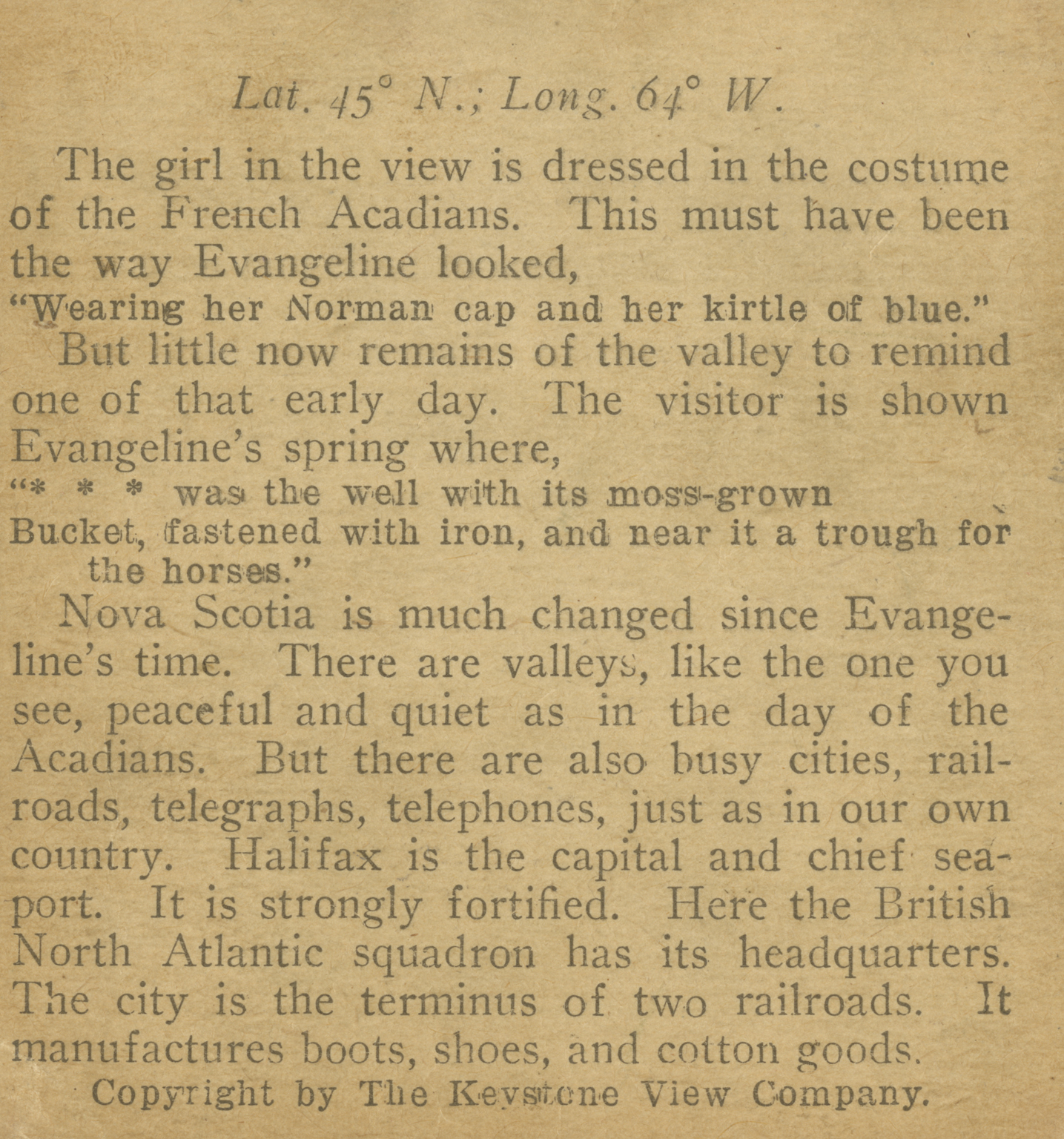
Negative Number: 13895
Latitude: 15.0
Longitude: 64.0
Geographical Classification:
North America: Northern Countries of North America: Canada
Card Front:
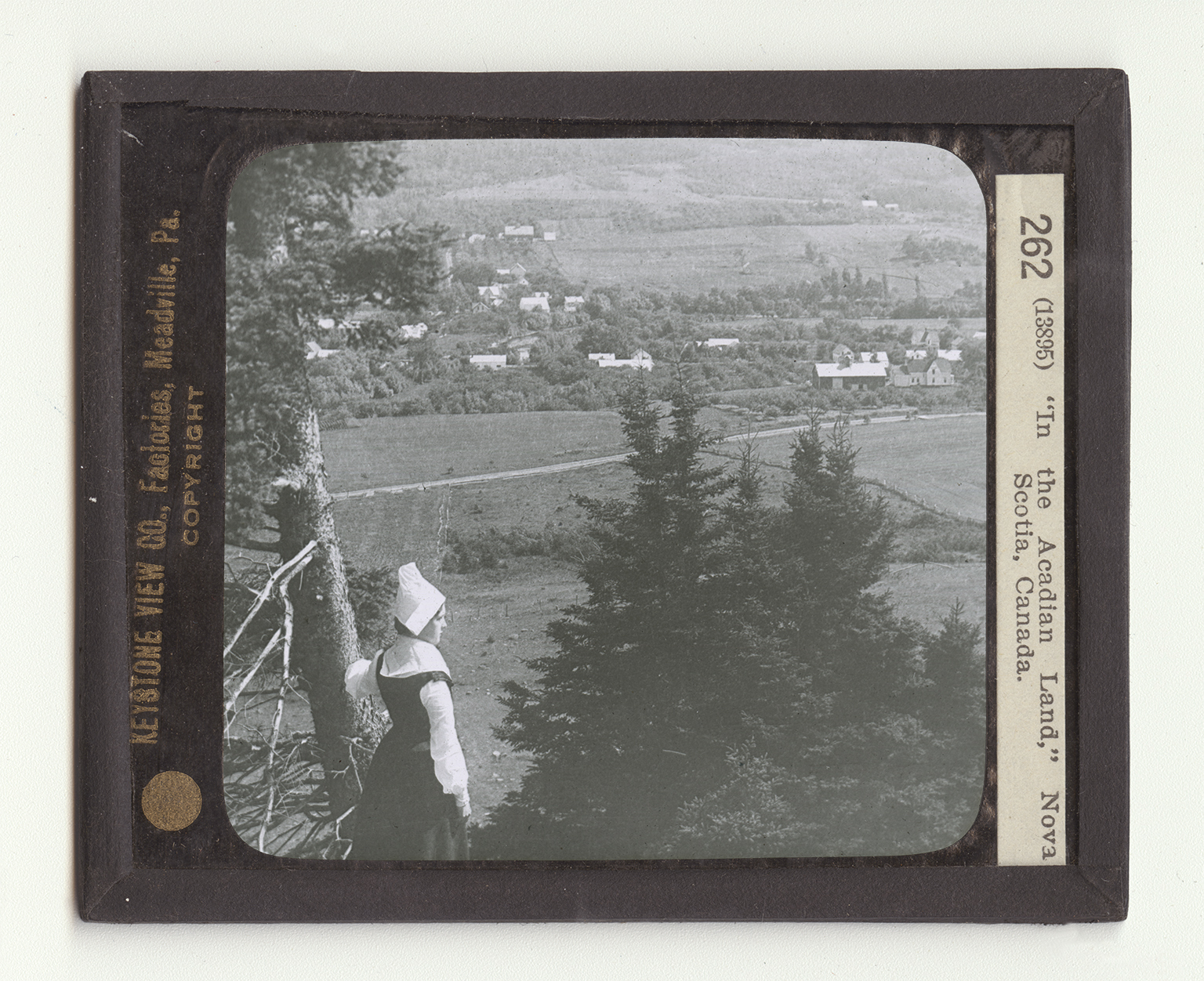
"In the Acadian land, on the shores of the Basin Minas, Distant, secluded, still the little village of Gran Pré Lay in the fruitful valley. Vast meadows stretched to the eastward, Giving the village its name, and pasture to flocks without number. ***Westward and south there were fields of flax, and orchards and cornfields Spreading afar and unfenced o'er the plain;*** There, in the midst of its farms, reposed the Acadia village." This is the way Longfellow describes, in Evangeline, the country here shown. In Evangeline's time it was the home of the French peasants. When England took the Canadian colonies from France, these French settlers refused to swear their loyalty to England. The English seize them, put them in ships, and carried them to different places. Evangeline tells a pitiful tale of their separation and wandering.
Card Back:
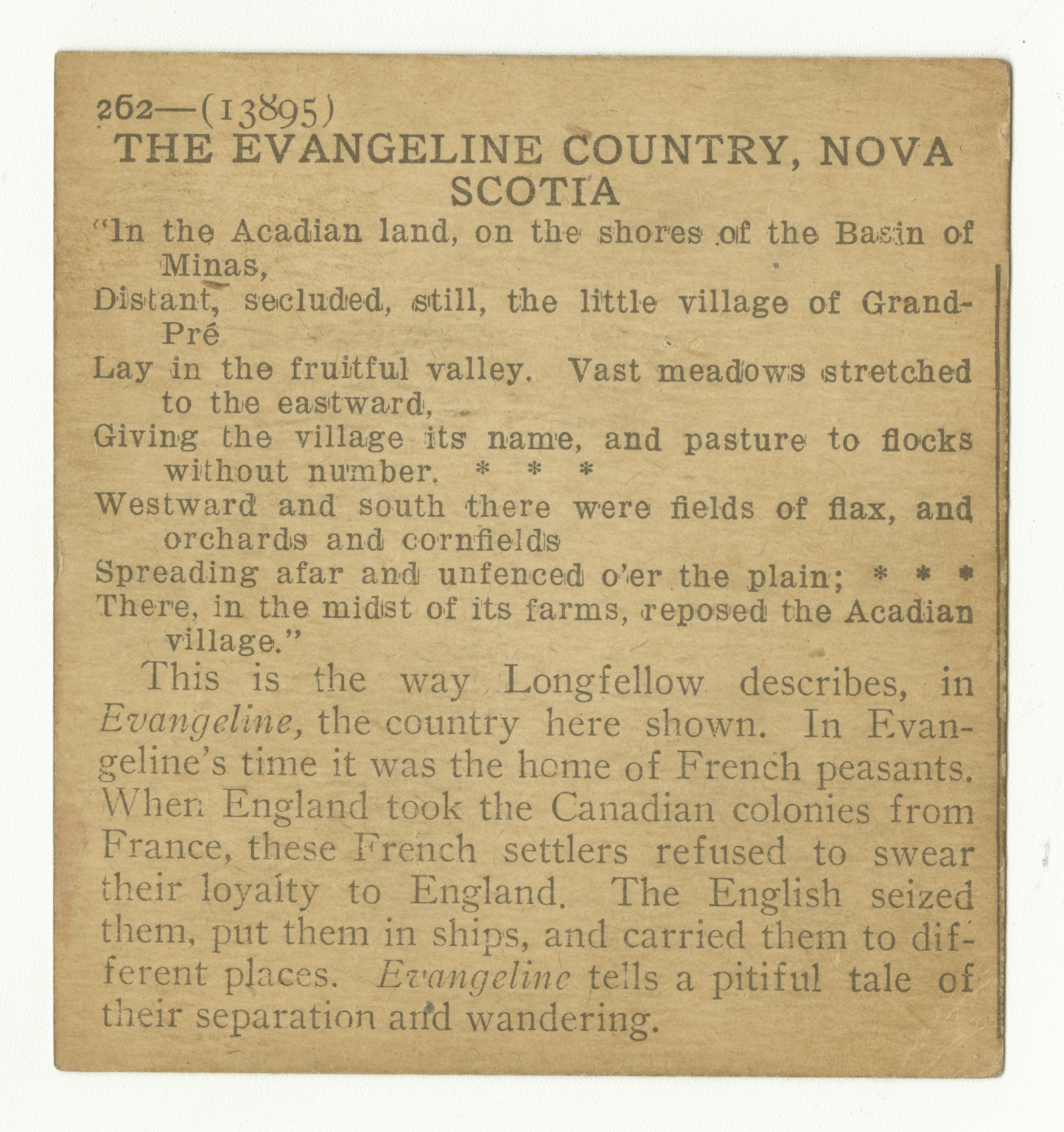
The girl in the view is dressed in the costume of the French Acadians. This must have been the way Evangeline looked. "Wearing her Norman cap and her kirtle of blue." But little now remains of the valley to remind one of that early day. The visitor is shown Evangeline's spring where, "*** was the well with its moss-grown Bucket, fastened with iron, and near it a trough for the horses." Nova Scotia is much changed since Evangeline's time. There are valleys, like the one you see, peaceful and quiet as in the day of the Acadians. But there are also busy cities, railroads, telegraphs, telephones, just as in our country. Halifax is the capital and chief sea-port. It is strongly fortified. Here the British North Atlantic squadron has its headquarters. The city is the terminus of two railroads. It manufactures boots, shoes, and cotton goods.