Negative Number: 10264
Latitude: 18.0
Longitude: 66.0
Geographical Classification:
North America: United States and Possessions (Except Asiatic Possessions): Outlying Possessions of the United States (Except the Philippines and Guam): Porto Rico
Card Front:
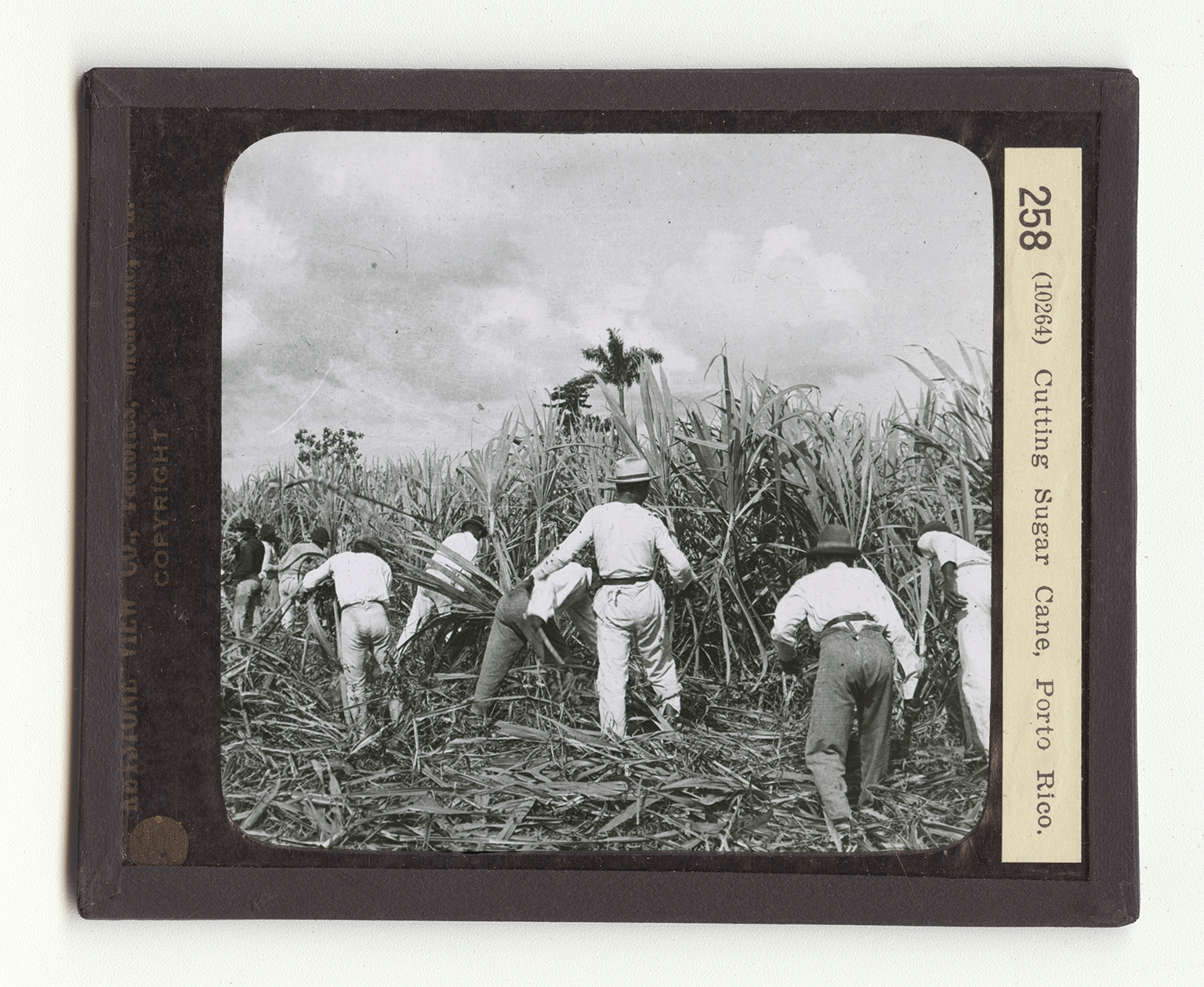
Porto Rico is one of the West Indies. The West Indies have been noted for a long period of time for their production of sugar. This sugar comes from the cane which is grown chiefly on the plantations of Cuba and Porto Rico. The view here shows a crowd of workmen busy harvesting the cane. It is in the spring of the year, because the cane ripens in the West Indies from January to May. In the rainy season the cane has been planted by putting portions of the stalk in a deep furrow. At every joint of the stalk there spring up the sprouts of young cane. This is cultivated during its growing season to keep the weeds down and the soil loose. The busy time, however, in the cane fields is at harvest. Each harvester is armed with a sickle or a knife with which he fells an armful of stalks. He pulls the leaves from the stalks, and piles the stalks in bunches. These are gathered
Card Back:
up by teamsters who haul them to a press. There the sweet juice is squeezed out between the steel rollers of the compress. The juice is then put inot tanks and boiled until the watery part has evaporated and the sugar particles left behind. These particles are the raw sugar of commerce. The raw sugar is shipped to large cities where refineries are. In these refineries it is worked and reworked until it becomes the sugar you purchase. The leaves which these men have pulled off the stalks are gathered up on most plantations to serve for cattle feed. There is so much to be done during the cane harvest that the women often help the men in the fields. Observe the palm tree in the background. Notice how the workman's sleeve is worn by catching the falling cane upon it. How tall is the sugar cane here pictured?