Negative Number: 20889
Latitude: 9.0
Longitude: 80.0
Geographical Classification:
North America: United States and Possessions (Except Asiatic Possessions): Outlying Possessions of the United States (Except the Philippines and Guam): Panama, C. Z.
Card Front:
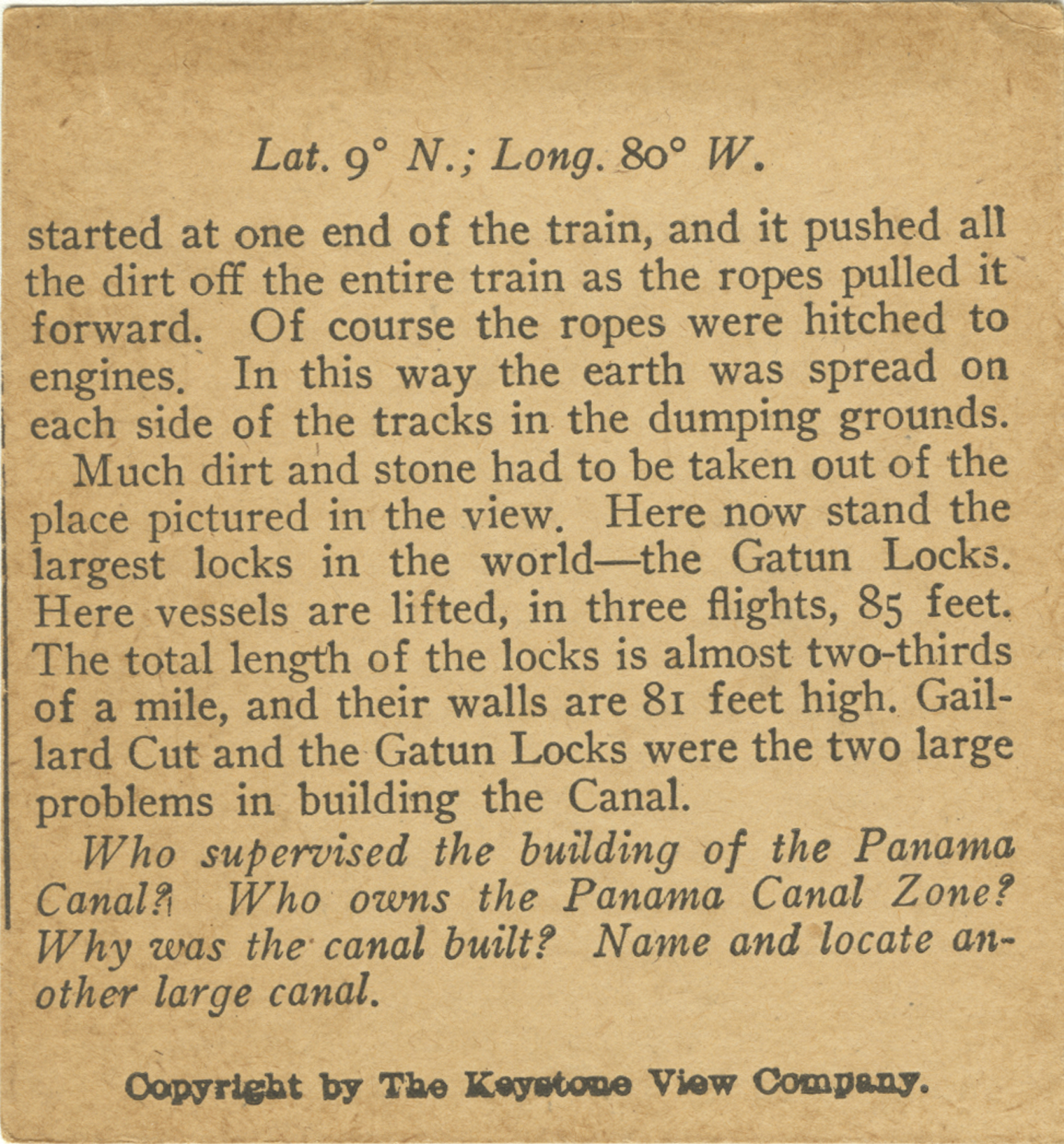
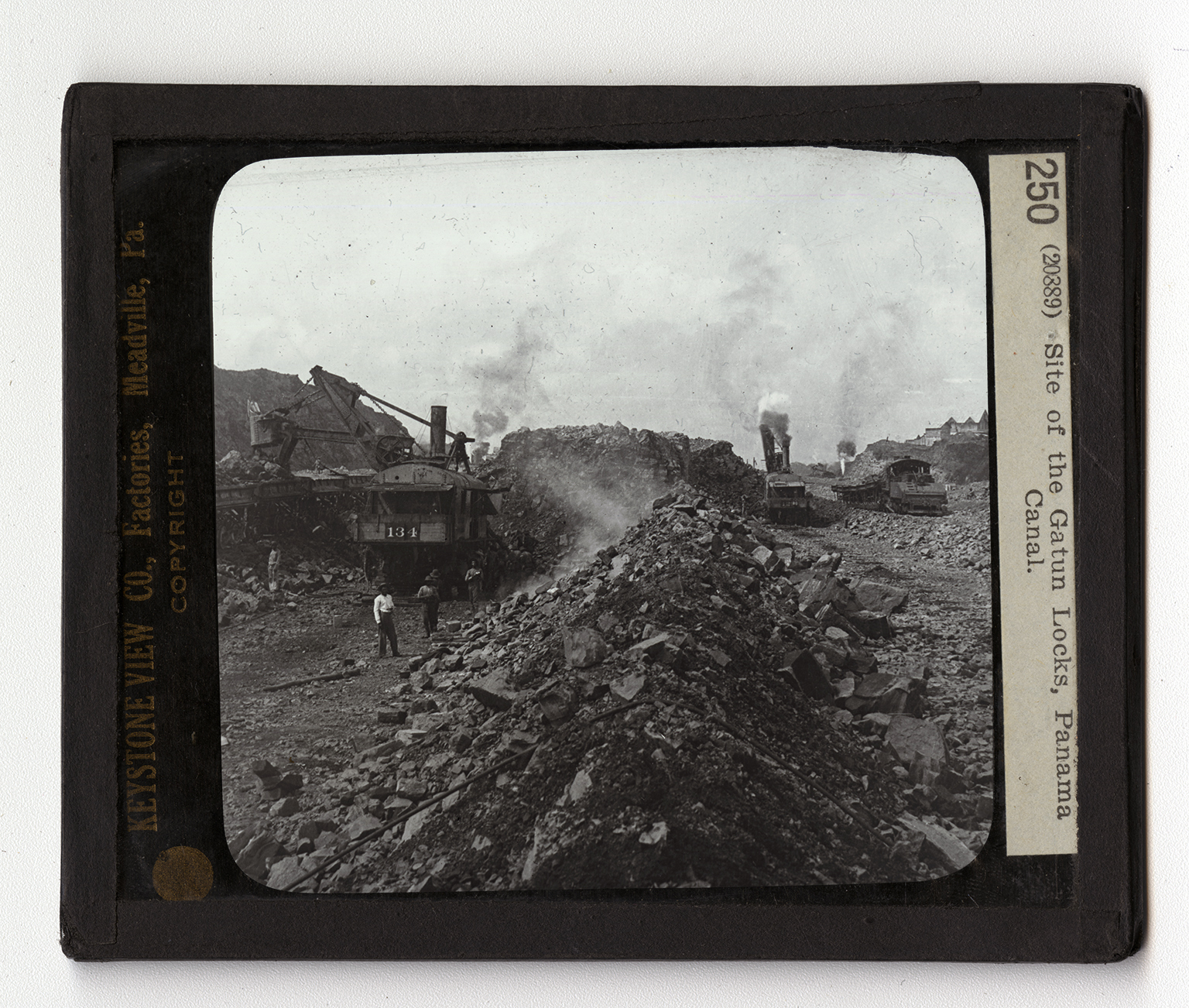
The picture shows the way the Panama Canal was dug. Drills run by machinery, dynamite, steam shovels, and cars loosened, dug, and carried away most of the dirt. In the view a steam shovel is dropping a dipper full of dirt on a car. These shovels dipped from 5 to 10 tons of earth and rock at one lift. They located a train of 30 cars in from 7 to 15 minutes. One shovel loaded in one day 8.395 tons of earth. There were about 100 of these shovels used on the Canal. In addition to the shovels, 560 drills were used. Nearly 400 engines were needed to pull the 6,000 cars. There were 30 dredges, 30 unloaders, 12 tugs, and 70 barges used. And to operate these tools 35,000 to 40,000 men were employed. To upload the cars you see in the view, one of the tools used was a spreader. It is a big iron affair pulled by steel ropes or cables. It was
Card Back:
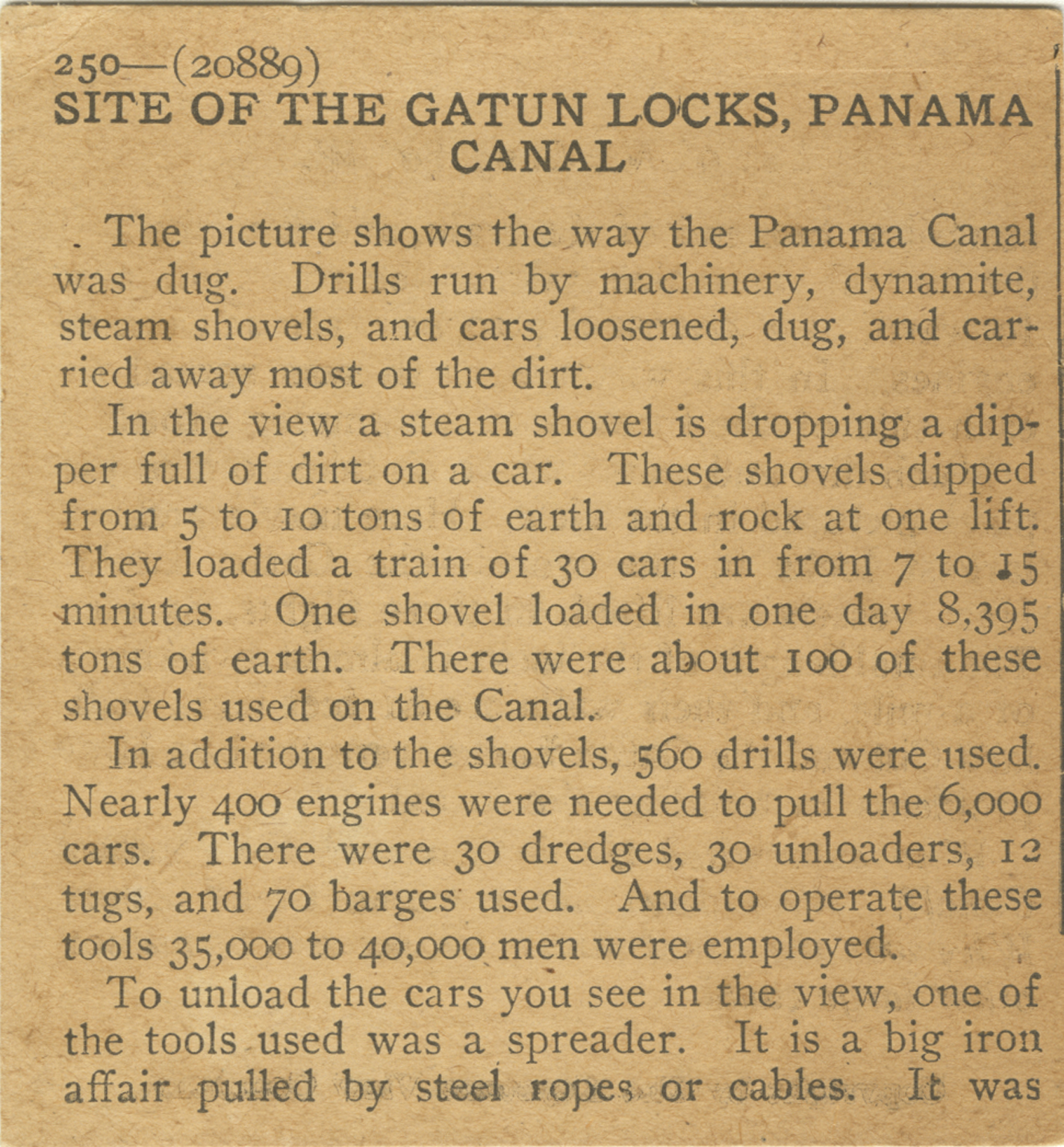
started at one end of the train, and it pushed all the dirt off the entire train as the ropes pulled it forward. Of course the ropes were hitched to engines. In this way the earth was spread on each side of the tracks in the dumping grounds. Much dirt and stone had to be taken out of the place pictured in the view. Here now stand the largest locks in the world - the Gatun Locks. Here the vessels are lifted, in three flights, 85 feet. The total length of the locks is almost two-thirds of a mile, and their walls are 81 feet high. Gaillard Cut and the Gatun Locks were the two large problems in building the Canal. Who supervised the building of the Panama Canal? Who owns the Panama Canal Zone? Why was the canal built? Name and locate another large canal.