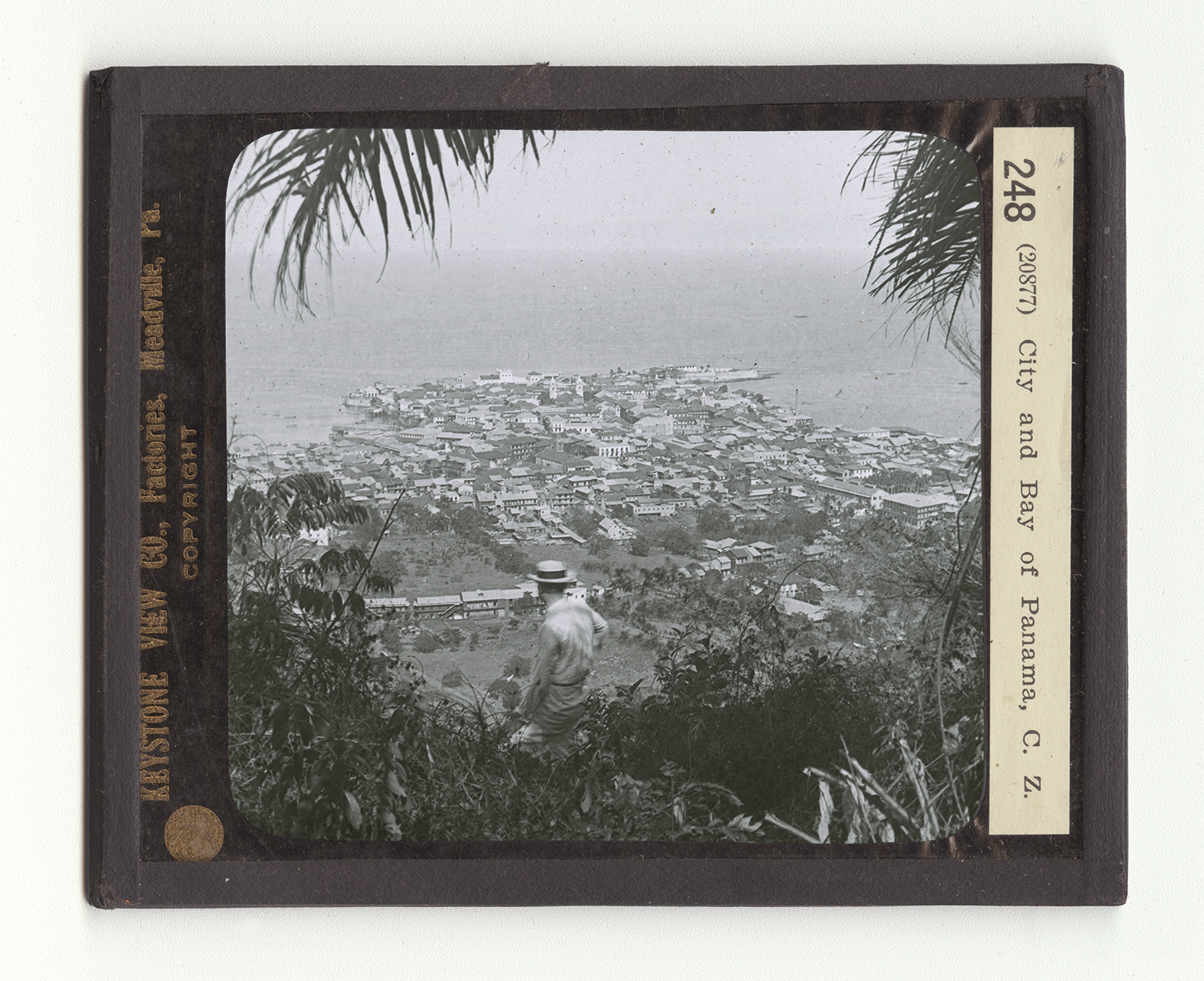
Negative Number: 20877
Latitude: 10.0
Longitude: 80.0
Geographical Classification:
North America: United States and Possessions (Except Asiatic Possessions): Outlying Possessions of the United States (Except the Philippines and Guam): Panama, C. Z.
Card Front:
Panama City is near the Pacific end of the Canal. It is one of the oldest cities in the western world. Its early history reads like a tale from a book of fairy stories. It was here that the Spaniards built a town 400 years ago. Here the Spanish brought their shiploads of gold and silver that they had taken from the Inca Indians of Peru. The precious metals were often carried across the isthmus to be put on other ships to be put on other ships bound from Spain. Here, too, pirates stopped for food or plunder. The old city of Panama was destroyed by the pirate Morgan in 1671. It was, for a long time, a city known for its wealth and its wickedness. In the City of Panama today there are many things to remind the visitor of those early days. There are runs of walls and of forts; half-ruined churches beautifully built; and remains of streets, plazas, and shops. Today the city has a population of about 40,-
Card Back:
000 people of all races. Since the Panama Canal was undertaken by the United States, the city has taken on new life. Hundreds of travelers are on its streets or in its hotels. Its stores and shops are busy places. It has a new city building, a new government building and a new opera house. In short, it has become a clean, modern city; but it has also the old places to add interest and color. Back of the city is Ancon Hill. It is from this hill that the view of the city and the bay were taken. You can understand, when looking at this scene, how Balboa must have felt when he gazed from near this place on the Pacific for the first time. Balboa, you recall, discovered the Pacific Ocean. Tell the story of Balboa's discovery of the Pacific; of Pizarro's conquest of the Incas.