Negative Number: 21100
Latitude: 66.0
Longitude: 148.0
Geographical Classification:
North America: United States and Possessions (Except Asiatic Possessions): Outlying Possessions of the United States (Except the Philippines and Guam): Alaska
Card Front:
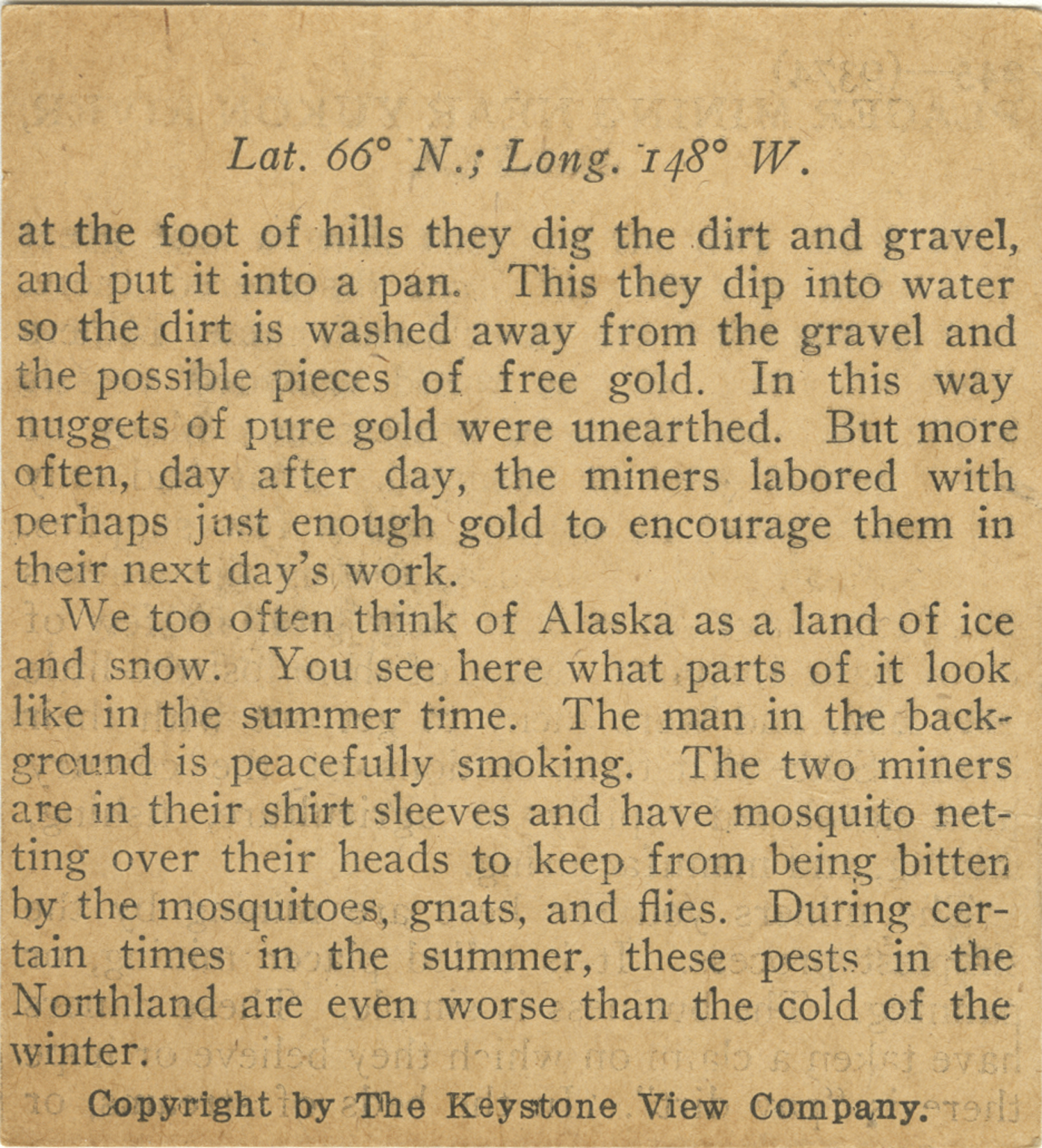
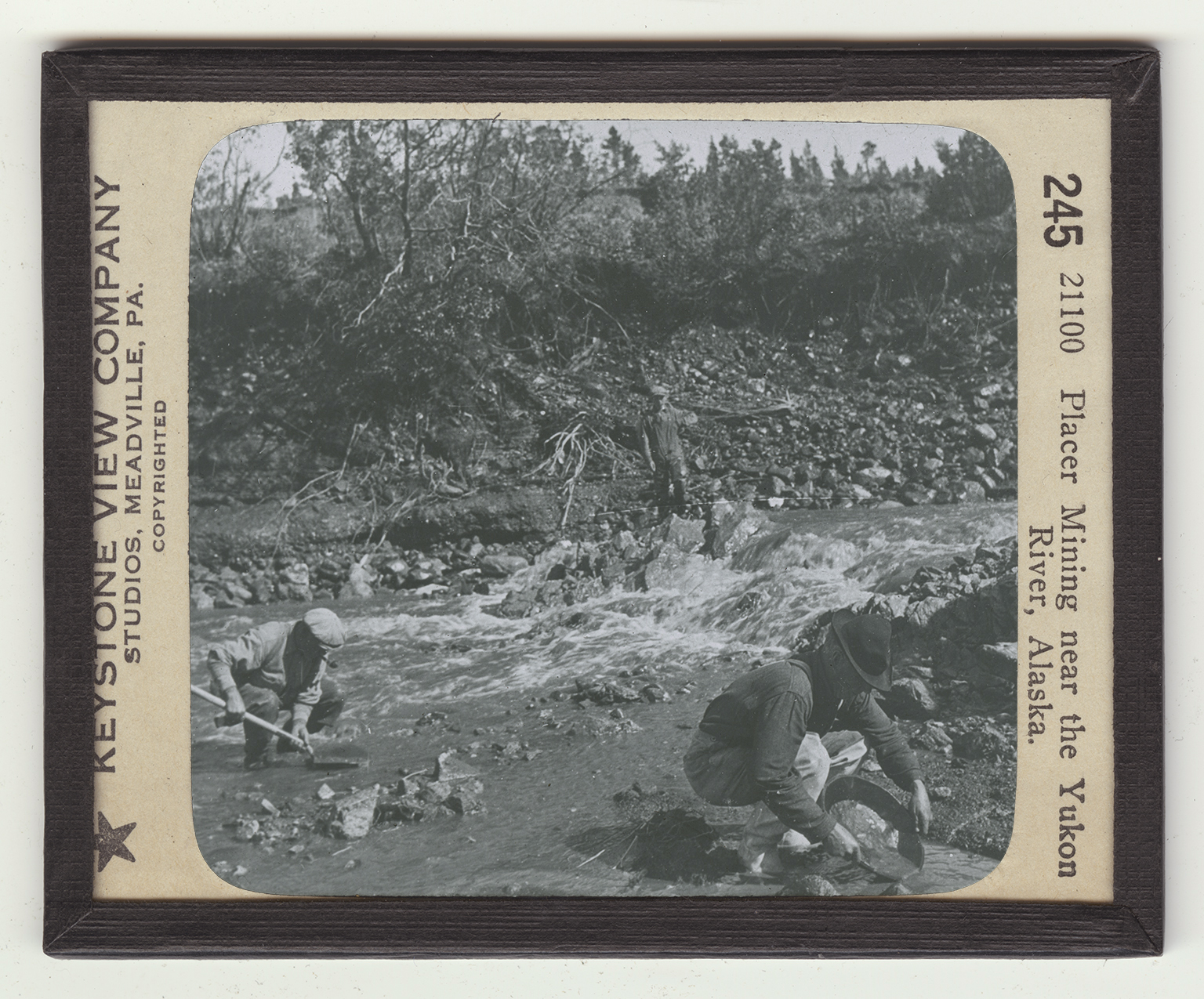
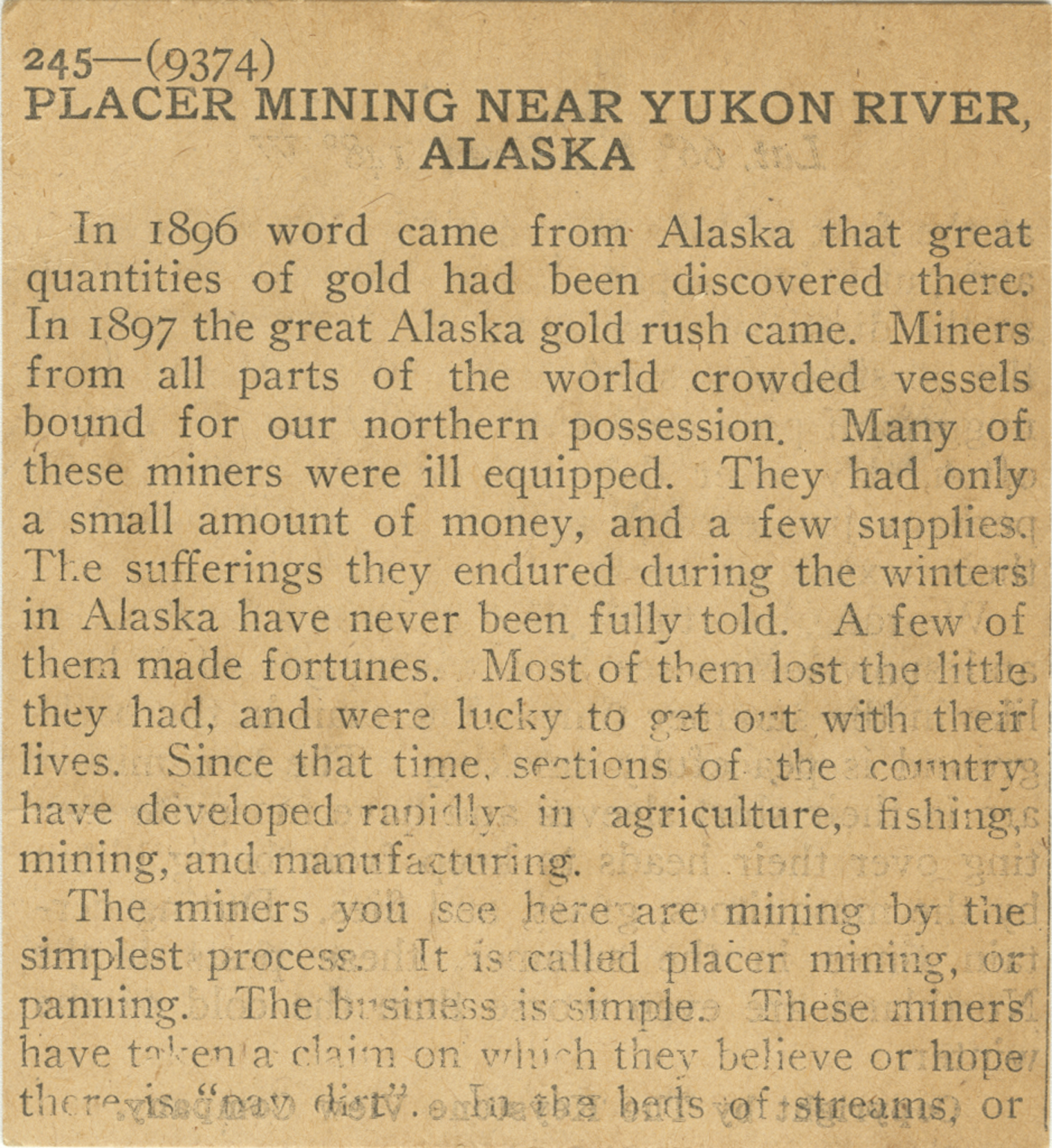
In 1896 word came from Alaska that great quantities of gold had been discovered there. In 1897 the great Alaska gold rush came. Miners from all parts of the world crowded vessels bound for our northern possession. Many of these miners were ill equipped. They had only a small amount of money, and a few supplies. The sufferings they endured during the winters in Alaska have never been fully told. A few of them made fortunes. Most of them lost the little they had, and were lucky to get out with their lives. Since that time, sections of the country have developed rapidly in agriculture, fishing, mining, and manufacturing. The miners you see here are mining by the simplest process. It is called placer mining, or panning. The business is simple. These miners have taken a claim on which they believe or hope there is "pay dirt". In the beds of streams, or
Card Back:
at the foot of hills they dig the dirt and gravel, and put into a pan. This they dip into water so the dirt is washed away from the gravel and the possible pieces of free gold. In this way nuggets of pure gold, the miners labored with perhaps just enough gold to encourage them in their next day's work. We too often think of Alaska as a land of ice and snow. You see here what parts of it look like in the summer time. The man in the background is peacefully smoking. The two miners are in their shirt sleeves and have mosquito netting over their heads to keep from being bitten by the mosquitos, gnats, and flies. During certain times in the summer, these pests in the Northland are even worse than the cold of the winter.