Negative Number: 6228
Latitude: 46.0
Longitude: 120.0
Geographical Classification:
North America: United States and Possessions (Except Asiatic Possessions): Pacific States: Oregon
Card Front:
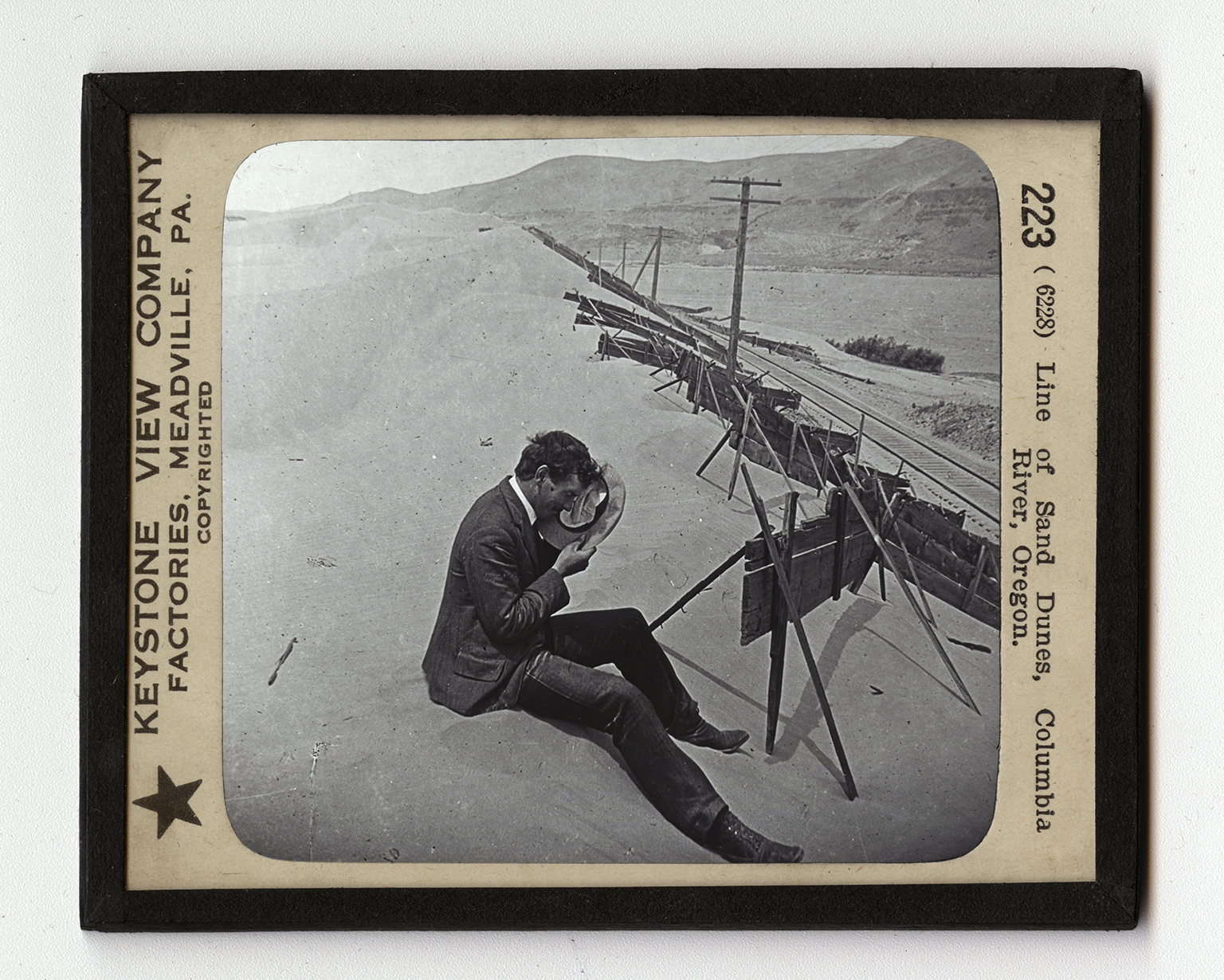
On your right in the view flows the Columbia River. On the river bank is a railroad track. To the left of the track is a slender barrier made of boards. This barrier has been built to prevent the sand from burying the railroad tracks. The dunes are low sand hills stretching straight ahead of you in the center of the view. The sand is blowing so violently that the foreground of the scene looks like a heavy dust cloud; and it is flying with such force that the man is protecting his face with his hat. Sand dunes are formed like snowdrifts. Perhaps you have seen the wind pick up the snow in great swirls and pile it in drifts along fences. You have seen dust clouds carried by a gale. If you put in the places of the snow or the dust a great stretch of sand, you would have a sand storm, and a sand dune would be formed. In some parts of the world these dunes are from
Card Back:
200 to 300 feet high. But they are usually only from 10 to 20 feet. The dunes usually start about the stump of a tree, a house, or anything solid. Once it is started, the sand continues to gather until a ridge is built. There is a natural limit to its height. The upper wind is stronger than the wind next to the earth, so that after a dune has reached a certain height the wind tears its top off and carries the sand beyond. In many places forests have been the barriers. The dunes may kill the first line of trees; then shift farther into the forest until a great wooded area has been deadened. In some places the dunes have marched over great areas of land that had been tilled, making it useless. One the shores of the Baltic Sea towns have been wiped out by the march of the dunes. Explain how sand dunes are formed.