Negative Number: 13588
Latitude: 45.0
Longitude: 111.0
Geographical Classification:
North America: United States and Possessions (Except Asiatic Possessions): Plateau States: Wyoming
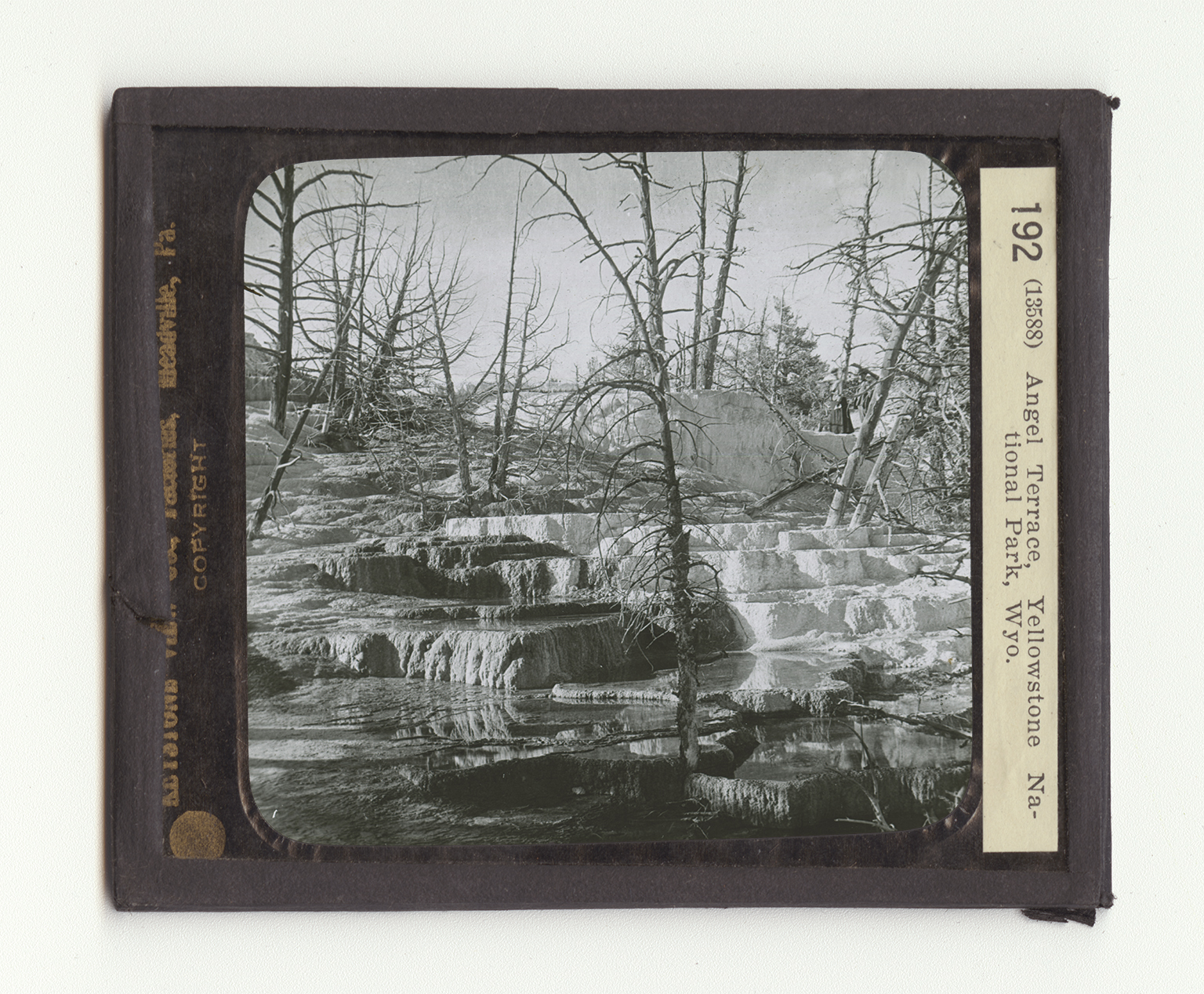
Card Front:
This is a section of the hot springs area in the Yellowstone National Park. These springs have built up terraces, as you see, of limy deposits. These deposits are formed partly because of the cooling of the water, and partly because of the plants which are submerged in the water. The entire region of the Yellowstone is volcanic in formation. That is, the interior heat of the earth comes very near to the surface in this district. In some places the waters are heated, steam is formed, and the overlying surface water is blown far up into the air. These are called geysers. In other spots the boiling-hot water trickles out of the rocks. These are the hot springs. Among the hot springs here shown, you may pick your way around if you watch your step. The pools look to be vividly colored. Some of the deep ones are very green. In others the sprigs of grass and flowers appear to be
Card Back:
painted over with a coating of fine silver. Yellowstone Park is a land of wonders. It is the largest of all our national parks. It is kept in its wilderness state so it is not only a pleasure park, but it is also a retreat for thousands of wild animals. Antelopes, elks, bears - all the wild animals native to this section of the Rockies - are protected within the Park limits. Within its 3300 square miles are more geysers than can be found in all the rest of the world put together. Its hot springs are countless. It has swift rivers, large lakes, deep canyons, and great stretches of petrified forests. Here, too, are large hotels and camps for the public. The park contains 200 miles of first-class roads. Explain how hot springs are formed. In what other parts of the United States are hot springs found?