Negative Number: 13641
Latitude: 46.0
Longitude: 110.0
Geographical Classification:
North America: United States and Possessions (Except Asiatic Possessions): Plateau States: Montana
Card Front:
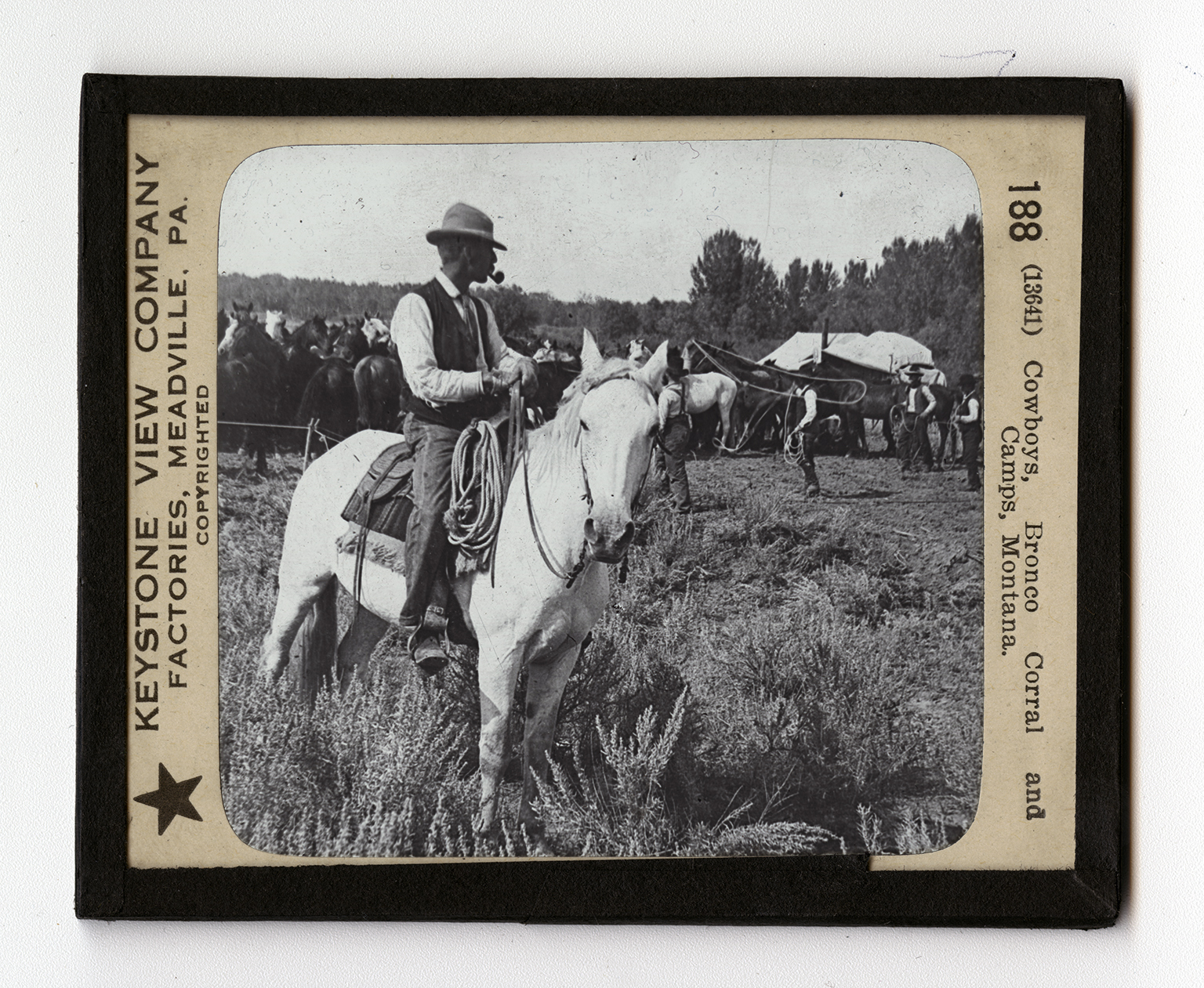
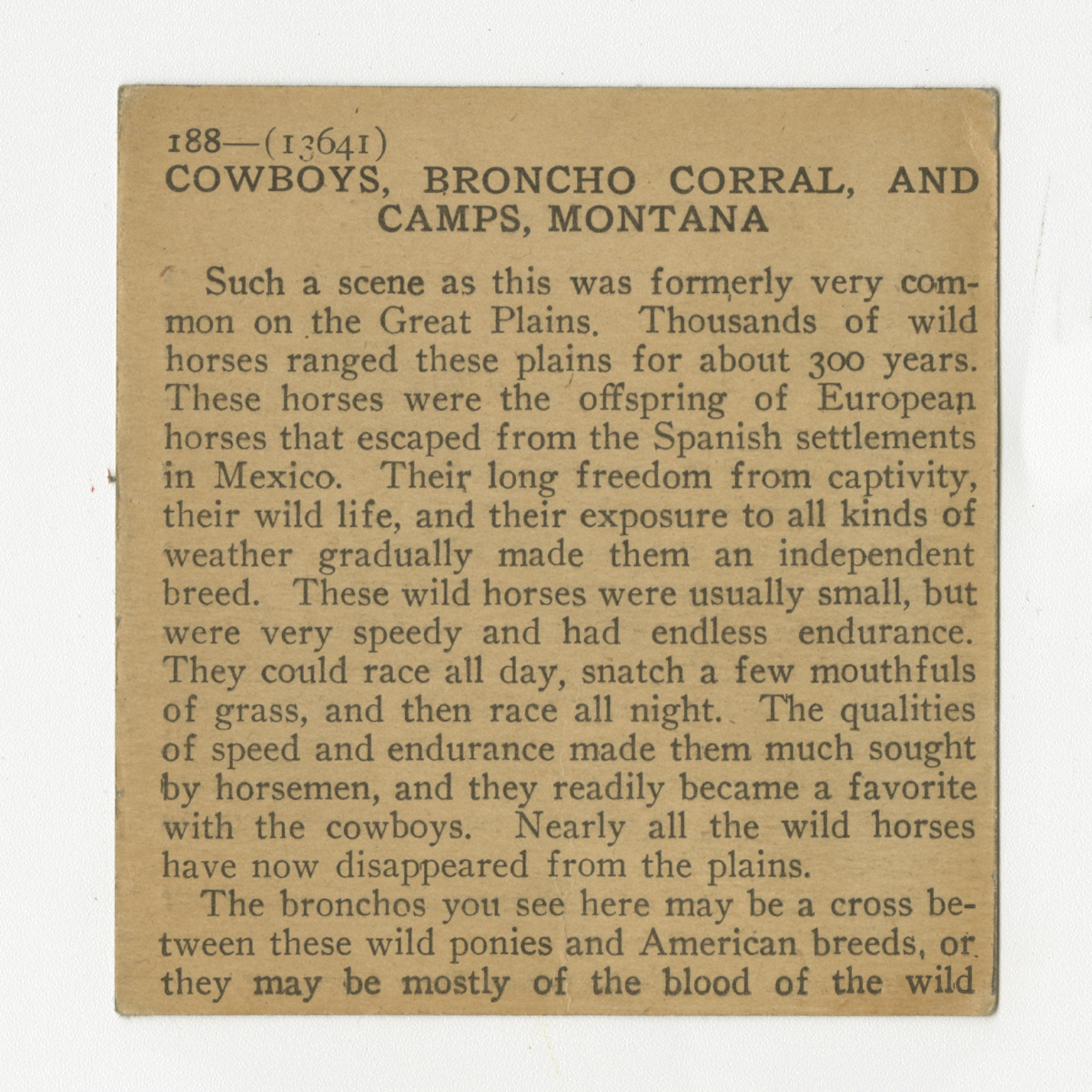
Such a scene as this was formerly very common on the Great Plains. Thousands of wild horses ranged these plains for about 300 years. These horses were the offspring of European horses that escaped from the Spanish settlements in Mexico. Their long freedom from captivity, their wild life, and their exposure to all kinds of weather gradually made them an independent breed. These wild horses were usually small, but were very speedy and had endless endurance. They could race all day, snatch a few mouthfuls of grass, and then race all night. The qualities of speed and endurance made them much sought by horsemen, and they readily became a favorite with the cowboys. Nearly all the wild horses have now disappeared from the plains. The bronchos you see here may be a cross bretween these wild ponies and American breeds, or they may be mostly of the blood of the wild
Card Back:
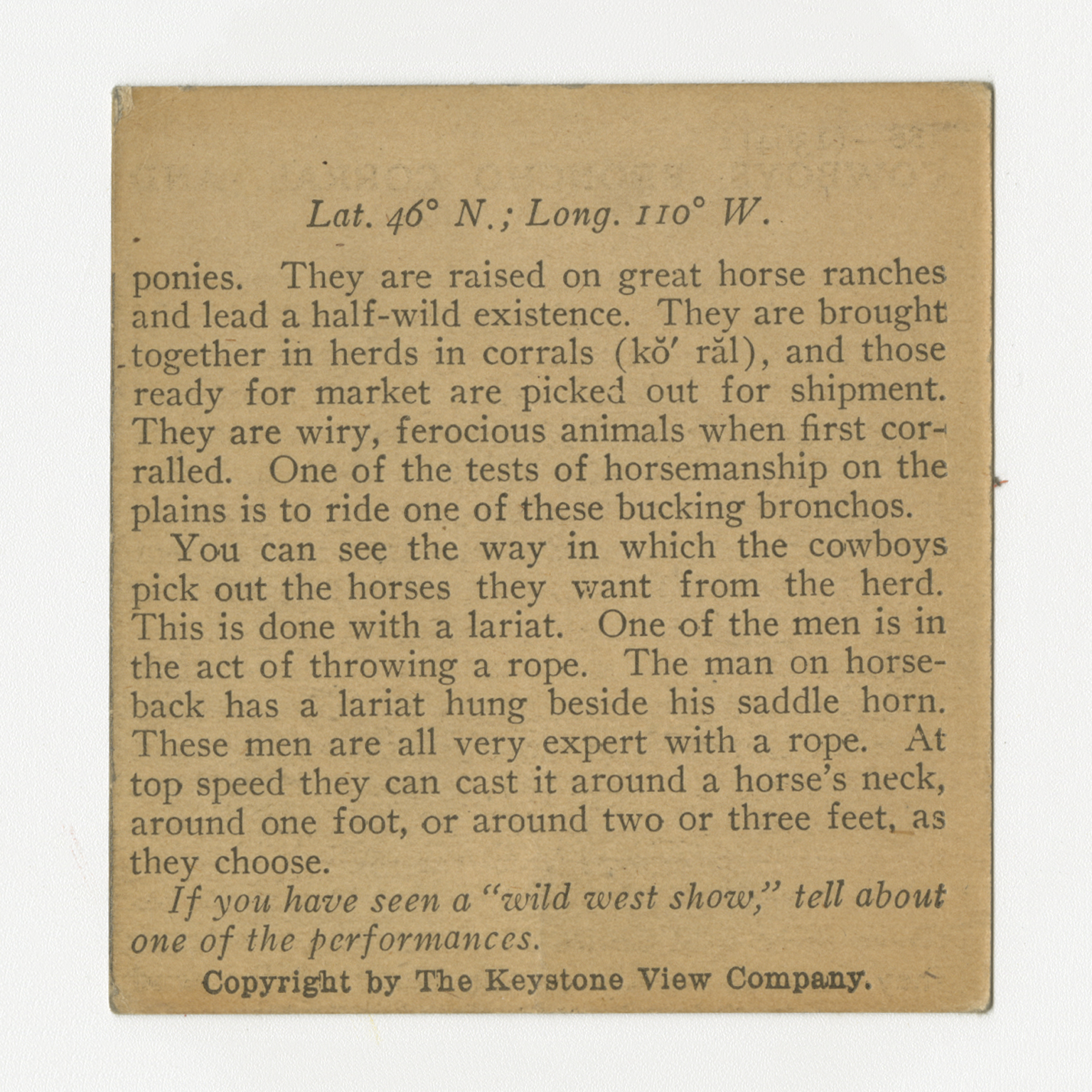
ponies. They are raised on great horse ranches and lead a half-wild existence. They are brought together in herds in corrals, and those ready for market are picked out for shipment. They are wiry, ferocious animals when first coralled. One of the tests of horsemanship on the plains is to ride one of these bucking broncos. You can see the way in which the cowboys pick out the horses they want from the herd. This is done with a lariat. One of the men is in the act of throwing a rope. THe man on horseback has a lariat hung beside his saddle horn. These men are all very expert with a rope. At top speed they can cast it around two or three feet, as they choose. If you have seen a "wild west show," tell about one of the performances.