Negative Number: 16703
Latitude: 45.0
Longitude: 93.0
Geographical Classification:
North America: United States and Possessions (Except Asiatic Possessions): North Central States: Minnesota
Card Front:
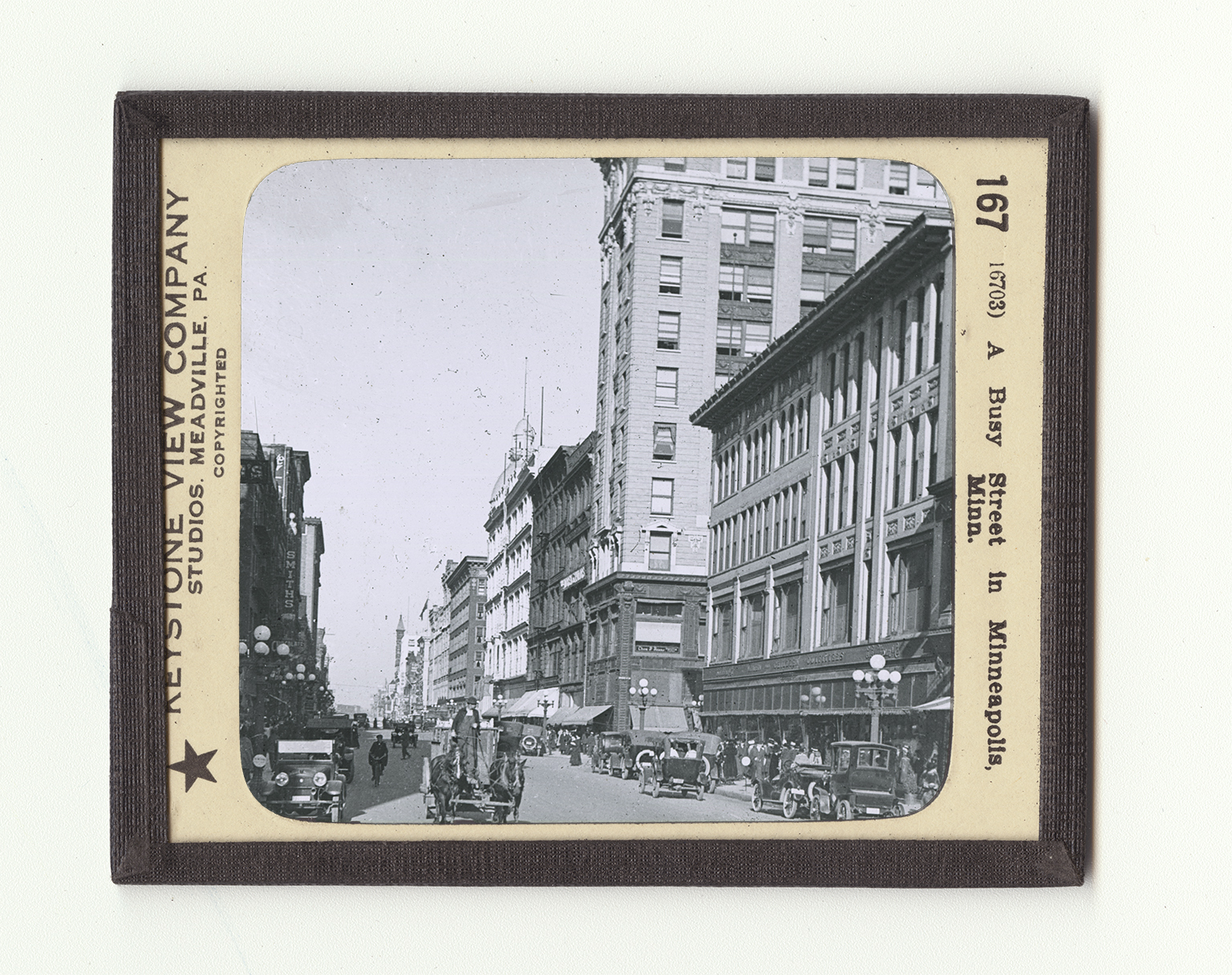
Minneapolis sprang up at the Fall of St. Anthony on the Mississippi. Not many years ago Minnesota was noted for its lumbering. The Falls of St. Anthony furnished power to drive the machinery of great sawmills and planing factories. When the lumbering ceased to be so important, agriculture took its place. In a few years there were miles of wheat fields on the prairies particularly in the valley of the Red River of the North. Today Minneapolis is the greatest flour making center in the world. North Dakota, South Dakota, and Minnesota grow a great deal of flax. This is raised for its oil. Minneapolis is the center of this trade, so it has great linseed oil factories. Linseed oil is made from flax seed. It is used to mix with paint. The seeds are crushed, the oil is pressed out, and the seedcakes are fed to farm animals. Minneapolis and St. Paul are so near each
Card Back:
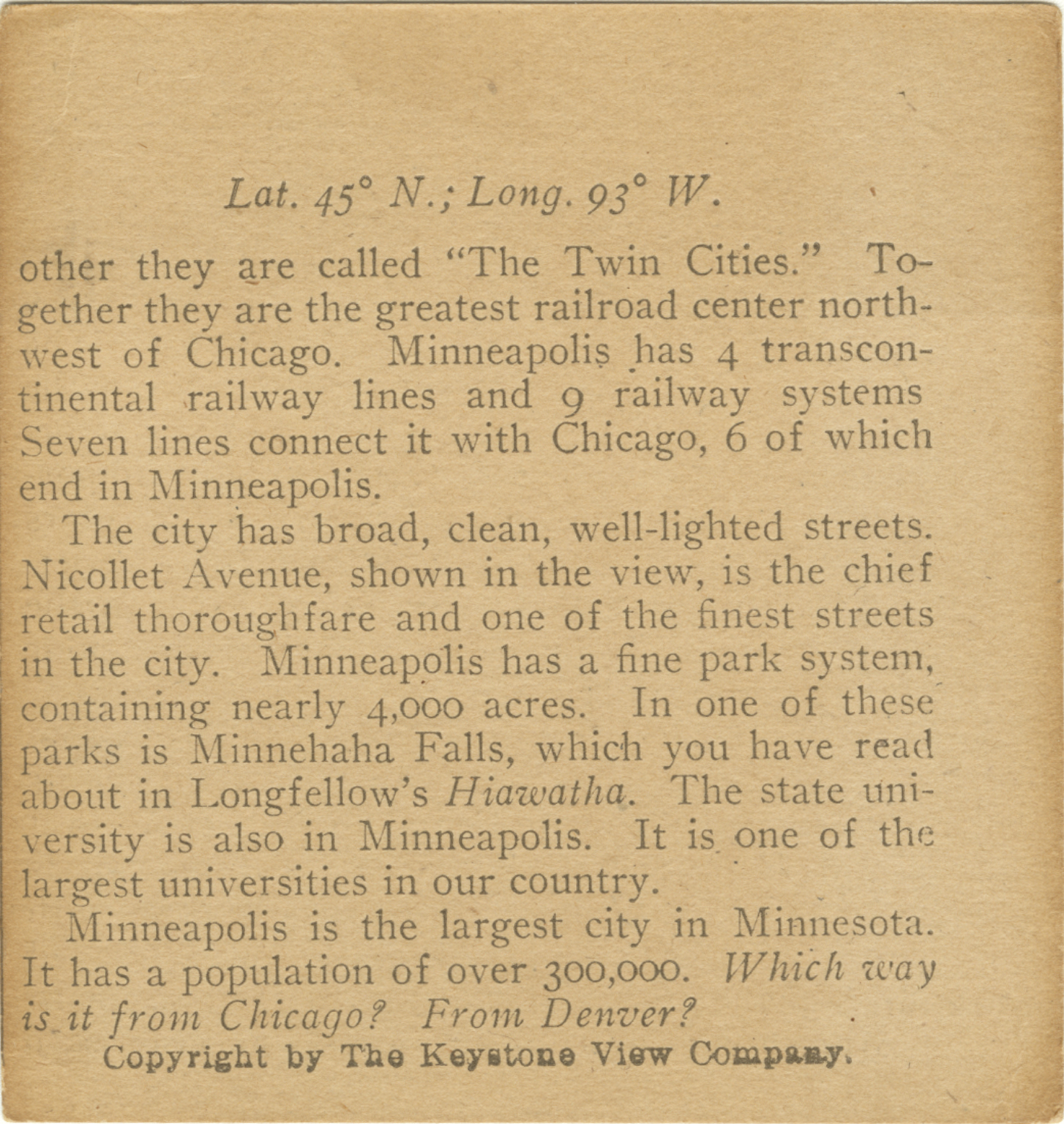
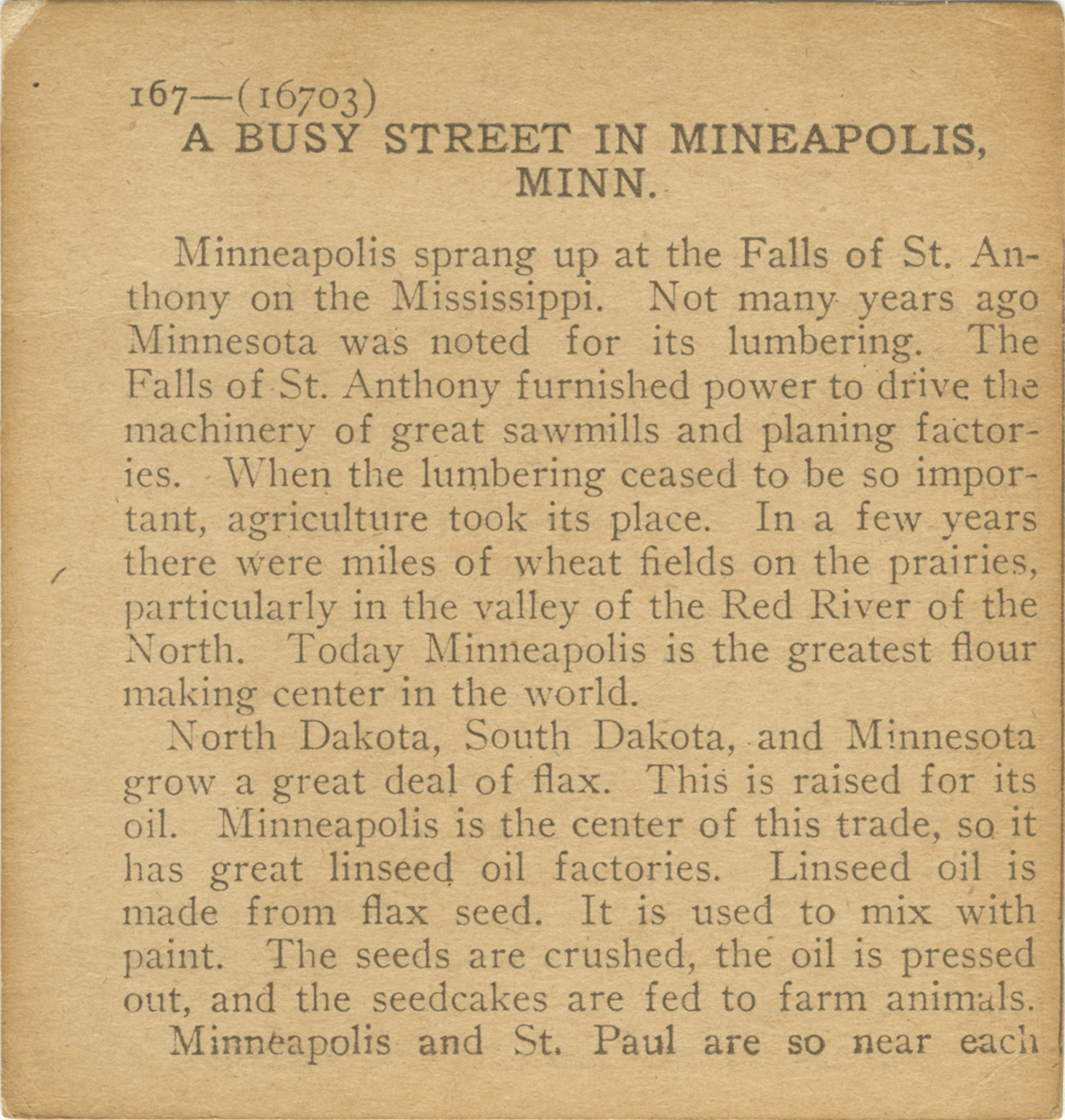
other they are called "The Twin Cities." Together they are the greatest railroad center northwest of Chicago. Minneapolis has 4 transcontinental railway lines and 9 railway systems Seven lines connect it with Chicago, 6 of which end in Minneapolis. The city has broad, clean, well-lighted streets. Nicollet Avenue, shown in the view, is the chief retail thoroughfare and one of the finest streets in the city. Minneapolis has a fine park system, containing nearly 4,000 acres. In one of these parks is Minnehaha Falls, which you have read about in Longfellow's Hiawatha. The state university is also in Minneapolis. It is one of the largest universities in our country. Minneapolis is the largest city in Minnesota. It has population of over 300,000. Which way is it from Chicago? From Denver?