Negative Number: 16716
Latitude: 42.0
Longitude: 86.0
Geographical Classification:
North America: United States and Possessions (Except Asiatic Possessions): North Central States: Michigan
Card Front:
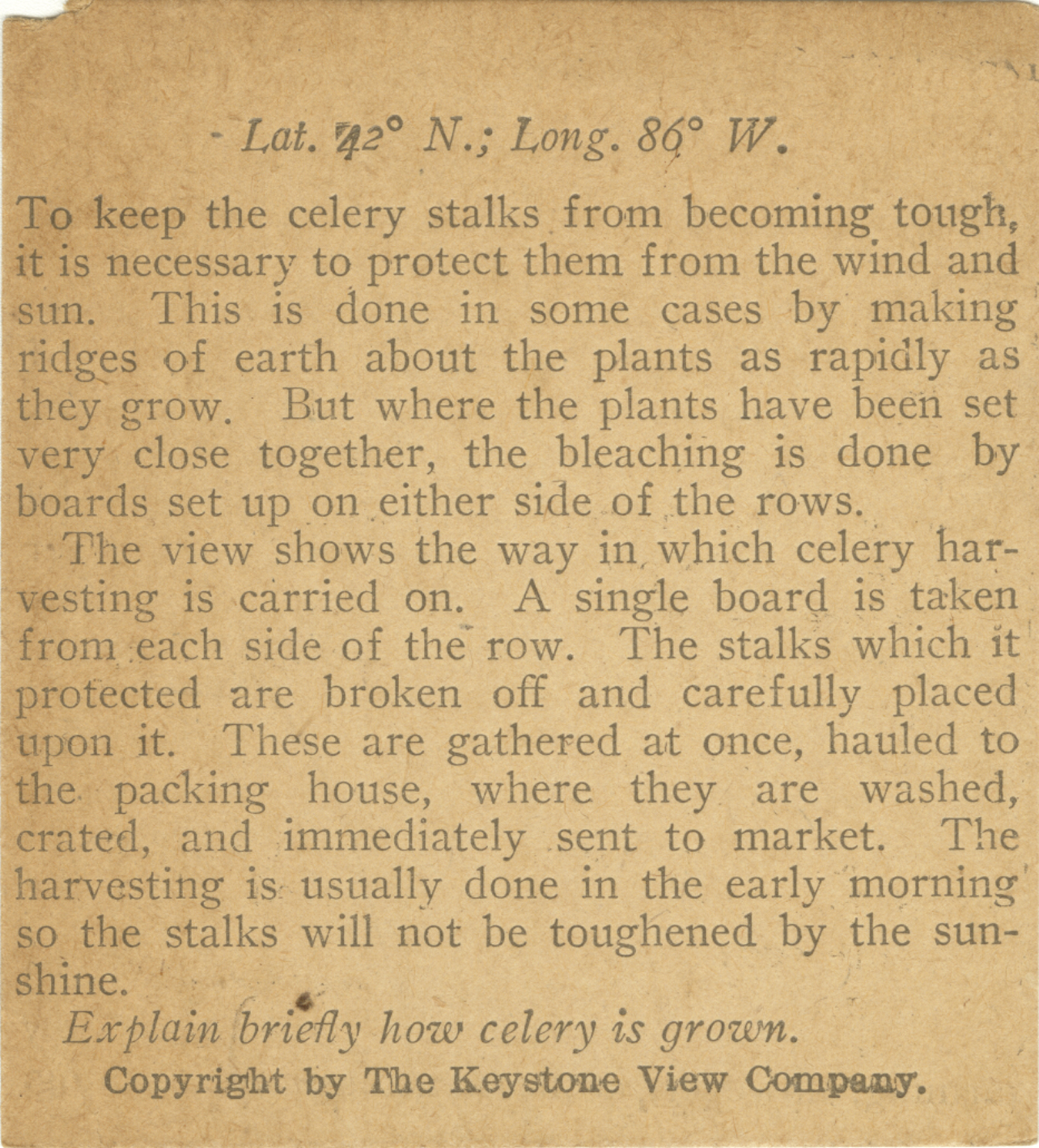
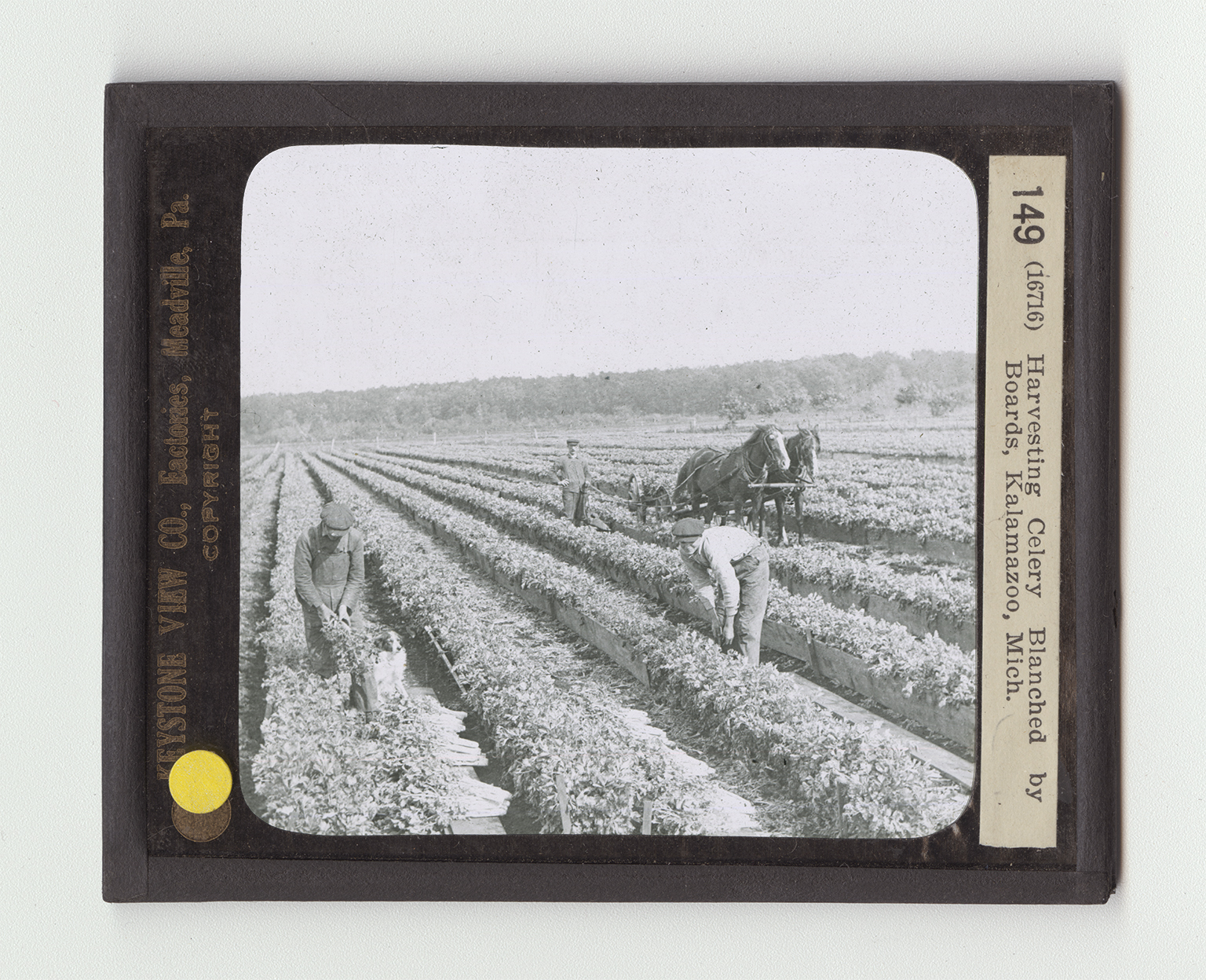
The region about Kalamazoo has made a reputation for itself in the production of celery. The ground is rich, black much deposited formerly by the Kalamazoo River. A rich soil is one of the first requirements for celery production. A temperate climate is also an essential. Celery is grown from seeds which are started in hotbeds. The plants are usually set in other beds before they are put in the fields. The celery is set out in straight rows 4 or 5 feet apart. Sometimes the plants in the rows are set a foot from each other. But in the method of farming practiced about Kalamazoo, they are set a great deal closer. The distance depends on teh manner of bleaching that is to be used when plants are grown up. The ground between the rows is cultivated very thoroughly. The chief feature of celery farming, however, is the bleaching or blanching.
Card Back:
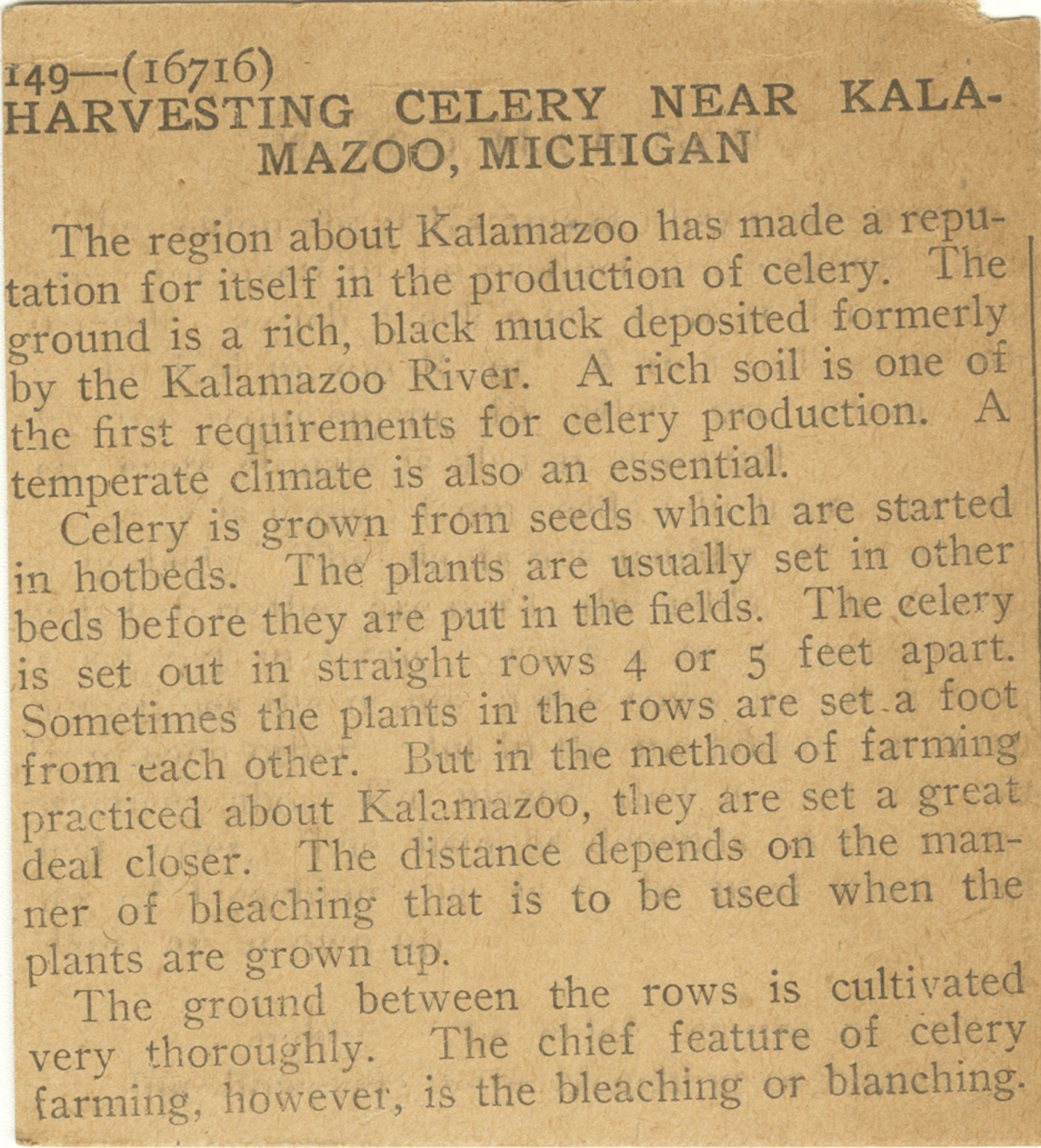
To keep the celery stalks from becoming tough, it is necessary to protect them from the wind and sun. This is done in some cases by making ridges of earth about the plants as rapidly as they grow. But where the plants have been set very close together, the bleaching is done by baords set up on either side of the rows. The view shows the way in which celery harvesting is carried on. A single board is taken from each side of the row. The stalks which it protected are broken off and carefully placed upon it. These are gathered at once, hauled to the packing house, and immediately sent to market. The harvesting is usually done in the early morning so the stalks will not be toughened by the sunshine. Explain briefly how celery is grown.