Negative Number: 16712
Latitude: 40.0
Longitude: 86.0
Geographical Classification:
North America: United States and Possessions (Except Asiatic Possessions): North Central States: Indiana
Card Front:
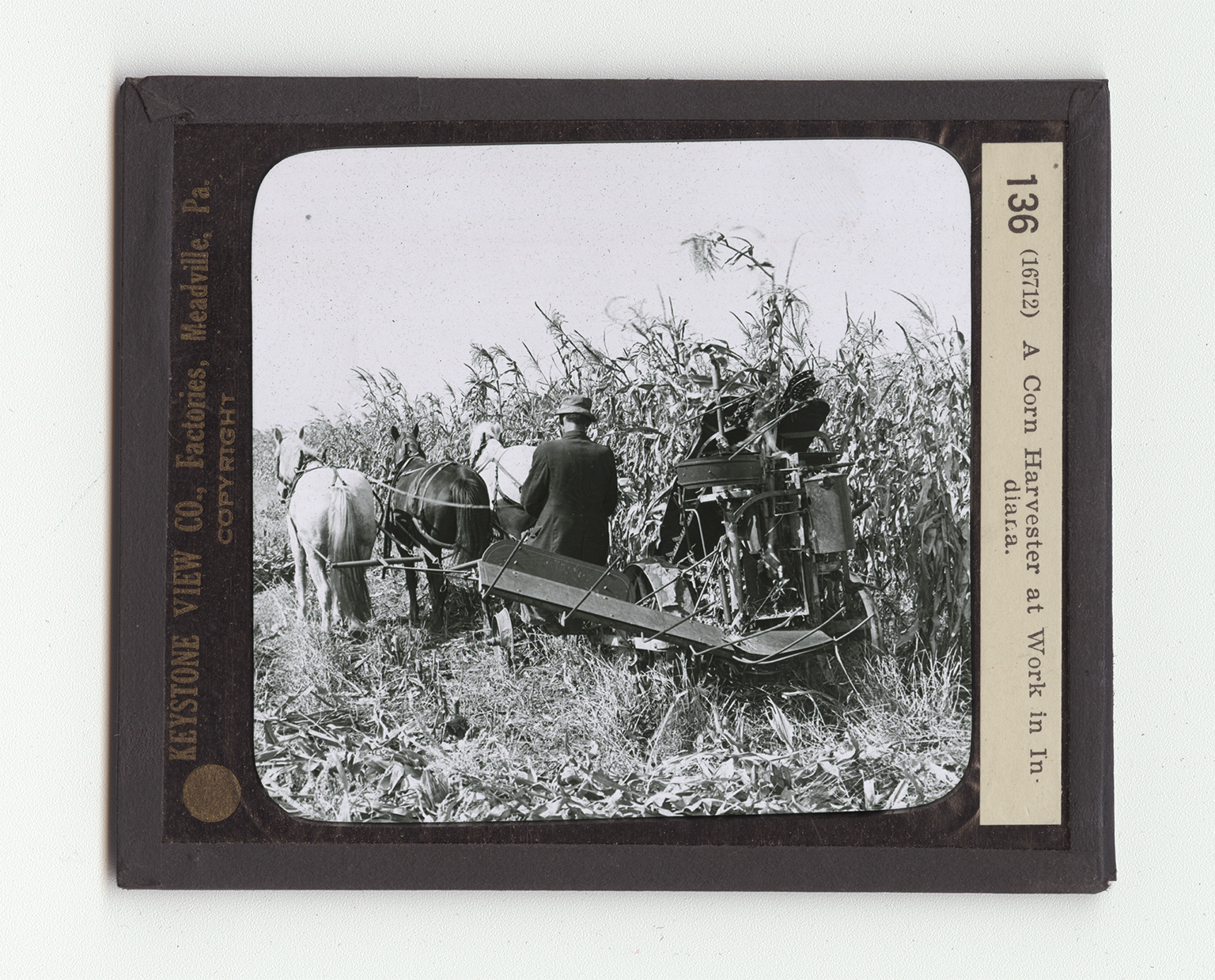
Corn is a double food supply for stock. The grain is one of the best foods known for horses, cattle, sheep, and hogs. And the stalks and leaves when cured take the place of hay and straw both as food and bedding. On many, perhaps most, small farms, corn is cut by hand. When it begins to ripen in September men cut it several inches above the ground and set it in shocks. It is then spoken of as corn fodder. On damp days during the fall or winter the shocks are torn apart, and the corn is husked. The fodder reshocked, and is hauled out of the field as it is needed for food. But corn cutting by hand is low and hard work. It takes a strong, quick field hand to cut 30 shocks, 12 hills square, in a day. Hence, a machine was invented to cut corn more rapidly and with less labor. You see here one of these corn harvesters at work. The machine is built
Card Back:
to cut between one row at a time. The corn is caught between two slanting uprights and a sickle cuts it off. It is tied in bundles at the same time, and these bundles fall from the rear of the harvester. All the workman needs to do is to drive his team properly. The bundles may be hauled to barns or silos for storage or they may be set in shocks, in much the same way wheat is handled. This machine does not husk the ears. The first of these harvesters that were operated did not meet with favor. They knocked off too many ears of corn. This objection has been partially overcome. At any rate it is no great task to pick up the fallen ears in a field where the corn has been so harvested. And there is a great saving in labor and in time by using machinery instead of men.