Negative Number: 20109
Latitude: 33.0
Longitude: 96.0
Geographical Classification:
North America: United States and Possessions (Except Asiatic Possessions): South Central States: Texas
Card Front:
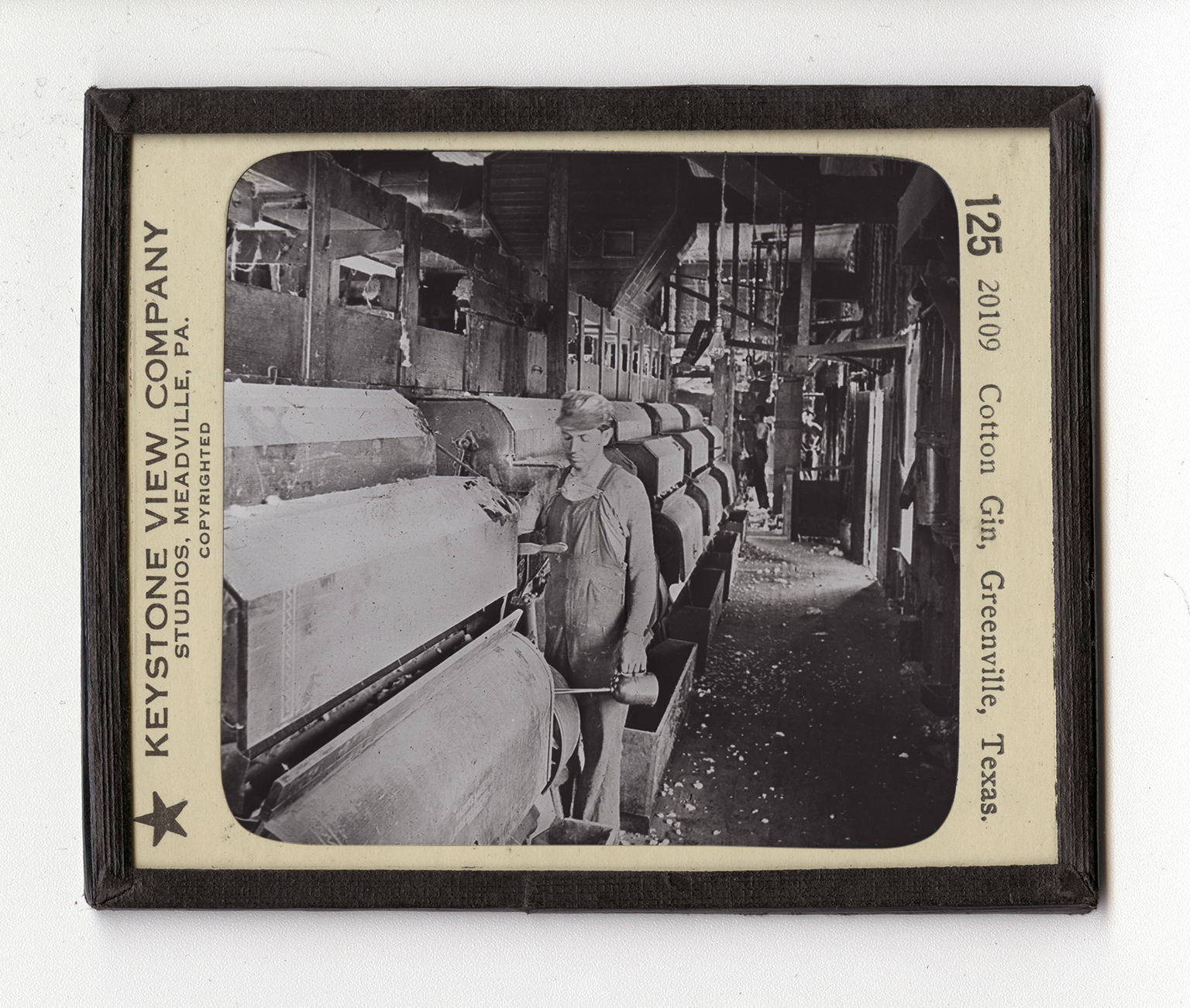
This view shows you the improved machine that has made possible th extensive growing of cotton. You see here a number of cotton gins sitting side by side. These machines remove the cotton seed from the fiber. In 1793 Eli Whitney invented the cotton gin. Before this time the seeds were picked from the fiber by hand. This was tedious work. The seeds themselves are about the size of peas, and were easy enough to grasp in the fingers. But the fibers clung to them, and each boll of cotton had to be examined carefully to see that all the seeds were taken out. Whitney's machine was a very simple affair. Saw tooth cogs drew the cotton fibers through guides that would not allow the seeds to pass. Brushes then removed the lint from the cogs. Simple though this first machine of Whitney's was, it had a great influence on American history. Had it not been for the cotton gin, it is
Card Back:
very doubtful whether we would have had the Civil War. At the time of its invention, leading men in the North and in the South were seriously talking about freeing all the slaves. Slave labor was found to be unprofitable, even in the South; but when the cotton gin was invented, all this was changed. By hand, negroes could seed one or two pounds of cotton a day. Whitney's machine would seed five thousand pounds. The plantation owners of the South immediately set their negroes to work in the fields to raise as much cotton as they could. Out in the field, the negro was a paying hand. So the South refused to free a workman who was so valuable. A modern ginnery such as you see here, will remove daily the seeds from 250 bales of cotton, each weighing 500 pounds. Explain the relation of the cotton gin to the Civil War.