Negative Number: 9508
Latitude: 33.0
Longitude: 96.0
Geographical Classification:
North America: United States and Possessions (Except Asiatic Possessions): South Central States: Texas
Card Front:
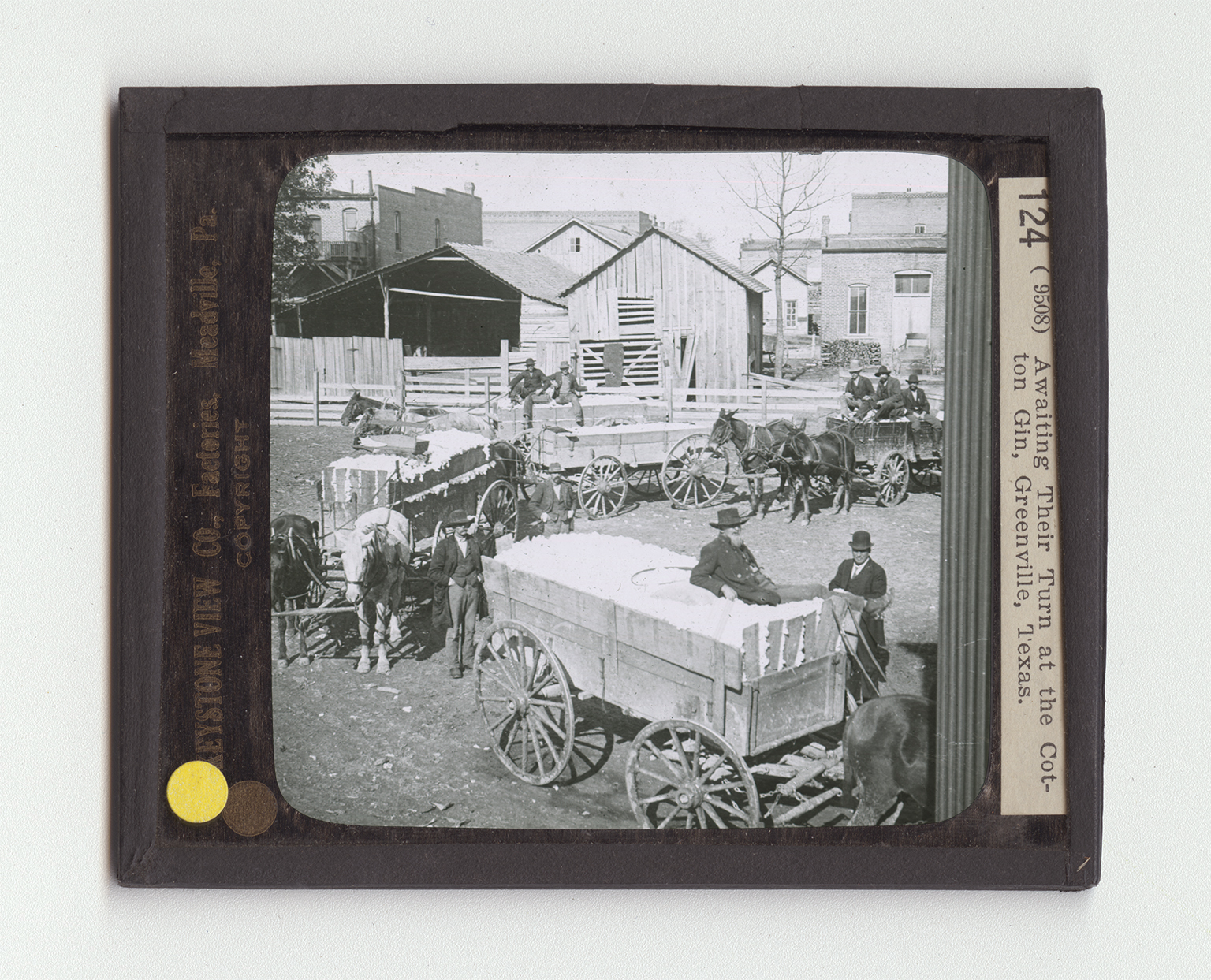
After the cotton is picked it is loaded into wagons and hauled to gins. At the gins the seeds are taken out and the cotton lint or fiber is pressed into bales ready for shipment. On some large plantations, where modern machinery is used, gins are also set up. The cotton is hauled from such estates directly to the shipping point, in bales. The common practice, however, is such as you see here. Here is a group of farmers waiting their turn at the village cotton gin. "First come, first served," is the rule here just as it is in the North where farmers haul their wheat to the mills. The loose cotton, as you see, is tramped into a wagon box, and is hauled probably for several miles over country roads. In many places these roads are far from good. You would know this by looking at the mud on the legs of the horses and the mules, and on the wagon wheels.
Card Back:
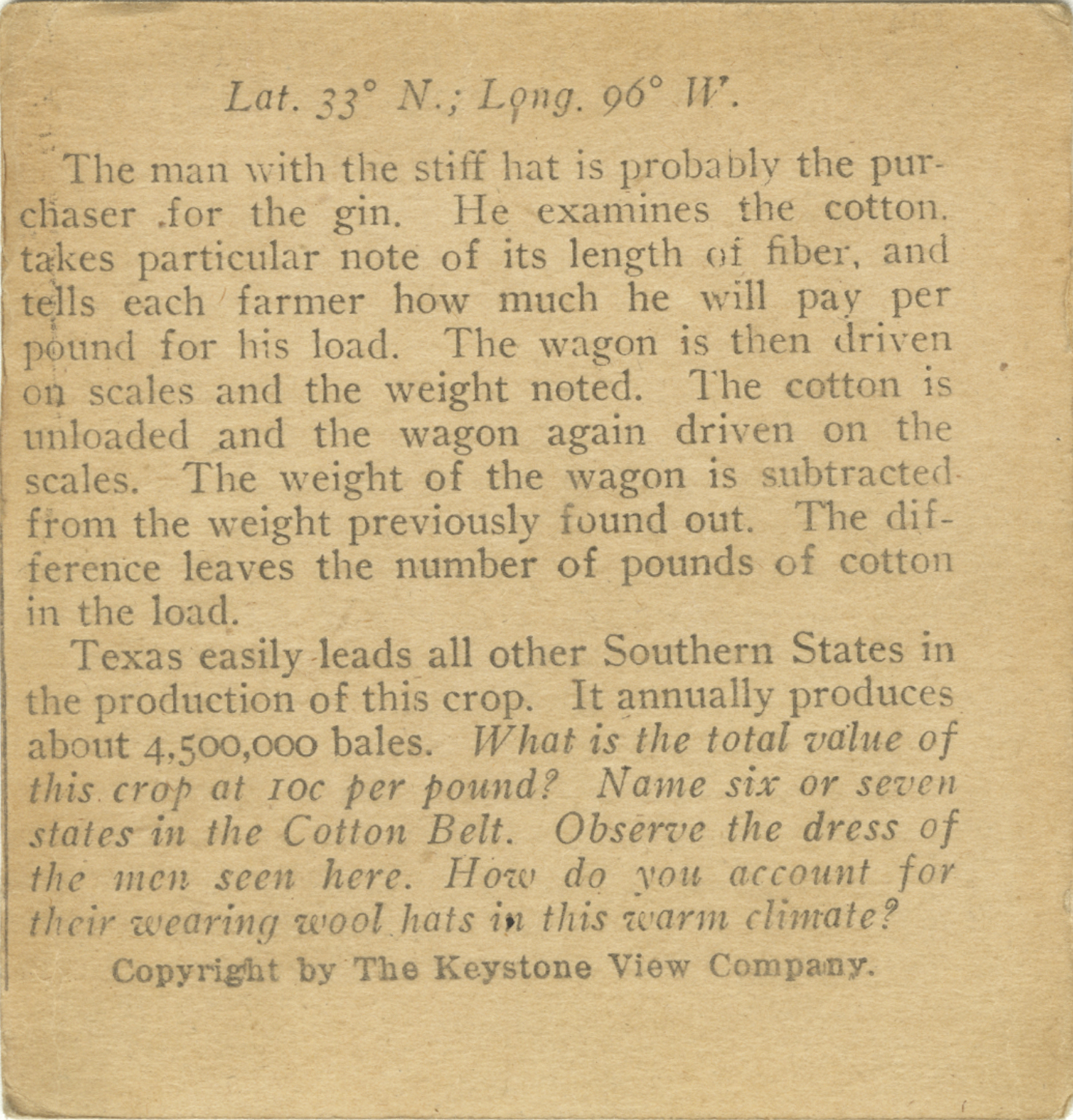
The man with the stiff hat is probably the purchaser for the gin. He examines the cotton takes particular note of its length of fiber, and tells each farmer how much he will pay per pound for his load. The wagon is then driven on scales and the weight noted. The cotton is unloaded and the wagon again driven on the scales. The weight of the wagon is subtracted from the weight previously found out. The difference leaves the number of pounds of cotton in the load. Texas easily leads all other Southern States in the production of this crop. It annually produces about 4,500,000 bales. What is the total value of this crop at 10c per pound? Name six or seven states in the Cotton Belt. Observe the dress of the men seen here. How do you account for their wearing wool hats in this warm climate?